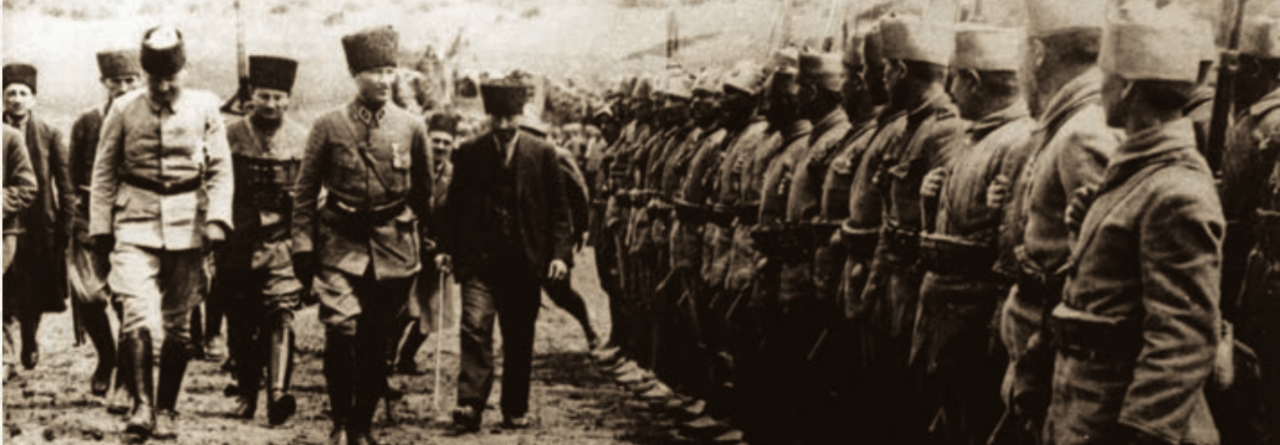
I heard Ariel Sharon speak on several occasions, but I only met him once.
In 1996, as director of the Moshe Dayan Center at Tel Aviv University, I set about scheduling a speaker for the annual address in Dayan’s memory. In practice, the Center’s Israeli board of governors, composed largely of Dayan’s old friends, selects the speaker. That year, we held the board meeting at the museum-home of David Ben-Gurion in Tel Aviv. The subject of the address came up, and someone floated the name of Ariel Sharon.
At the time, Sharon was minister of national infrastructure in the Likud-led government of Benjamin Netanyahu, and he was still very much a bête noire. At the mention of his name, my eyes immediately turned to Yael Dayan, Moshe Dayan’s daughter and a Labor party politician active in Peace Now. To my surprise, she pronounced Sharon to be the perfect choice as her father’s memorial speaker. I realized then, as I’ve realized many times since, that the old Israeli elite is bound by ties that go much deeper than the party politics of the moment.
So Sharon got the invitation, and he accepted it. For my academic colleagues, it was as if I had summoned Satan from the depths. While I awaited Sharon’s arrival on the appointed evening, I scanned the audience and saw few if any of them in attendance. (Yael Dayan wasn’t there either.) I recall feeling relieved that the honor of introducing Sharon had been claimed in advance by Zalman Shoval, a board member. I would have been hard-pressed to come up with enough admiring words.
Sharon came, spoke, and went. The speech got some coverage on an inside page of a newspaper, but it wasn’t a headline event. Yet it stayed with me, as did another Sharon speech I attended in Washington during those same years. Listening to Sharon, I didn’t hear a radical ideologue bent on “politicide” of the Palestinians—his usual portrayal in Israeli academe. I heard a hard-nosed former soldier concerned first and foremost with Israel’s security and preservation as a Jewish state.
The second Palestinian intifada resurrected Sharon, thanks to people like me. I had supported the Labor-led peace process, knowing it would involve far-reaching compromises. I voted for Ehud Barak in 1999. But when Yasir Arafat tried to leverage Israel by promoting mass terrorism, he changed my mind. I thought it important to erase from the record those concessions that had been offered by Israel at Camp David and, more importantly, at Taba. I saw Sharon as personifying strength, determination, and a willingness to act boldly, not in pursuit of a utopian “New Middle East,” but of Israel’s national survival. So I cast my ballot for him in 2001, as did a decisive majority of Israeli voters.
The situation was very different in my university setting, where I was a lone soul, both then and in 2003, when I voted for Likud. Since the disengagement and Sharon’s creation of Kadima, I’ve run into people on campus who’ve announced their intention to cast a ballot for the man they once reviled. Now they never will. No elected leader ever meets all expectations, and to believe that they might is to subscribe to a dangerous sort of secular messianism. But of all the votes I’ve cast, I least regret the two I cast for Ariel Sharon, and I would have cast another one.
In December, Harvard and Georgetown universities announced that they’d each received $20 million from Saudi Prince Alwaleed bin Talal Al Saud, for programs in Islamic studies. There’s been much commentary on this, and I’ll have more to say later. For now, I draw your attention to the photograph of the signing ceremony for the Georgetown deal.
Presumably, Alwaleed’s own photographer shot the event (it took place on November 7 at one of his properties in Paris), and it seems logical to assume that Alwaleed selected the photograph for release to the press. Anyone gazing upon it will sense immediately that this wasn’t just a signing ceremony. It was a deliberately choreographed court ritual, about power and control.
The most striking element in the mise en scène is the positioning of Prince Alwaleed. He is front and center. Immediately to his right is Georgetown president John J. DeGioia. Note that they aren’t positioned as equals—as joint partners in a shared enterprise. That’s because DeGioia is a mere a recipient of royal largesse, inferior to Prince Alwaleed. This is true not only in the formal sense that he is not of royal lineage. It’s also true in absolute terms of wealth. Georgetown’s endowment is a meager $680 million. Prince Alwaleed’s personal worth is estimated at $23.7 billion. In other words, Georgetown’s entire endowment can be tucked into the leftovers of Alwaleed’s worth, to the right of the decimal point.
It’s telling, too, that DeGioia is grinning in gratitude, while Prince Alwaleed remains expressionless. DeGioia has achieved a coup, having added greatly to the university’s endowment. It remains for Georgetown to do what it takes to put a smile on Prince Alwaleed’s face. “We are deeply honored by Prince Alwaleed’s generosity,” DeGioia said in a statement announcing the gift. It’s a telling formula. Prince Alwaleed, unlike most donors to universities, hasn’t exchanged his money for the trifling honors of academe. He has showered Georgetown with his money and his honor. Now it’s incumbent upon Georgetown to give him what he wants in return.
That’s where the figure seated at the far left comes in. He’s Georgetown professor John Esposito, founding director of the Center for Muslim-Christian Understanding, which has now been renamed for Prince Alwaleed. Esposito, more than any other academic, contributed to American complacency prior to 9/11. He peers out from this photograph as if to say: I’m back. Indeed he is, having proved that he’s still a magnet for Arab and Muslim money. Prince Alwaleed apparently decided that while Esposito’s reputation may be dented, the professor still has some value in him. (Remember, too, that the prince made his fortune buying up distressed stock.) So Esposito’s now a bought and paid-for subsidiary, and he’s signed himself over in his own hand, as this photograph attests. (But Esposito, to his credit, doesn’t undersell himself. A recent profile reported that he’d unloaded his trophy Hillandale home to the NFL commissioner, downsizing to a Bethesda, Maryland condo, while keeping his getaway on the Maryland shore and a “dream home” on the Florida coast. He collects up to $30,000 for speaking to groups that support his message. Advocating for foreign interests from within the academy can be a lucrative vocation.)
What’s also striking, too, is that DeGioia and Esposito have crossed the Atlantic to accept the gift in Paris—specifically, at the Hotel George V, owned by Prince Alwaleed. The great Arabian prince cannot be troubled to come to Georgetown, but rather summons his newly-acquired agents to his outlying campsite to collect their gift, hear his wishes, and take oaths to do his bidding.
Finally, note that the scene is flanked by two national flags, of the United States and Saudi Arabia. Georgetown is a private university (with its own flag), and Prince Alwaleed is a private businessman. The agreement between them isn’t a treaty between governments. But the national flags send the implied message that this deal is somehow in the interests of the two countries and deserves their blessing. Prince Alwaleed thus claims to serve a higher purpose, as a self-professed “friend” of the United States and its “special relationship” with the Saudi kingdom.
I find the whole scene both fascinating and repelling. It’s the most dramatic visual confirmation of the deep corruption that Prince Alwaleed’s buying spree is spreading through academe and Middle Eastern studies. Erik Smulson, assistant vice president for communications at Georgetown, made this assurance about the gift: “The funds are designated, but there are no strings attached.” Such boiler-plate statements are ritualistic incantations. Over two years ago, I predicted that Alwaleed would reduce Middle Eastern studies to a cargo cult, with university administrators vying to win the attention of the flying prince. And I wrote this passage: “In the near future, don’t be surprised to see grinning university presidents posing with Prince Alwaleed. They will say there are no strings attached. Puris omnia pura: To the pure all things are pure.”
Every three years, the Middle East Studies Association (MESA) brings its annual conference to Washington, presumably to impress upon lawmakers the relevance of Middle Eastern studies. The conference is meeting in a Washington hotel right now. So it’s an appropriate moment to consider how the field’s priorities have shifted since 9/11 and the Iraq war.
One measurable indicator is the papers presented at the annual conference. In the four MESA conferences since 9/11 (2002 through this year), some 1,900 papers have appeared in the program. That’s a substantial sample of what interests people. But it’s more than a measure of pure intellectual interest. Like all such meetings, MESA is a place where grad students and untenured faculty display their wares, in the hope of attracting job offers. It’s also where the mandarins send signals to their lessers about what’s in and what’s out.
So just what do these people study? There are all sorts of ways to answers this question. One could look at different themes (e.g., gender, Islamism), categorize MESA papers accordingly, and come up with some trends. But that leaves a lot of room for subjective judgment, and some paper titles are so obscure as to defy easy categorization.
Sandbox takes a different approach. The Middle East is a large and diverse place. It includes many Arab countries, Turkey, Iran, and Israel. With the help of my research assistant, Sandbox has gone back over the last four MESA conference programs. We’ve looked through all paper titles for explicit mention of one of seven countries: Egypt, Iran, Iraq, Israel, Palestine, Saudi Arabia, and Turkey. These countries are where where you would expect to find a greater focus, because of their large populations or geostrategic significance. We’ve added up the papers, and plotted the results here. (The vertical axis is the percentage of total papers; the figure next to the name of the country is the total number of papers in the 2005 conference.)
The conclusion of these findings is incontrovertible. For MESAns, the Palestinians are the chosen people, and more so now than ever. More papers are devoted to Palestine than to any other country. There are ten times as many Egyptians as there are Palestinians, but they get less attention; there are ten times as many Iranians, but Iran gets less than half the attention. Even Iraq, America’s project in the Middle East, still inspires only half the papers that Palestine does. Papers dealing with Israel are only half as numerous as those on Palestine, and only three of these are about Israel per se, apart from the Arab-Israeli conflict. More than half of the Israel-related papers actually overlap the Palestine category. MESA’s Palestine obsession has reached new heights, suggesting this: academe is gearing up for its next intifada.
To appreciate that, you have to go beyond the numbers, to the content of this “scholarship.” There you discover that many of the presentations, if not most of them, are blatant attempts to academize anti-Israel agitprop. Here are three quick examples, selected pretty much at random from the program.
There’s a paper by one Nasser Abufarha, University of Wisconsin-Madison, entitled “The Making of a Human Bomb: State Expansion and Modes of Resistance in Palestine.” It turns out that Abufarha, a grad student, is already well on his way to recognition as a one-man Palestinian propaganda machine. He made this speech at an April 2002 rally in Madison:
In 1948 the State of Israel stole Palestine of its people, its land… In 1967, the Israelis occupied the remainder of Palestine after stealing the nation as a whole….They came to Palestine and forced us, the Palestinians, to pay the price for their troubled history—and we are still paying with our blood and tears…. I salute my people in Jenin for defending our city in the face of the most brutal, murderous army, supported by the most lethal Amercan weapons…. Our message to Powell and Bush: join the world community that has called to impose sanctions on the apartheid state of Israel! (applause)
Abufarha also oozed this bit of sentimental syrup:
For over fifty years, cactus trees in stolen Palestine produce their fruit every season and don’t find the people to pick them (they are surrounded by strangers who don’t know how or when to pick them, or what they taste like, or if they are even edible). They are patiently blooming their beautiful yellow flowers every spring and fruiting every summer hoping that the people who know them would come the next season. We shall return.
With a Wisconsin Ph.D. in cultural anthropology, an “academic” paper on Palestinian “human bombs,” and the support of the MESA network, Abufarha is sure to land a spot teaching “Israel/Palestine” at a university near you.
Here’s another example, taken at random: Noura Erakat, law school at the University of California, Berkeley, offers a paper on “Non-State Parties in International Criminal Tribunals: A Case Study of Palestinian Refugees from Jenin Refugee Camp.” Noura Erakat is a campus agitator and co-founder of Law Students for Justice in Palestine, a pro-divestment group. This is how she describes herself (warning: this is not a parody):
I never hesitate to assert my Palestinian identity. I am frustrated by the U.S. government’s colonization of Iraq, its support of Israeli colonization of Palestinian land, and its economic and military domination of the Arab world in general…. I believe that imperialist ambition of conquest and the accumulation of wealth drive U.S. foreign policy. I believe that people of color within the U.S. and the Global South, generally, incur similar repression and marginalization due to U.S. imperial exercises; I, therefore, identify as a person of color from the Global South. Consequently, I share similar struggles with Latina women, but I am Arabiya [an Arab woman].
Erakat has a two-year fellowship at Berkeley to develop a litigation project to sue Israelis for alleged human rights violations, sue U.S. corporations doing military business with Israel, and protect pro-Palestinian activists and scholars in the United States. Now she’ll have a MESA conference paper on her resume—another “academic” fig leaf to cover her naked propaganda when she goes for her next fellowship.
Here’s another case: Lori Allen, a post-doc in anthropology at Brown University, offers a paper trendily entitled “Martyr Bodies: Aesthetics and the Politics of Suffering in the Palestinian Intifada.” Allen’s projects are textbook cases of how to disguise agitprop as scholarship. She did a doctorate at the University of Chicago which purports to be an “ethnography” of the second intifada. The Social Science Research Council funded her research in the West Bank, which was to “examine the role which discourses of pain and suffering play in the creation of Palestinian nationalism.”
While in the field, she wrote passionate reportage full of… Palestinian pain and suffering, which she made her own. “It is true that some have accused me of writing one-sided propaganda,” she admitted, “and others have warned me against publishing views in a necessarily simplified form that might be interpreted in credibility-wrecking ways. But writing about Palestine from a sympathetic point of view is always going to elicit such commentary, and the professional risks are outweighed by what I feel to be professional obligations and moral imperatives.” (I assure Dr. Allen she has nothing to worry about. If she keeps writing one-sided propaganda in simplified form, her academic credibility will increase. It’s a risk-free strategy. But I suspect she knows this already.)
One could go on and on in this depressing exercise. Paper after paper reveals itself to be elaboration of Palestinian nationalist ideology, “academized” into “discourse” by grad students and post-docs who’ve already given stump harangues, organized sit-ins, and written passionate propaganda pieces. This same kind of nationalism, practiced in any other field, would be dismissed as primitive pap. But exceptions are regularly made, and standards are regularly suspended, for crudely apologetic and celebratory analysis applied to (and by) Palestinians. Of course, no one dares to call any of this work mediocre, which is why so many mediocre pseudo-academics produce it. The appalling truth is that in the Edward Said-inflected, Rashid Khalidi-infested field of Middle Eastern studies, you dramatically improve your chances if you sell yourself as a Joseph Massad-in-the-making—someone likely to come up with the next great breakthrough to follow Massad’s ingenious discovery that Zionism is really a form of antisemitism.
The foundations of the next academic intifada are being laid right now. When the next major crisis comes in Israeli-Palestinian relations, dozens of Massad-like agitators will have taken up secure positions on campuses, having first established their polemical bona fides in the Palestine-fest of MESA. A few years hence, they will have completed the academic mainstreaming of the “one-state solution” and “apartheid Israel,” and they will have generated a vast literature, with theoretical prefaces and bloated footnotes, blaming Palestinian suicide bombings on their Israeli victims. When the sign is given from Palestine, Israel will be assaulted on campus by a veritable army of propagandists, who’ve been smuggled into the ivory tower because no one has had the courage to stop them, or even to call such smuggling a degradation of scholarship.
So remember MESA 2005 when the next intifada sweeps academe. Sandbox warned you.
You must be logged in to post a comment.