 As I followed the fierce debate over President Trump’s executive order, denounced by its opponents as a “Muslim ban,” my thoughts turned the Jewish ban that changed the career of my mentor, Bernard Lewis.
Lewis, the great historian of the Middle East who last May turned 100, travelled extensively in Arab countries in the late 1930s and 1940s. Born in Britain to British-born parents, he traversed French-ruled Syria for his doctoral work, and then served in the British army in Arab lands during the Second World War. In 1949, at the age of 33, he was already a highly-regarded academic authority on medieval Islam and a full professor at the University of London. The university gave him a year of study leave to travel in the Middle East. But the Arab reaction to the creation of Israel derailed his research plans. Lewis explained what happened in an article published in 2006:
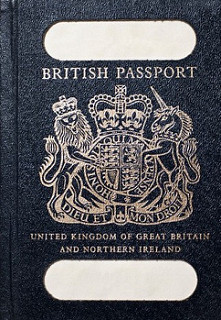
Virtually all the Arab governments announced that they would not give visas to Jews of any nationality. This was not furtive—it was public, proclaimed on the visa forms and in the tourist literature. They made it quite clear that people of the Jewish religion, no matter what their citizenship, would not be given visas or be permitted to enter any independent Arab country. Again, not a word of protest from anywhere. One can imagine the outrage if Israel had announced that it would not give visas to Muslims, still more if the United States were to do so. As directed against Jews, this ban was seen as perfectly natural and normal. In some countries it continues to this day, although in practice most Arab countries have given it up.
Neither the United Nations nor the public protested any of this in any way, so it is hardly surprising that Arab governments concluded that they had license for this sort of action and worse.
According to Lewis (in his memoirs), some Jews fudged their religious identification on visa applications. (“One ingenious lady from New York City even described herself as a ‘Seventh Avenue Adventist.'”) Others simply lied.
But most of us, even the nonreligious, found it morally impossible to make such compromises for no better reason than the pursuit of an academic career. This considerably reduced the number of places to which one could go and in which one could work…. At that time, for Jewish scholars interested in the Middle East, only three countries were open—Turkey, Iran and Israel…. It was in these three countries therefore that I arranged to spend the academic year 1949-50.
In retrospect, it is fortunate that Lewis had to make the adjustment: he became the first Western historian admitted to the Ottoman archives in Istanbul, and his pioneering work in this area opened up a vast field of study. Yet his exclusion as a Jew clearly rankled. It was something he hadn’t experienced in Britain, yet Western governments now failed to stand up for their Jewish citizens by insisting that they be accorded equal treatment. And in the 1950s, it got worse: not only did Arab states not admit Jews, they drove their own Jews into exile. This may have been the animating force behind Lewis’s 1986 book Semites and Anti-Semites, one of the first to analyze the continuing mutations of antisemitism in the Arab world.
Today, Arab states don’t ban Jews as such. They do ban Israelis. In fact, six of the seven states featured in Trump’s executive order ban entry of Israeli passport-holders: Iran, Iraq, Libya, Sudan, Syria, and Yemen. (So, too, do another ten Muslim-majority states.) Those same six states also won’t admit anyone whose non-Israeli passport includes an Israeli visa. I’m not aware that the international community regards this as a particularly egregious affront to international norms. The governments of these countries regard every Israeli, whether Jewish or Arab, or any past visitor to Israel of any nationality, as a potential security threat. That’s not irrational, since some of these governments have a record of threatening Israel through incitement, sponsorship of terrorism, and dubious weapons projects.
Trump’s limited executive order doesn’t resemble the sweeping Jewish ban that changed the career of Bernard Lewis. It’s more in line with the Israel bans implemented in the very same countries he’s named. Trump regards holders of certain nationalities as potential security threats, and has excluded them on that basis. There’s plenty of room to debate the wisdom, efficacy, and even morality of the executive order. While the United States may not be as great an exception to the rule as it sometimes claims to be, it still isn’t Sudan or Yemen. And one would hope that the United States, which has invested untold billions (or is it trillions?) in intelligence collection and vetting since 9/11, would be capable of telling friend from foe, and victim from victimizer, within nations.
But the governments of states like Iran have no cause to profess outrage. No one has practiced blanket exclusion on the basis of nationality as unremittingly, decade after decade, as they have, and they aren’t likely to give it up any time soon. It would be unfortunate if this became the norm in the world. But it wouldn’t mark much of a change in the Middle East.
 As 2016 winds down, I thought I’d share some end-of-year updates:
 Martin Kramer on the Middle East
You must be logged in to post a comment.