
It has been a century since the first nationalist murder of a Jew by a fellow Jew. On June 30, 1924, Jacob Israël de Haan left his evening synagogue prayers in Jerusalem. A man approached him and asked for the time. As De Haan reached for his pocket watch, the man shot him three times and escaped, never to be apprehended.
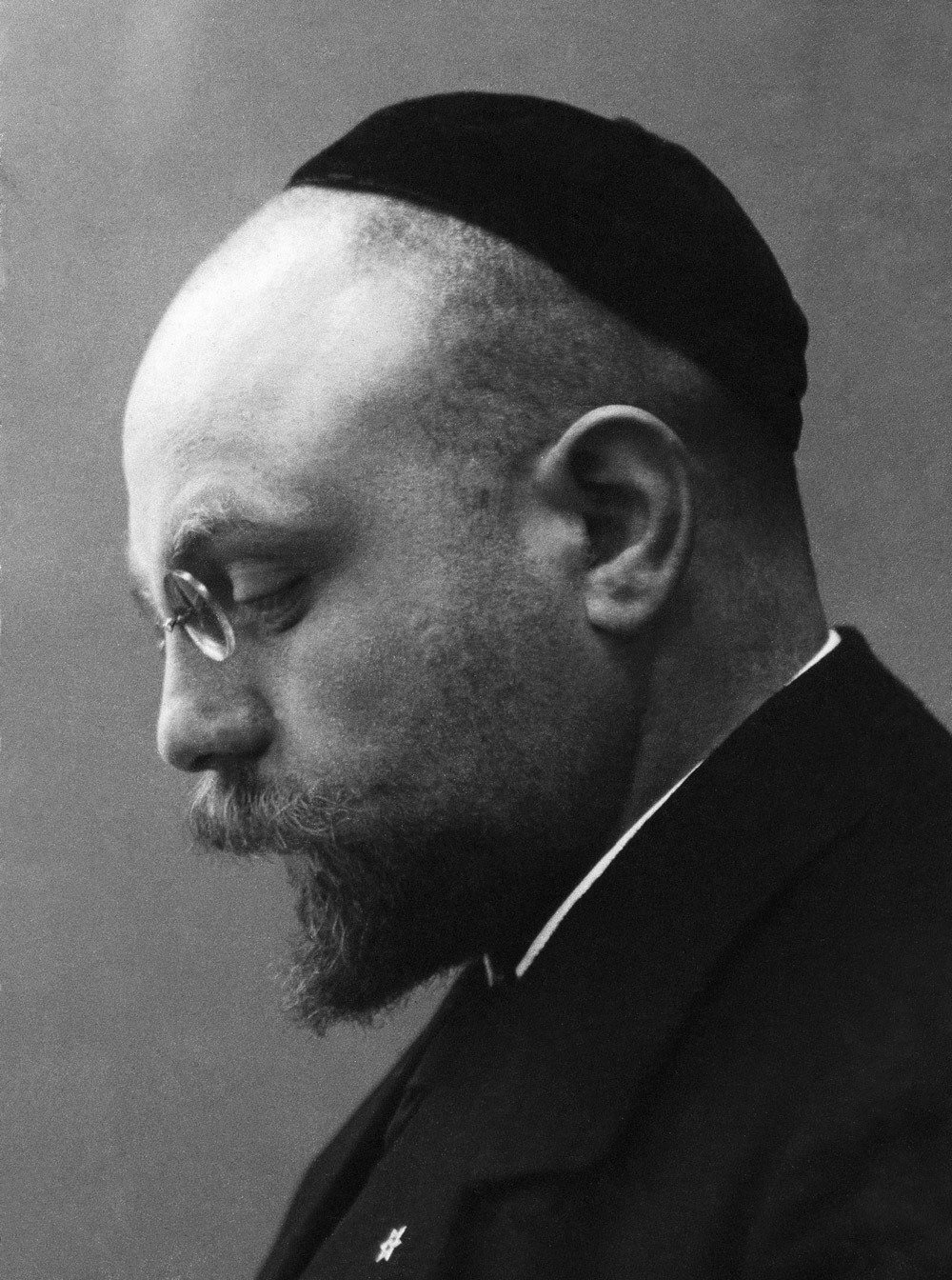
For many years, the question “Who killed De Haan?” inspired rounds of accusations and journalistic investigations. Now, a century later, the more relevant question might be, “Who was De Haan?” Sixty years after his death, his assassin, then a Haganah operative, essentially confessed to the murder. While no new revelations about the assassination have emerged since then, fascination with De Haan’s complex personality has steadily grown.
That fascination has its own century-long history. Colonel Frederick Kisch, a decorated British-Jewish officer who chaired the Zionist Executive in Jerusalem, knew De Haan well. “I have been thinking a good deal about De Haan,” he wrote in his diary the day after the assassination.
—not about his death but about his life; really an amazing human story. Formerly regarded as one of the most brilliant poets in Holland, he spent his latter days living in dirt and squalor in a single room—little more than a cell—in an Arab courtyard at Jerusalem. He passed through an intermediate stage of intense Jewish national enthusiasm, having acclaimed the Balfour Declaration in inspiring verse, and came to Palestine as an enthusiastic Zionist. His personal ambitions, his resistance to the discipline which is indispensable in any organization, and a mania which showed itself no less in his private than in his public life, turned him against the majority of his own people. Thereafter he made of religious orthodoxy a political weapon, which he wielded relentlessly against his fellow Jews.
This “amazing human story” captivates the imagination today precisely because of the elements Kisch succinctly summarized. De Haan was an acclaimed Dutch poet and writer, a European intellectual of the first order. After arriving in Palestine in 1919, he gradually shifted from secular Zionism to ultra-religious anti-Zionism. By the “mania” of his private life, Kisch referred to De Haan’s homosexuality, evidenced in both his writings and his liaisons.
De Haan briefly taught in the British-run Government Law School, and reported on Palestine for a leading Dutch daily, filing nearly 400 feuilletons. He also served as a kind of foreign minister for the ultra-Orthodox Agudat Israel community, which opposed subordination to the Zionist institutions recognized by the British Mandate. De Haan worked diligently to dissuade British colonial officials and press barons from endorsing a Zionist monopoly on Jewish life in Palestine.
He also maintained close contact with the then-leaders of Arab nationalism: Hussein of Mecca and his sons, Abdullah and Faisal. The British governor of Jerusalem recalled how De Haan’s “gold-rimmed spectacles would peer out of a white silk kufiyya as he drove across the Jordan in full Beduin costume—now become a Nordic Arab—to visit the Amir Abdullah.” While the Zionists pressed these Arab leaders to recognize a Jewish “national home” in Palestine, De Haan told them that the Jews he represented wanted only communal autonomy in a larger Arab kingdom.
It was likely anger at De Haan’s diplomacy that precipitated his assassination. The plot against him emerged from the ranks of the Haganah, the nascent self-defense force of the socialist Yishuv. Just how high up the plot reached has been the subject of endless speculation. Did Yitzhak Ben-Zvi, later Israel’s second president, order the killing? Or perhaps David Ben-Gurion? It’s unlikely that we will ever see any new evidence to answer these questions definitively.
Retrieving De Haan
The circles that cherished the memory of De Haan were once fairly limited, primarily comprising the most anti-Zionist of the ultra-Orthodox, such as Neturei Karta, for whom De Haan was a martyr. To them, his killing proved the moral debasement of secular Zionism. As one adherent put it, “our homage is to be paid to the penitent who rose from the [Zionist] idol’s feet to spit in its face and sacrificed his life to rescue the faithful from its clutches.” These faithful would annually mark the anniversary of De Haan’s death, 29th Sivan (this year, July 5), by visiting his grave on the Mount of Olives.
Then there were gay Dutch readers who found inspiration in his homoerotic novels and poetry. A sample illuminates this body of work: “I wait for what, this evening hour— / The City stalked by sleep, / Seated by the Temple Wall: / For God or the Moroccan boy?” A line from one of his poems is etched on the Homomonument in Amsterdam.

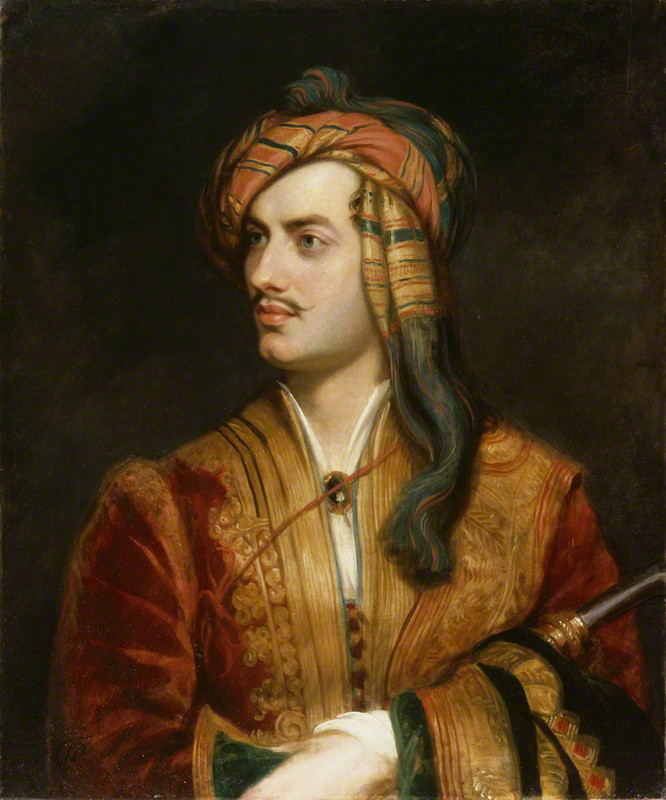
The more recent growth of interest comes not from these circles, but from left-wing anti-Zionists, including Jews, who seek Jewish precursors for their views. For them, De Haan is the bearer of a timely political message: the path to peace lies not in continued Jewish statehood, but in the abandonment of Jewish sovereignty. A photograph of De Haan in keffiyeh and agal is sometimes deployed to pique the interest of “river-to-the-sea” critics of “settler-colonialism.”
How far this retrieval of De Haan will go seems uncertain. For one thing, his diplomacy didn’t engage Palestinian Arabs, and his dispatches sometimes disparaged their character. He instead swooned to the titled rulers of the Hashemite house, the makers of the “Arab Revolt” in their palatial desert tents across the Jordan. And much of his reportage on Jewish settlement was reasonably balanced.
For these and other reasons, De Haan hasn’t yet emerged as an inspiration for “free Palestine” activists. That would require a selective reading of his oeuvre, slanted toward the last year or so of his life. But since the great bulk of his work has never been translated into English, and there is no English-language biography, more would have to be done to make him accessible to today’s anti-Israel mainstream.
An irrational act
To mark this centenary, I’ve chosen to translate not something written by De Haan, but another text by a formidable publicist almost totally lost to memory. Moshe Beilinson was a prolific writer and journalist. This Russian-born physician and socialist relocated from Italy to Palestine in 1924. He quickly became a voice of authority in the labor movement, and played an outsized role in the Histadrut’s sick fund, which later named its flagship hospital in Petah Tikvah after him. (Beilinson Hospital is now part of the Rabin Medical Center.) If Beilinson is little remembered, it’s perhaps because he died before the birth of Israel, at the age of 47 in 1937.
The Zionist press generally responded to De Haan’s assassination much like Colonel Kisch did: “I made it clear to the police that they were not justified in taking it for granted that the crime was political, since De Haan had many private enemies.” The insinuation was that he had fallen victim to an Arab honor killing. Beilinson rightly asserted otherwise, arguing that this blatantly political murder crossed every red line. Beilinson responded to the first Zionist assassination with the first Hebrew case against it. Interestingly, he didn’t make the narrow argument that Jews must not kill Jews. Instead, he insisted that assassination itself was irresponsible, ineffective, and immoral.
It’s hard to tell how his argument was received, but it’s a fact that after De Haan’s murder, the Haganah largely forswore political assassination almost to the end of the British Mandate. This distinguished it from the rival Irgun (Etzel), which De Haan’s assassin ultimately helped to found.
Published in Kontres 9 (Tammuz 16, 5684 [July 18, 1924]): 14-15. Reprinted in Do’ar Ha-Yom, July 22, 1924.
On the Murder of De Haan
The war [of 1914-18] has taught the world to devalue human life. Political murder, which was rare and only tolerated under exceptional conditions before the war, has become commonplace, especially in the countries of Eastern and Central Europe. The use of this abhorrent method has been particularly embraced in the political struggles of those defending a crumbling world, which is somewhat understandable. But for those living under conditions of political freedom, where wars of words and writings are allowed, resorting to such means not only demonstrates a criminal attitude towards the lives of others, but also exposes their weakness and inability to fight by other means.
The murder of De Haan compels everyone in the country to rethink these questions.
De Haan’s personality is irrelevant in this context. No positive movement can derive any benefit from such a death. Even if we view De Haan’s actions as extremely harmful to the Yishuv, we must add that his personality was in no way so powerful or exceptional that his absence would change the situation today. Just as before, there will be Jewish enemies of our national interests, and it is likely that even now, as before, hidden hostility will lead them to measures which will justifiably arouse the Yishuv’s anger.
Assassinations of individuals have never and nowhere led to a change in the situation. The bullets and bombs that killed Plehve and Stolypin did not bring about the Russian Revolution, nor did the deaths of Erzberger and Rathenau ease Germany’s situation. On the contrary, if the Russian Revolution is now fading due to unnecessary destruction and if Germany still has not found peace, it is also due to political murder. That said, De Haan’s murder cannot be compared to the murder of those at the helm of governments. There, the purpose of the acts is not only to get rid of individuals but also to prepare for a revolution, which is irrelevant in this case.
This act is not only irrational but also very harmful to our cause. It gives all our enemies a perfect excuse to blame our entire movement, and rightly so. Who will demand justice and fairness when they can smear and harm us? It can be predicted that this evil act will be fully used to turn Arab and English public opinion against us, amplifying the supposed “Bolshevik danger” posed by secular Jews in the Land of Israel; and to provoke opposition to us within Jewish Orthodoxy. After all the accusations and false charges leveled at us, our enemies finally have a real fact to use against us, and they will undoubtedly seize upon it. In his life, De Haan was a highly dubious figure, and even those close to his views were not always willing to defend him. In these circles, his blood will overshadow his offenses against the Jewish people. De Haan, the criminal in his actions against his people, will be overshadowed by De Haan, the victim. His dead body can cause more harm than his actions in life.
Let our movement not be stained with the blood of the innocent or the guilty; otherwise, our movement will be in dire straits. Blood always begets blood, always seeks revenge, and once you start down this path, you never know where it will lead. Irresponsibility born of excessive emotion replaces measured and rational conflict. Political murder is always linked with provocation, betrayal, espionage, slander, and suspicion. We are strong enough to let our enemies live and to look upon them with contempt if they use illegitimate means. We are not strong enough to adopt methods of warfare that could lead to moral ruin within the movement. Our movement has a clear and definite path: it is the path of labor, and only under this sign will we prevail. This does not mean that we should not defend ourselves when attacked, but our defense of our work has no connection with killing unarmed individuals.
There is another side, a purely moral one, making it the hardest to address. We, the Hebrews, were the first to establish the commandment: “Thou shalt not kill.” We, the socialists, always and everywhere demand the abolition of the death penalty. Who has the right to violate, to transgress the most sacred commandment of Judaism and civilized humanity? Who in their mind can dive into the depths of another person’s soul—even if that person is a hundred times our opponent—and find them deserving of death? The most cruel aspect of political murder is that the accused have no chance to defend themselves, making it worse than a military trial; judgment is passed without investigation and counter-evidence. They use “objective facts,” but how often are these false, and how often do they lead to the gravest errors, even in courts of law? But let’s assume De Haan was truly guilty, that he did act from impure motives. He fought us with the power of speech and writing, and we should have fought him with the power of speech and writing, exposed his schemes, and refuted his lies—we live in a land of political freedom, and our mouths are not shut. But no one has the right to take another’s life—life that is not given by man and cannot be restored once it is taken away.
Political sense, concern for the purity of our movement, and moral feeling compel us—regardless of the victim’s personality and the motives of the perpetrator—to pass a harsh verdict on the murder of De Haan.
M. Beilinson



 Martin Kramer on the Middle East
You must be logged in to post a comment.