Barry Rubin’s improbable journey

This post first appeared on the Commentary blog on February 3.
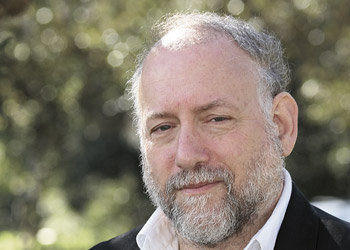
Today, February 3, marks one year since Barry Rubin, scholar and friend, lost his bout with an aggressive cancer. He was sixty-four. The many tributes published upon his passing celebrated him as a prolific and passionate advocate for his adopted country, Israel, and as a tireless scholar who generated a steady flow of writings and an astonishing array of initiatives: a think tank, several journals, and many conferences. His highly regarded expertise made him the go-to source on the Middle East for journalists, diplomats, and some Israeli public figures.

This was Barry Rubin, the finished product. Had you told me thirty-five years ago, when I first met him, that he would become not only “one of the great intellectual defenders of Israel,” but an Israeli, I would have dismissed you. Nothing would have seemed so improbable.

Barry grew up in northwest Washington to well-to-do parents who strived to assimilate. He later recalled having “no sense of my own history, coming from a family which had tried to obliterate its own past.” Barry had no Zionist upbringing whatsoever—no youth movement, no summer camp, no family trip to Israel. “When I attended one-day-a-week religious school at Washington’s premiere Reform synagogue,” he later wrote, “we were told that Jewish history began with the discovery of the New World. Hebrew was taught without any reference to the existence of the state of Israel.” (Personal experience would inspire the mature Barry to write a book-length critique of Jewish assimilation.)

Ron Radosh has noted that as a young student, Barry was “hard left—as left as they come.” Perhaps it was his youthful reaction to privilege. Barry’s father was a successful Washington property developer; his parents, Barry later wrote laconically, “changed their Thunderbirds every year or so [in the 1960s] and at some point, a few years later, would move into Mercedes.” Radosh tells of Barry’s enthusiasm for Castro’s Cuba, which he visited in 1975. (“You’ll love Cuba!”, he told Radosh. “You’ll see how Castro is building a new socialist country right in our own backyard.”) But his radicalism extended to the Middle East. He published Marxist-inflected articles in the pro-Palestinian Journal of Palestine Studies and the far-left MERIP Reports. He even turned up in Beirut in 1974, in the company of his Georgetown mentor, the Palestinian professor Hisham Sharabi, whom Barry candidly described later as “one of the teachers who most influenced me.” “It is no secret,” he wrote in a 1977 letter to COMMENTARY, “that when I was young I was a leftist and anti-Zionist.”

By the time I met Barry in 1979, this was only a few years behind him. But he had already learned “what it’s like to believe in the totalitarian Left, to be misused and disillusioned, to go through difficult internal struggles, and finally to emerge from this dark period. Many of our finest intellectuals and journalists have had similar experiences.” The newly liberated Barry Rubin was about to forge a new persona as a serious researcher.

Walter Laqueur, the historian and author, had a major influence on Barry in the late 1970s, guiding him to a deeper understanding of the perils of the totalitarian mindset and serving as his model of a contemporary historian. Laqueur had closely dissected the vile ideological excesses of 20th-century Europe, from Nazism to Stalinism. He had written widely on the Holocaust and the Cold War, and had also authored a masterly history of Zionism. Barry’s later work showed the influence of Laqueur’s research agenda, his approachable prose, and his method of scholarly entrepreneurship. “He also taught me,” wrote Barry, “that being prolific is not a sin.” In a few cases they collaborated, and one of their joint projects, Barry’s revision and expansion of Laqueur’s Israel-Arab Reader, seems on track to stay in print forever.

According to Laqueur, he tried to dissuade Barry from specializing in the Middle East. But the unsettled region excited Barry’s own restless curiosity. Had he stayed on the left, and especially had he been willing to defame Israel, he would have been assured an academic position in the United States. Many radical Jewish academics did just that, and made comfortable careers in Middle Eastern studies. But Barry had progressed, and it left him unemployable. His only interview for a teaching position “was interrupted by one professor screaming at me, ‘How could you ever possibly represent the narrative of the Palestinian people?’ To which I responded that obviously, I didn’t think I was supposed to represent it, merely teach about it…. I think the problem was my last name.” Barry later wrote this about my own indictment of Middle Eastern studies, Ivory Towers on Sand: “When I first read it, I joked to Martin that it was my life story.”

Still, when Barry moved to Israel, in the early 1990s, I was surprised. It wasn’t as though Israel beckoned to him with open arms. Ironically, in Israel, too, Barry’s prospects of finding an academic position were slim: he hadn’t come up through the Israeli system, so he didn’t have a patron. For some years, he moved around Israeli academe in adjunct or research positions, and he did a long stretch at the Begin-Sadat Center (BESA) at Bar-Ilan University. It is to the credit of the Interdisciplinary Center (IDC) in Herzliya that it ultimately offered him a proper academic appointment.

Barry became best known not for his academic titles, but for his many book titles. The number of these books that appeared under the imprint of first-tier university presses exceeded the production of just about any Israeli academic. Oxford University Press published four of his books: Paved with Good Intentions: The American Experience and Iran; Secrets of State: The State Department and the Struggle over U.S. Foreign Policy; Hating America; and Yasir Arafat: A Political Biography. Harvard University Press published two: Revolution Until Victory? The Politics and History of the PLO and The Transformation of Palestinian Politics: From Revolution to State-building. Yale University Press published two: Israel: An Introduction and, most recently, Nazis, Islamists, and the Making of the Modern Middle East. Syracuse University Press issued The Arab States and the Palestine Conflict, and Cambridge University Press published The Tragedy of the Middle East. When Barry wrote in a more journalistic style, he placed those books with commercial presses. My personal favorite is his Istanbul Intrigues, a historical study set in the Second World War that reads like a thriller.

At a memorial event for Barry held in Washington, Judith Colp Rubin—his devoted wife and occasional co-author—said that Barry would sometimes wonder aloud whether anyone was reading his books. I’m sure he carefully monitored the sales of all his books, and it’s sad to think that they disappointed him. But as a rule, books on the Middle East don’t find large audiences, unless publication neatly coincides with a crisis to which a book is immediately relevant. The closest Barry came was his 1980 book on Iran, Paved with Good Intentions (also the only book by him that I ever reviewed), which appeared in the midst of the Iran hostage crisis. It was widely and favorably reviewed (most prominently by Daniel Pipes in the New York Times Book Review), and it remains his most-cited work (so says Google Scholar).

But Barry was usually too prescient to get the timing right: his books often appeared before they became relevant. So it was with his study of Arab liberals, The Long War for Freedom: The Arab Struggle for Democracy in the Middle East, which preceded the “Arab Spring” by five years. No book came closer to predicting the explosions that eventually rocked the region. “If a large group in the Arab world,” Barry wrote, “whether a majority or sizeable minority, will someday speak and struggle for democracy, the views then expressed could confound all the public statements made in the last half-century about what people in Arab societies think.” Another book, The Truth About Syria, preceded the country’s breakup by three years. “With its mix of competing religious and ethnic groups,” Barry wrote in that book’s short description, “[Syria] is a 72,000-square-mile time bomb waiting to go off.” Contrary to other expert expectations, it did. Barry reached a broader audience through his journalism and blogging, and especially his long-running column in the Jerusalem Post. But he saw his fifteen books as his greater legacy, and one of his last projects was to make all but the newest pair freely available on the web. For students and younger scholars looking for a model of meticulous analysis combined with passionate prose, Barry Rubin’s virtual shelf is an excellent place to start. (It is maintained by the institute he founded, and which is soon to bear his name.)

Barry regarded his Tragedy of the Middle East as the book that best encapsulated his own view of the region. For Barry, the “tragedy” wasn’t simply the massive dysfunction of the region’s politics, but the compounding denial or deflection of blame, which made change nigh impossible. He came to his conclusions not by extensive travel (he traveled little in the Middle East, with the exception of Turkey), or by exhaustive reading (although he was very well read). Barry was informed by a vast network of Middle Easterners who knew they could share their opinions with him in total confidence. “Every single point you will read in this book,” he wrote in The Tragedy of the Middle East,

has been made a multitude of a thousand times in private conversation by Arabs of every description and location throughout the Middle East. Yet this hidden mountain of truth is invisible in public and ineffective in shaping the life of the nation.

“What you see is only a small portion of what goes on behind the scenes,” he insisted. Barry relied instead on his

contacts with people all over the region, sometimes people whose lives would be in danger if it were known they were talking to me…. As an Israeli, I often find it’s much easier to talk with Turks, Iranians and Arabs because we are on the same page—especially in private—about understanding the reality of the region compared to the fantasies often held in Western academic, media and governmental circles.

For Barry, the regimes of the Middle East were so many Cubas, deceptively concealing oppression behind a facade of revolution, and seducing gullible Westerners with lies. Why could others not see the “hidden mountain of truth” that seemed so obvious to him? They subscribed to those same radical shibboleths he himself had abandoned. The worst offenders were the denizens of Middle Eastern studies. “I cannot think of a single book of value on any subject regarding the Middle East produced by these hundreds of tenured radicals,” Barry once opined. It is a harsh verdict, to be sure, but it has the ring of truth.

Over the last decade, Barry reacquainted himself with America. Much of what he saw disturbed him. During a sabbatical stretch spent in the Washington area with Judy and the children, he saw how the educational curriculum had been emptied of any pride in America’s great achievements. To Barry’s mind, Barack Obama personified this abandonment of the American ethos, and in his posthumously published jeremiad against the left, Silent Revolution: How the Left Rose to Political Power and Cultural Dominance, he staked out his position clearly.

Yet he took heart from everyday Americans, such as the Civil War reenactors whose ranks he enthusiastically joined (on the Union side). Barry would go off almost annually to live for several days in tents with these history buffs—small contractors, office and construction workers, mechanics—and there he rediscovered the spirit of America that he so admired. They must have wondered at this eccentric man, and no more so than when Israel’s then-ambassador, Michael Oren, visited Gettysburg with an entourage for the 150th anniversary of the battle, and suddenly recognized and embraced a grizzled Union soldier. It was Barry in authentic uniform and kit, attending his very last reenactment.

Barry’s personal friendship, once given, was generous and enduring, and his love for Israel was unconditional. Born and raised in a cynical city at a troubled time, he embarked on a quest for a cause worthy of his fierce loyalty, and for people who would love him for who and what he was. After much trial and error, he found his place amidst his ancestral people, his true friends, and his adoring family. “I think it is likely that I will never leave Israel again,” he wrote to me during his illness, “but then with a country we love so much that’s not so bad. I am glad to have participated with you and so many others in trying to restore and preserve our nation, the miracle that we have made and has been given to us—with all of its flaws—after so many centuries of yearning.” Barry Rubin’s own improbable journey home was one of the more amazing small miracles of which Israel is the sum.

Shabtai Teveth and the whole truth

This post first appeared on the Commentary blog on January 20.

Longtime readers of COMMENTARY might remember Shabtai Teveth, prolific author and the authorized biographer of David Ben-Gurion. Teveth passed away on November 1 at the age of eighty-nine. He had gone silent twelve years earlier, following a debilitating stroke. It was on the pages of COMMENTARY, in 1989, that he launched one of the most thorough broadsides on Israel’s “new historians.” It repays reading now (as does Hillel Halkin’s COMMENTARY review of Teveth’s Ben-Gurion and the Holocaust). It’s also a reminder of how desperately Israel still needs truth-tellers like Teveth, who knew the flaws of Israel’s founders perfectly well, but never let that overshadow the nobility of their cause.

By the time I met Teveth, in the early 1980s, he was already renowned for his journalistic achievements at Haaretz, but also for his best-selling books, most famously his up-close account of the heroic armored battles of the June 1967 Six-Day War. (It appeared in English under the title The Tanks of Tammuz.) Approaching sixty years of age, he had set aside journalism in order to devote himself to a monumental biography of David Ben-Gurion, a project he had commenced some years earlier, when the Old Man was still alive and willing to talk.

I was new in Israel, and the native-born Teveth became a friend and my guide to the intricacies of the country’s history, politics, and journalism. In return, I helped him to prepare an English edition of a spin-off of his biographical project: a book eventually entitled Ben-Gurion and the Palestinian Arabs, published by Oxford in 1985. In that work, Teveth argued that Ben-Gurion perfectly understood Arab opposition to Zionism, but also recognized the danger of acknowledging its depth. So B-G conducted a carefully calibrated policy that held out the hope of a peaceful settlement, even while preparing for confrontation. The book covered the 1920s and 1930s, but Ben-Gurion would implement the same approach right up to 1948.

Work on the book became a kind of tutorial course on the history of Israel, taught to me by Teveth. In turn, I taught him some of the odder subtleties of English. For years afterwards, he would call me at some ungodly hour of the morning, to ask how he might best render this or that Hebrew phrase into polished English without sacrificing even an iota of its original meaning.

Teveth wrote like a journalist up against a deadline. He would rise very early, go for a swim, head for his office (he didn’t work at home, but kept a separate apartment filled to the brim with his research materials), and then would bang out a few thousand words on his typewriter before lunch. I don’t think he ever had a day of writer’s block. Over the years, we developed a regular routine. Perhaps once a month, we would meet for lunch in a restaurant somewhere in north Tel Aviv where he kept his office. By lunchtime, Sabi (as his family and friends called him) had finished a full day’s work, and he was primed for competitive conversation, usually smoothed by a glass of Scotch, for which he had a refined taste. I couldn’t return all of his volleys, and the only real match he had in conversation was the late Zvi Yavetz, the historian of ancient Rome and a master raconteur in his own right. When Sabi and Zvi got rolling, showering the table with sparks of erudition and wit, the spectacle inspired awe and envy.

I once asked Sabi why he had set journalism aside, since his Haaretz columns had landed on the breakfast tables of the most influential people in Israel. His many books, prior to the Ben-Gurion project, had been contemporary reportage of the highest order, attracting large numbers of readers. (These included a biography of Moshe Dayan, a book on the first years of Israel’s post-1967 policies in the West Bank, and an exploration of poverty in Israel.) Sabi answered that he didn’t want to spend an entire lifetime breathing heavily over the doings of politicians.

The older I grow, the more I appreciate that decision to move from punditry to history. Teveth came to recognize the ephemeral nature of most journalism. He believed he was fortunate to have witnessed the last chapter in the founding of Israel (as a young soldier in the Palmah and then as an army journalist), and that this was a story that would be told again and again by future generations, each time from a point still more remote from the events. If he wrote that history now, meticulously and honestly, that telling would last beyond him.

The Ben-Gurion project, which ultimately reached four volumes (3,000 pages) in Hebrew, belongs to the genre of the big-canvas biography, of the sort exemplified by Robert Caro’s study of Lyndon Johnson or Martin Gilbert’s official biography of Winston Churchill. Indeed, it was Teveth’s finest hour in 1987 when the 967-page English version of the B-G biography (pre-1948) received a glowing review from Gilbert on the front page of the New York Times Book Review, accompanied by a photograph as well as a short profile of Teveth (written by Tom Friedman). This was before the internet, and I remember rushing over to Sabi’s home to see the review section, urgently dispatched by his New York publisher.

The Friedman profile includes an odd quote. “Israel has been going through a difficult period during these last thirteen years,” Teveth told Friedman. “But all this time I feel as though I have been working in a bunker full of light and hope. In my bunker the Jewish state is yet to be born. The Jewish people have a strong leader and the world is huge.” I personally never heard Sabi talk of his historical work as a nostalgic retreat from contemporary Israel. He regretted the diminished quality of Israel’s leaders, but this only fortified his determination to remind Israelis of a moment in living memory when they had a leader equal to world history at its most demanding.

There had been a leader who might have risen to that stature: Moshe Dayan, Ben-Gurion’s favorite, who seemed poised to succeed the Old Man as the very personification of Israeli grit. Teveth had written a biography of him—admiring but not reverential—that appeared in 1971, while Dayan still basked in the glow of the Six-Day War. Dayan’s prospects were dashed by the Yom Kippur War in 1973, when suddenly he became the clay-footed personification of Israeli hubris. Teveth nevertheless remained loyal to Dayan, and it was he who mediated between Dayan’s longtime admirers and Tel Aviv University, to bring forth the Moshe Dayan Center for Middle Eastern and African Studies.

The monumental biography of Ben-Gurion secured for Teveth the National Jewish Book Award in 1987 and the Israel Prize, Israel’s highest civilian honor, in 2005. But the project remained unfinished, in part because every few years he would suspend it to write a spin-off. He wrote a book on the 1933 murder of Chaim Arlosorov. (Its conclusions so enraged the then-prime minister Menachem Begin that he appointed an official commission of inquiry to refute it.) He wrote another book on Ben-Gurion’s response to the Holocaust, and still another on the 1954 Lavon Affair (both also appeared in English). And there was that book on Ben-Gurion and the Palestinian Arabs. These digressions, while important works in their own right, took time from the biography, and when Teveth suffered his stroke, he hadn’t yet gotten to the year for which Ben-Gurion’s life had been a preparation: 1948.

We are fortunate, then, that one of those digressions took the form of a direct confrontation with the so-called “new historians.” Avi Shlaim, one of Teveth’s targets, later called him “the most strident and vitriolic” critic of the self-declared iconoclasts who set about smashing the conventional Israeli narrative with reckless abandon. In the spring of 1989, Teveth fired off a barrage of full-page critiques in three consecutive weekend editions of Haaretz. (These pieces formed the nucleus of his later COMMENTARY article.) Teveth pummeled the “new historians” (Shlaim and Benny Morris), whose indictments of Israel’s conduct in 1948 he described as a “farrago of distortions, omissions, tendentious readings, and outright falsifications.” I recall waking up early each Friday morning and rushing down to my doorstep to grab the newspaper and flip to that week’s installment.

A year later, he published a 35-page review of Benny Morris’s Birth of the Palestinian Refugee Problem, pursuing error and bias into the most remote footnotes. This was Teveth at his forensic best: he had read the same documents in the same archives, and he showed that they did not always say what Morris claimed they said. “Morris’s work was received with great expectations,” Teveth concluded. “On examination, however, these have been disappointed. This problem [of how the Palestinian Arabs became refugees], therefore, will have to wait still further for a more comprehensive and honest study, that would be worthy of the great human and national tragedy it represents.”

The “new historians” retaliated by trying to label Teveth as “old.” True, he was a generation older than them, but the “old”-naming could reach absurd proportions. For example, Shlaim once described him, repeatedly, as a “member of the Mapai old guard.” Nonsense: Teveth was famously associated with Mapai’s young guard, and indeed built his journalistic reputation as a muckraker by attacking Mapai’s veteran party stalwarts.

Teveth concluded his COMMENTARY article by dismissing the “new historians,” since “history, thank goodness, is made of sterner and more intractable stuff than even their wholesale efforts of free interpretation can dissimulate.” This proved to be overly optimistic. Demolishing Israel’s “myths” and creating new ones turned into a popular pastime for younger academics and activists. Benny Morris’s book on the Palestinian refugee problem has become the most-read and most-cited book on the 1948 war. One hardly need wonder what Teveth would say about the latest iteration of “free interpretation” (pioneered by Morris in the revised edition of his book), accusing Israel of various massacres that somehow escaped notice until just now. Nothing good, I imagine.

I wish I could announce that Teveth’s legacy will be ever-enduring, but a younger generation of readers will have to discover him first, and that hasn’t happened yet. He wrote mostly in the era before the internet, so his most important writings aren’t accessible at a click. He disappeared from the scene years before he died, so the obituaries were few and perfunctory. And he wrote big books that almost no one has read cover-to-cover. Teveth not only told truths about Israel, he told whole truths, and that required a minute retrieval and examination of all the evidence. There were reviewers who complained that Teveth left his readers “drowning in a sea of detail,” and that “intimate descriptions of daily doings” caused them to lose the “overall thread.”

Teveth was familiar with the criticism, and he rejected it. At one point, he had recited the list of groceries Ben-Gurion purchased while in London in November 1938. “Trivial,” he acknowledged, “yet how well this information helps the biographer in describing the loneliness of Ben-Gurion, who ate in his hotel room and there listened to the radio speeches by Hitler and Chamberlain, speeches that decided the fate of the world and the fate of both Europe’s Jews and Zionism.” Such level of detail assures that while the general reader may not persevere, every future biographer of Ben-Gurion will keep those four volumes on his or her desk. Perhaps that was Teveth’s aim all along.

I’ve missed Sabi very much these last twelve years, and suspect I’ll miss him still more with the passage of time. This is not only because he was my friend, but because I see no one who combines his mix of passion, energy, and encyclopedic knowledge in the pursuit of every recoverable fragment of evidence needed to establish the truth. My condolences to Ora, his wife, who sustained him through all the years of his disability and saw the last volume of the Ben-Gurion biography through to publication, and to their children and grandchildren, in whom Sabi took so much pride.

Shabtai Teveth (right) with David Ben-Gurion

Fouad Ajami’s discovery of Israel

This article first appeared at Mosaic Magazine on January 8, 2015, under the title “Fouad Ajami Goes to Israel.”

“In a curious way, my exposure to Israel was essential to my coming to terms with Arab political life and its material.”

—Fouad Ajami

The scholar and public intellectual Fouad Ajami, who was born in Lebanon and died last summer in Maine at the age of sixty-eight, specialized in explaining to Westerners the complex and traumatic encounter of the Arab peoples with modernity.  He didn’t write much about Israel per se, or claim any unique insights into its complexities. And yet, at a certain point in his life, he decided he would discover Israel for himself—not only by reading and meeting Israelis abroad, but by visiting the place.

As it happens, I witnessed several of the stages of this discovery, first as his student and later as his friend. Here I want to mark those stages, and then offer some observations on the crucial insight I believe he derived from his quest.

I start with a passage written in 1991:

At night, a searchlight from the Jewish village of Metullah could be seen from the high ridge on which my [own] village lay. The searchlight was a subject of childhood fascination. The searchlight was from the land of the Jews, my grandfather said . . . . In the open, barren country, by the border, that land of the Jews could be seen and the chatter of its people heard across the barbed wire.

Fouad’s native village, Arnoun in southern Lebanon, stands less than five miles from Metullah, the northernmost point in Israel. The story of his discovery of Israel surely begins with this searchlight, beaming and beckoning across an impenetrable border. From childhood, he would later recall, “I retained within me an unrelenting sense of curiosity” about the Jewish state.

But the actual discovery began only much later, after Fouad passed through Beirut and came to America. Exactly 40 years ago, in the fall of 1974, I was a Princeton University senior in Fouad’s class, Politics 320, “Modernization in the Middle East and North Africa.” I was twenty, with two years of study in Israel under my belt; Fouad, recently arrived as an assistant professor of politics, was twenty-nine. Richard Falk, who taught international law at Princeton and would later become notorious as an anti-Israel agitator, played some role in bringing him onto the faculty; he has remembered Fouad as one who “shared a critical outlook on the follies of the American imperial role and felt a deep sympathy for the Palestinian struggles for their place in the sun.” Falk also claims that he introduced Fouad to Edward Said, with whom there was a “rapid bonding.”

Although I place little faith in Richard Falk’s word on anything, I imagine this to be true. Still, I have no personal recollection, from the fall of 1974, of Fouad as a firebrand. In that class there was an Israeli freshman, a twenty-four-year-old artillery captain who had distinguished himself in the October 1973 war and who was the first Israeli officer to go abroad on undergraduate study leave. He later rose to the rank of brigadier general. I can’t be absolutely certain, but he may have been the first Israeli whom Fouad ever encountered.

This young Israeli came right out of central casting—a confident soldier-scholar, not only a sabra but a graduate of Phillips Exeter, the elite New Hampshire boarding school. My vague recollection is that Fouad was fascinated by him, and the class often turned into a back-and-forth between the two of them. When this Israeli was profiled in Princeton’s alumni weekly, he said of Fouad that “we get along well. Relationships at Princeton are very intellectual.” That same semester, incidentally, some of my Jewish classmates decided to invite Fouad to dinner at the kosher dining facility on campus. I’m sure it was his earliest kosher culinary experience—the first (and quite possibly the worst) of many to come.

After my graduation and a year in New York, I returned to Princeton as a graduate student in 1976. Fouad was still there. He had become a star lecturer, with a huge course in international politics enrolling more than 300 students. In those years, he still wore his Palestinian sympathies on his sleeve. Many will have seen a Youtube clip from 1978 of an exchange between one Ben Nitay, a twenty-nine-year-old economic consultant known today as Benjamin Netanyahu, and a thirty-three-year-old Fouad in a jet-black beard. In this encounter, which took place a scant two years after the IDF’s dramatic rescue of Jewish hostages held by Palestinian  terrorists at Entebbe (an operation in which Jonathan Netanyahu lost his life), Fouad is very much the angry Arab, peppering an unflappable Bibi with aggressive questions about Israel’s policies toward the Palestinians.

In the archives of the Daily Princetonian, I find an April 1979 report under this headline: “Politics Professor Informs Precept of PLO Invitation to Visit Lebanon.” According to a student cited in the report, Ajami “told us that Yasir Arafat had invited him and six students to come visit him.” According to another student, Ajami “said jokingly the reason he had received the invitation was because he had spoken out for the PLO in the past, and they hoped he would do so again.”

That Fouad might have thought to visit Beirut, where he himself grew to manhood, on an invitation from the PLO, speaks of another time and a different Fouad. It’s usually said that he broke with the Palestinians over the PLO’s abuse of the Shiites of his native Lebanon, especially in the lead-up to Israel’s 1982 invasion. But the shift was probably expedited by his move from Princeton to the School of Advanced International Studies at Johns Hopkins, and his engagement with the New Republic, especially its owner Martin Peretz and its literary editor Leon Wieseltier, and subsequently with Mortimer Zuckerman, publisher of the Atlantic and U.S. News & World Report.

Among American Jews, Fouad found the kind of free-wheeling, serious intellectual camaraderie that the Arab-American community, then and now, simply couldn’t sustain. Israel would not have been the cause of his being drawn into this world, but there he would have been challenged to test his second-hand notions of Israel against the reality.

And so he did test them. Fouad paid his first visit in 1980, crossing from Jordan over the Allenby Bridge. “It would have been too brave, too forthright to fly into Israel,” he later wrote. “I covered up my first passage by pretending that I had come to the West Bank. . . . Venturing there (even with an American passport) still had the feel of something illicit about it.”

From then on, he began to pay fairly regular visits, and to fly directly. Because I’d been his student, and we could pick each other out in a crowd, I volunteered for the pleasant task of meeting him when he landed at Ben-Gurion airport. Although an American citizen, he had been born in an enemy country, and his Israeli friends wanted to spare him any indignity or delay at the airport. So I would greet him before he entered passport control. Then we would take a seat while border officials scrutinized his papers. Once he’d been cleared, we would claim his bags, and I’d drive him to his hotel. By the end of this ritual, we’d have caught each other up on our news, and I would know what he was hoping to do on this trip.

Here is Fouad’s 1991 description of these visits:

I knew a good many of the country’s academics and journalists. I had met them in America, and they were eager to tutor me about their country. Gradually the country opened to me. I didn’t know Hebrew; there was only so much of Israeli life that was accessible to me. But the culture of its universities, the intensity of its intellectual debates would soon strip me of the nervousness with which I had initially approached the place. The Palestinian story was not mine. I could thus see Israel on its own terms. I was free to take in the world that the Zionist project had brought forth. Above all, I think I had wanted to understand and interpret Arab society without the great alibi that Israel had become for every Arab failing under the sun. In a curious way, my exposure to Israel was essential to my coming to terms with Arab political life and its material.

The visits were personal, and Fouad usually came alone. He didn’t participate in conferences, deliver lectures, or grant interviews. He did want to meet public figures; my colleague Itamar Rabinovich arranged most of those meetings. I have a clear memory of a Sabbath lunch hosted by Itamar at his apartment so that Fouad could meet Yitzhak Rabin, then out of government; I’m sure Itamar made many more such introductions. On another occasion, in the mid-1990s, I went through a former student to set up a meeting for Fouad with Benjamin Netanyahu, then in his first term as prime minister.

I never heard Fouad boast of these meetings, and of course we would never spread word of them. He wasn’t collecting trophies. He wanted to learn what made the country’s leaders tick. But he valued no less highly his meetings with intellectuals. He felt an especially deep affinity with the political analyst Meron Benvenisti, a former deputy mayor of Jerusalem and vocal advocate of binationalism, whose almost tragic complexity fascinated him.

On weekends, he was sometimes free. I remember Fouad coming to my home for a Sabbath lunch, and a walk we took to a nearby moshav, a kind of collective farm. He loved the rustic houses, the idling tractors, the scent of freshly turned earth, the dogs lazing in the road—all reminded him powerfully of his native village, and he shared some stories of a distant childhood. On the way back we entered a military cemetery, and I read him some of the tombstones, explaining how each war came to have its official name. He was thoughtfully silent.

Back in America, Fouad generally steered clear of appearances before the bevy of organizations that support Israel. He had made an exception in 1992, when he allowed friends to “draft” him (his word) to speak at a New York fundraiser for the Jerusalem Foundation, alongside Dan Rather and Henry Kissinger. The Arabic press was all over him, and friends learned not to ask this sort of favor again. But two years ago, when the American Friends of Tel Aviv University put on a gala dinner in New York to honor his and my mentor Bernard Lewis, Fouad did speak, with humor and emotion. For Bernard, Fouad would do anything—another large story. But he also nodded toward Tel Aviv University, and his statement of friendship is very much worth having in these days of academic-boycott resolutions by bigoted people whose knowledge of Israel and Israeli universities is as nothing compared with his.

Fouad also welcomed publication of his books in Hebrew. Four appeared, in a curious order. First was The Vanished Imam, on the political awakening of Lebanon’s Shiites, rushed to translation in 1988 when Israel was facing a Shiite insurgency in Lebanon’s south. Then came The Dream Palace of the Arabs; only after that, its predecessor The Arab Predicament, a full two decades after its original publication; and finally, in 2012, The Syrian Rebellion.

What did Fouad take away from his forays of discovery? Much of what’s said on this subject misses the point—a failure exemplified by the absurd claim, made in an old hit piece in the Nation, that he “became an ardent Zionist” and even underwent a “Likudnik conversion.” Far from it.  Fouad was one of those—and I would include among them the late, great Jewish scholar Elie Kedourie—who began as naysayers but reconciled themselves to Israel because it had become, in Kedourie’s words, a “going concern.” Or, as Fouad put it, “the state that had fought its way into the world in 1948 is there to stay.” Fouad wasn’t an “ardent Zionist”—and believe me, I know us when I see us. He was a hard-bitten realist who believed that the dreamy denial of Israel’s permanence was crippling the Arabs.

Fouad accused Arab elites, and especially Arab intellectuals, of failing in their most critical responsibility: to grasp the power of Zionism and later Israel, and so pursue an urgent accommodation with the new reality. Instead they had done the opposite, feeding Palestinian refugees and Arab publics with the cruel illusion that history could be undone.

Again and again, Fouad would return to the phrases “history’s verdict” and “harsh truths.” “It would have been the humane thing,” he wrote, “to tell the [Palestinian] refugees that huge historical verdicts are never overturned. But it was safer to offer a steady diet of evasion and escapism.” And this: “Ever since the Palestinians had taken to the road after 1948, that population had never been given the gift of political truth. Zionism had built a whole, new world west of the Jordan River, but Palestinian nationalism had insisted that all this could be undone.” And this: “Arafat refrained from telling the Palestinians the harsh truths they needed to hear about the urgency of practicality and compromise. . . . He peddled the dream that history’s verdict could be overturned, that the ‘right of return’ was theirs.” In short, Arab rejection of Israel had been predicated either on willful ignorance or a lie.

Fouad taught himself more about Israel than any Arab intellectual of his generation. He knew its flaws and faults, but he also understood its virtues and strengths. “On a barren, small piece of land,” he wrote,

the Zionists built a durable state. It was military but not militaristic. It took in waves of refugees and refashioned them into citizens. It had room for faith but remained a secular enterprise. Under conditions of a long siege, it maintained a deep and abiding democratic ethos. The Arabs could have learned from this experiment, but they drew back in horror.

“The Arabs could have learned from this experiment”— in that sentence, Fouad suggested the ultimate purpose of his quest. It wasn’t to ingratiate himself with the American Jewish establishment, as his critics charged. It was to break down the wall the Arabs thought they had erected around Israel, but in truth had erected around themselves.

By a circuitous route, Fouad traced that beam of light he first glimpsed shining across the night sky from the far northern edge of Israel back to its very source. Yes, he told truths about the Arabs to America. But perhaps his greater legacy will prove to be the truths he told about Israel to the Arabs.

A somewhat different version of this essay was delivered as an address at a memorial to Fouad Ajami at the Johns Hopkins School of Advanced International Studies on November 12, 2014. 

Fouad Ajami and Itamar Rabinovich

Photo: Ajami (left) and Israeli academic and diplomat Itamar Rabinovich at a New York event in honor of Bernard Lewis, sponsored by the American Friends of Tel Aviv University, September 12, 2012.