New York Times: soft spot for Rashid Khalidi?

This post first appeared on the Commentary blog on February 27.

There’s a brouhaha at Ramaz, the private Orthodox Jewish high school on the Upper East Side, around Rashid Khalidi, the Edward Said professor at Columbia and promoter of the Palestinian hard line. Some students invited him to speak, but the head of the school didn’t like the idea and disinvited him. Khalidi has said nothing, but he doesn’t have to. He only benefits from these episodes, and it’s not the first time. In 2005, he was dropped from a New York City teacher ed program, with the same predictable result of turning him into a free speech martyr. This tableau seems destined to be repeated over and over again.

I’m not an officer, donor, trustee, student, teacher, or parent stakeholder at Ramaz, so I don’t care how many pretzels they have to twist over Rashid Khalidi. But I do care how the New York Times reported one aspect of the story this morning: “Critics have accused the professor of having had ties to the Palestine Liberation Organization, which he has denied.” The reference here is to the activities of Khalidi when he resided in Beirut in the 1970s and up until Israel’s 1982 invasion. In those days, the PLO ran an exterritorial gangland, and was neck-deep in terrorism planned by Arafat and his mob.

Note this phrase: “Critics have accused…” Today’s article thus repeats a trope that appeared back in 2008, when the Times ran a piece on Khalidi prompted by his past association with Barack Obama:

He taught at universities in Lebanon until the mid-’80s, and some critics accuse him of having been a spokesman for the Palestine Liberation Organization. Mr. Khalidi has denied working for the group, and says he was consulted as an expert by reporters seeking to understand it.

Again, it’s the “critics” who “accuse him.”

Well, I’m a critic, but we critics didn’t just imagine Khalidi’s PLO affiliation. We were alerted to it by a parade of highly regarded journalists, including two from the New York Times. So here are the “critics” who first leveled the “accusation” (still more sourcing here):

  • Joe Alex Morris Jr., reporting from Beirut for the Los Angeles Times on September 5, 1976, quoted Khalidi and described him as “a PLO spokesman.”
  • James M. Markham, reporting from Beirut in the New York Times on February 19, 1978, quoted Khalidi and described him as “an American-educated Palestinian who teaches political science at the American University of Beirut and also works for the P.L.O.”
  • A Pacifica Radio documentary, reporting in 1979 from Beirut, interviewed Khalidi “at the headquarters of the PLO in Beirut,” and described him as “an official spokesperson for the Palestinian news service Wafa,” “PLO spokesperson,” “official spokesperson for the PLO,” and “the leading spokesperson for the PLO news agency, Wafa.”
  • Thomas Friedman, reporting from Beirut in the New York Times on June 9, 1982, quoted Khalidi and described him as “a director of the Palestinian press agency, Wafa.”
  • Doyle McManus, reporting on rumored American-PLO contacts in the Los Angeles Times on February 20, 1984, quoted Khalidi and described him as “a former PLO official.”
  • James Rainey, reporting on Khalidi’s connection to Obama for the Los Angeles Times on October 30, 2008, described him as “a renowned scholar on the Palestinians who in the 1970s had acted as a spokesman for Yasser Arafat’s Palestine Liberation Organization.” (As I noted at the time, the Los Angeles Times thus honorably stood by the 1976 reportage of its legendary, long-dead Beirut correspondent, Joe Alex Morris Jr.)
  • Thomas W. Lippman, for thirty years a diplomatic, national security, and Middle East correspondent for the Washington Post, in a letter published in that paper on November 1, 2008, wrote that “Khalidi was indeed ‘a PLO spokesman.’ In the early years of the Lebanese civil war, Mr. Khalidi was the Beirut-based spokesman for the Palestine Liberation Organization, and his office was a stop on the daily rounds of journalists covering that conflict. As we used to say in the pre-electronic newspaper business: Check the clips.”

None of these people were or are “critics” of Rashid Khalidi, and two of them were reporting for the New York Times itself. So why does the Times repeatedly inform us that it is only Khalidi’s “critics” who have “accused” him, when in fact a raft of esteemed journalists who interviewed him in Beirut identified him as a PLO spokesman, as a fact? This is not another he-said she-said (or Jew-says Arab-says) question. As Thomas Lippman said: Check the clips.

This is another opportunity to urge the New York Times to get off its derriere and get to the bottom of the Khalidi story. It is unthinkable that a Brooklyn-born, Yale-educated U.S. citizen operated in PLO headquarters in Beirut in the late 1970s, and wasn’t known to the personnel of the U.S. embassy and the CIA station. That was over thirty years ago, so some documents must have been declassified. Can we get some investigative reporting here? Instead all we’ve ever read about Khalidi in the Times is the puff piece. How boring.

Beware an alliance of the weak

This article first appeared at Mosaic Magazine on January 20, as part of a discussion of Israeli strategy.

Ofir Haivry has given a historically well-versed account of the evolution of Zionist and Israeli grand strategy, from Herzl to the present. He also makes a trenchant case that Israel has strayed from the “activist” precedent set by David Ben-Gurion in the early years of the state.

There was always something romantic about the “activist” doings of Israel—forging ties as far afield as Ethiopia and Iran, dabbling in the secessionist causes of the Kurds of Iraq and the blacks of southern Sudan. And, of course, there was the longest and most cherished play of all: the cultivation of ties with the Maronites of Lebanon. Ah, that view from the heights above Beirut. . . .

But as romantic as it all may seem in retrospect, this “activism” failed to achieve its primary end, which was to keep Arab states so preoccupied with other problems that they would avoid war with Israel. In each decade, Israel ended up fighting wars with Arab states: 1948, 1956, 1967, 1973. Each war had its own dynamic, but together they combined to create the firm impression in the world that the Arab-Israeli conflict was indeed the “Middle East conflict,” the source of all the region’s problems. Israel’s support for the southern Sudanese and Ethiopia didn’t restrain Egypt, its support for the Kurds didn’t deter Iraq, and its backing of the Maronites didn’t stop the PLO from carving out a mini-state in Lebanon. Relationships with Turkey and Iran did nothing to cause Arab states to think twice.

The problem was that Israel’s would-be friends among the region’s minorities were too weak, which was precisely why they sought Israeli support in the first place. Israel’s sub rosa allies, the monarchies of Ethiopia and Iran, were also weak at their cores, and both would be toppled by revolutions, in 1974 and 1979 respectively. Attempts to rekindle these ties never translated into meaningful strategic gains, and one of them, Israel’s mediation in the Iran-Contra affair, totally backfired.

The only way to break the cycle of wars with the Arabs was to get Egypt out of it. Egypt, too, had engaged in an “activist” policy following the 1952 revolution. In his Philosophy of the Revolution (1955), Gamal Abdel Nasser placed Egypt in three “circles”: Arab, African, and Islamic. Egypt began meddling in all of them, thinking this would inflate its importance as a regional power. Instead, this ceaseless “activism” turned into a burden, culminating in Egypt’s disastrous military intervention in a civil war in Yemen, which may have set the stage for Nasser’s humiliating defeat in 1967. Pan-Arabism was the Arab version of “activism,” and it, too, failed. When Anwar Sadat also sought an exit from the cycle of wars with Israel, his first move was to jettison it altogether.

It was the dual failure of Israeli and Egyptian “activism” to end costly wars that drove both countries to abandon it in favor of a direct deal for peace. The contribution of this peace to Israel’s security has been indisputable. Israel hasn’t fought a full state-to-state war since 1973. The costs of small wars, from Lebanon to the intifadas and Gaza, have never approximated those of waging a war with an Arab state—or worse, a coalition of them. No wonder Israel has preferred the stability of Egypt, although it has no way to promote it, and can only pray for it.

The drawback of the old “activism” was that it committed Israel to weak parties who didn’t bring enough heft to the relationships. The list presented by Haivry in arguing for a new “activism” today isn’t much more promising. There is no reason to be in the morass of southern Sudan, for instance, if there is no threat from Egypt, and even then it would be a very weak card. The same is true of the North African Berbers, also of little use to Israel absent a threat from Egypt. The Christians scattered across the Fertile Crescent are vulnerable, and they are emigrating whenever they can. The Druze everywhere sway with the wind, as they must do in order to survive, and they saw enough of Israel in Lebanon to know that they would be foolish to rely on it.

The Kurds, a big item on Haivry’s list, are much more interesting than they were way back when Israel cultivated them against Saddam. If they don’t overplay their hand, they may even acquire some trappings of sovereignty. But Israel will never be more than a bit player there, given that the Kurds are landlocked and Turkey has resolved to play the dominant role. Then there are the Alawites, who, if they did retreat to a coastal enclave in northern Syria–far from certain– would do so in defeat, and would need more than they could give. (Russia would remain their patron.)

As for the Azeris and other ethnic groups in Iran, despite decades of Western efforts to entice them to break off, they remain in a fixed orbit around the Iranian state. (Azerbaijan itself is a better play, although its significance is more economic than strategic.) Ethiopia, again, is valuable only if Israel faces a hostile Egypt, which it doesn’t. Lately, Israel has reached out to Greece and Cyprus, to tweak Turkey. But these are the basket cases of the European Union—better than nothing, but far inferior to any future reconciliation with a post-Erdogan Turkey.

This may be as good as it gets, and the Mossad could be kept busy collecting little bits and pieces of the shattered mosaic. But let’s not rule out alternatives to an alliance of weaklings.

One is some kind of cooperation with the Arab oil states, which are economically powerful but militarily exposed, and which are worried (perhaps excessively so) that the United States might sacrifice them to a reconciliation with Iran. No, they are not “natural” allies of Israel, and in the Saudi case, they are as distasteful to Israelis as Israelis are to them. But here, too, there are significant differences. The statelets that line the Gulf may funnel money to Islamists in Syria and elsewhere, but at home they are comparatively tolerant, to the point of allowing Arabs and Muslims to fall into the minority through the importation of foreign workers.

The emirs who build extensions of the Guggenheim and the Louvre, open branches of American universities, and put their resources not into weapons but skyscrapers, are more than just “Sunni authoritarians,” in Haivry’s phrase. These small states represent the most functional part of the Arab expanse (remember, it’s all relative), they’re not totally benighted, and they have strengths to offset their weaknesses. If Iran’s power grows, and confidence in the United States diminishes, these micro-states will do what it takes to survive, perhaps opening opportunities for Israel.

They are also in league with Egypt and Jordan, which remain bound to Israel by treaties that have stood many tests. The behind-the-scenes cooperation between Israel and the military in Cairo and the monarchy in Amman remains far-reaching. Those observers who, only a few years ago, wrote off the generals and the royals as vestiges of the past have a lot of explaining to do. Just as important, the ruling elites in both countries have shown grit in the face of challenges, and they can deliver on security when it is in their interest to do so. The simple geographic fact is that they are the custodians of Israel’s two longest borders, and no amount of romantic adventure in distant corners can substitute for solid relationships with immediate neighbors.

It would be splendid if all these considerations could be cast aside in favor of building, as Haivry writes, a league of “forces in the Middle East seeking self-determination, democracy, and liberty.” The problem is that these forces don’t have much force, and their commitment to the lofty principles that underpin Western modernity is far from unequivocal. In any case, the prevention of war is just as moral a pursuit as the promotion of democracy, especially where prospects for the former far outweigh the unlikely success of the latter. Even the United States, the greatest champion of liberty in human history, has been humbled by its failure to spread its values in the Middle East. Fortunately, Israel has shown that it can maintain liberty even in a region that is unfree. It can afford to wait until the peoples surrounding it transform themselves, however long it takes.

Israel has also shown that it can flourish even in the absence of a Palestinian state. In Israel, the question of whether the status quo on this front is sustainable is a subject of political disagreement, but it doesn’t break down along the lines of support for “activism” versus “stability.” For example, one might get the impression from Haivry that Amos Yadlin, the former chief of military intelligence, is a potential “activist” who sees opportunities everywhere except in the Palestinian track. In fact, he so supports a Palestinian state that he would have Israel thrust it upon the Palestinians even if they don’t want it—as a way to stabilize Israel.

Yes, there are some who believe that Israel, like Arab regimes, is also losing legitimacy (through its own actions or hostile “delegitimation”), and so must be saved by an alternative “activism” personified by John Kerry, who presents Mahmoud Abbas, the old-guard head of the Palestinian Authority, as a new “opportunity.” The problem with Abbas is that he is just another one of the weaklings, reliance upon whom is more likely to drain Israeli power than enhance it.

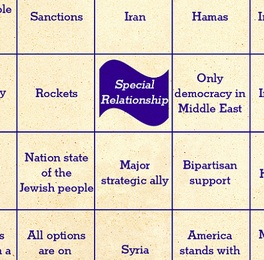
Which brings us to the ‘special relationship’ with the United States. It is absolutely true that the United States is retrenching (the result of its own deep disillusionment with the “activism” of George Bush’s “forward strategy for democracy”). Elsewhere I have argued that Israel needs to think about a “Plan B” for a post-American Middle East. But I must also admit that no one, myself included, has one. I recently chaired a panel of Israel’s most astute strategic thinkers, from the full range of the political spectrum, but when I asked them what could be done to offset American retrenchment, their answers were identical: there is no alternative. If India is indeed a “principal candidate,” as Haivry suggests, it will be a long time before any outside power fills the vacuum, so Israel will have to find ways to do so itself.

In particular, it will have to make sure that Iran doesn’t fill that vacuum. To some, Israel’s preoccupation with Iran may seem excessive and obsessive. I myself think it can be best apprehended by viewing this single image. Look at it carefully. Today, no regional power is capable of making this nightmare scenario come true. If Iran emerges with such a capability, Israel’s entire grand strategy will have to be revamped to embrace a very different kind of “activism,” well beyond drinking coffee with Kurds and Druze.

The possible parameters of such a posture deserve fuller treatment, but it would be better not to have to go there at all. That is why Iran must remain at the top of the agenda, and that is why Israel mustn’t be distracted by Arab springs, Islamist winters, and various photogenic “awakenings.” It must keep its eye on this ball, lest the ball become a fireball. No ramshackle structure of “partnerships” will matter if the image above becomes not just thinkable, but feasible.

The strength of Zionism and Israel has been their adaptive character, and particularly their ability to identify extraneous sources of power and to draw upon them to build independent Jewish power. Our heirs in the decades to come will judge us by whether, in these times of relative security, we prepared Israel for more troubled days. There can be no substitute for independent power, in the absence of which our fate would be comparable to that of Kurds, Christians, and Druze. By all means, let us seek new friends. But let us not forget that we must prepare ourselves to survive as a people that dwells alone.

 Go here to discuss this post at Mosaic Magazine.
The ASA’s next boycott!

Dear Fellow Members of the American Studies Association (ASA),

We are pleased to report our progress toward our next boycott resolution. As you know, our president, Professor Curtis Marez, gained some notoriety from a quote given by him to the New York Times. He had been asked why, given the widespread abuse of human rights around the world and especially in the Middle East, the ASA had chosen to boycott only Israeli universities. His answer: “One has to start somewhere.”

This prompted questions as to where we would go next. So we took our lead from a statement by Professor Marez: “We are targeting Israeli universities because they work closely with the government and military in developing weapons and other technology that are used to enforce the occupation and colonization of Palestinian land.” In that spirit, we have decided that our next boycott should be leveled against additional universities that collaborate with their governments and militaries in developing weapons and other technology used to violate human rights around the world. And since we are the American Studies Association, we have decided to focus our quest in these United States, where perhaps, right under our noses, universities are falling short of our own new standards of academic virtue.

Our attention has been drawn to the University of California at San Diego—where, so it happens, Professor Marez chairs the department of ethnic studies. We begin with a basic data point, taken from a 2012 press release by the UCSD News Center under the headline: “UC San Diego Maintains Strong Ties With Department of Defense.” The item notes that UCSD (itself situated on a former marine base) “has maintained a strong connection with defense initiatives for the military and U.S. government over the past five decades…. During this fiscal year alone, the Department of Defense has granted more than $60 million to support various basic and applied research studies at UC San Diego.” To this must be added grants from defense contractors, who are thick on the ground in San Diego.

After an intensive internet search, we have discovered where some of this funding is going. The 2012 news item, quoted above, mentioned that the most recent DoD grant, for $7 million, went to a team of physicists, biologists, chemists, bioengineers, and psychologists, “to investigate the dynamic principles of collective brain activity.” Nothing could sound more sinister. (Although our critics, pointing to our earlier boycott resolution, have claimed that “collective brain activity” does not have much potential.) Social scientists are also doing their share. For example, there is the political scientist doing a DoD-funded project on “cross domain deterrence,” in collaboration with the Lawrence Livermore and Los Alamos National Laboratories. (E.g., you threaten a student with a failing grade, and they threaten back with harassment charges.) And there is the economist, funded by DoD and Homeland Security, asking “Can Hearts and Minds be Bought? The Economics of Counterinsurgency in Iraq.” (In a word: yes, but every academic dean knows that anyway.)

However, there are projects far more ominous than “collective brain activity,” such as weapons systems, and particularly drone warfare. San Diego is the nation’s biggest center of military drone production, with the massive presence of General Atomics and Northrop Grumman, the two leaders in the field. General Atomics makes the Predator and the Reaper, Northrop Grumman makes the Golden Hawk and the Hunter. We remind our members that in the fall, Amnesty International and Human Rights Watch issued reports on civilian casualties in U.S. drone strikes in North Waziristan (Pakistan) and Yemen, respectively. Both reports are replete with disturbing case studies. Amnesty expressed “serious concerns that the USA has unlawfully killed people in drone strikes, and that such killings may amount in some cases to extrajudicial executions or war crimes and other violations of international humanitarian law.” Human Rights Watch concluded that “US statements and actions indicate that US forces are applying an overly broad definition of ‘combatant’ in targeted attacks… These killings may amount to an extrajudicial execution.” We have already received direct calls from Waziri and Yemeni civil society organizations, demanding our action. (We discount the one that began: “Oh, ye unbelievers of the ASA…”)

Just how much contract research on drones is done by UCSD? In July 2012, MuckRock News made a request under the California Public Records Act (the California equivalent of the Freedom of Information Act), asking to see “all contracts between UCSD and government agencies or private corporations for services relating to aerial drones, UAs, UAVs and UASs (‘drones’).” A year and a half later, UCSD has yet to produce any contracts, claiming that it is backlogged with other requests.

Nevertheless, your association has managed to uncover some specific instances. In 2006, the university’s Structural Engineering Department did a project to boost the payload of the Hunter. According to Northrop Grumman, the project helped to “add additional communications, intelligence and weapon payloads to the Hunter, expanding the capabilities of the fighter.” (Here is a photo of the Hunter on campus.) UCSD has also had a partnership with the Los Alamos National Laboratory, in which students worked on “damage detection for composite wings of the Predator UAV.” Interest in this subject continues, and two Predator wings were recently installed at the university for testing. (Here is a photo of two students posing with the wings.)

We intend to keep digging, but we believe this is enough to justify action. Remember the words of Professor Marez: “We are targeting Israeli universities because they work closely with the government and military in developing weapons and other technology that are used to enforce the occupation and colonization of Palestinian land.” Given that UCSD works closely with the U.S. government and military in developing weapons and other technology employed by the United States (including the CIA) to perpetrate extrajudicial executions and other violations of international humanitarian law, UCSD is obviously a candidate for boycott by the ASA. Our standards, to be compelling, should be consistent.

We have also been apprised of the following, by the Students for Justice in Palestine at UCSD: “UC San Diego is built upon indigenous Kumeyaay land just as Israel is built upon indigenous Palestinian land.” This being so, there are even further grounds for implementing a boycott, as UCSD stands on occupied Kumeyaay territory. Even the chancellor’s residence sits in the midst of a Kumeyaay cemetery. We know the analogy is not perfect: if you drop a shovel in indigenous Palestinian land, you might still strike an ancient Jewish grave. Nevertheless, we believe the parallels are compelling, and that this is further reason to boycott UCSD.

We are certain no difficulty would be caused to Professor Marez were his university to be boycotted. This would only preclude “formal collaboration” with his institution, so he could continue to participate in our annual conferences. And we are certain the pressure on him would lead him to stand firm in the faculty lounge and confront his scientific colleagues, and above all the chancellor of UCSD. The chancellor himself is a computer engineer who spent years working at the Department of Defense (at DARPA, its basic research branch), and later served as an adviser to DARPA on unmanned combat air systems. But we are sure our boycott, and the persuasiveness of Professor Marez, would lead the chancellor to reverse the university’s immoral course.

An ASA boycott of the University of California at San Diego would be a bold act, demonstrating our adherence to consistent principle and our solidarity with the peoples of Pakistan, Afghanistan, and Yemen, who live in constant fear of deadly U.S. drone attacks. In protesting these U.S. government violations of international humanitarian law, we have to start somewhere. Fellow members: let us make clear, in no uncertain terms, that we do have the courage to speak truth to power, even if it means sawing off the limb on which we sit!

Don’t we?

This parody first appeared on the Commentary blog on January 7.