Why Martin Luther King never visited Israel

This is a perfect opportunity to remind readers that since the last Martin Luther King Day, I solved the mystery of this quote attributed to him: “When people criticize Zionists, they mean Jews. You’re talking anti-Semitism!” Some pro-Palestinian polemicists claimed he couldn’t possibly have spoken these words where he was supposed to have said them, at a dinner in Cambridge, Massachusetts, not long before he died. I succeeded in establishing a date (October 27, 1967), a street address (20 Larchwood Drive), and a time of day (early evening) for the occasion. Go here for the full story.

And while I’m at it, I’ll solve a mystery-in-the-making. In honor of the day, the Israel State Archives has published a batch of Israeli documents, from the mid-1960s, about a possible visit by King to Israel. It’s fascinating material, and I commend my friend Yaacov Lozowick, the State Archivist, for taking this initiative (and others) to bring official documents to a wider public. But this cache, as Yaacov notes, leaves a question hanging.

In a nutshell, the Israelis thought it would be a fine idea to host MLK in Israel, and the more important he grew, the more convinced they were that it was something they should make happen. King, from his side, kept on saying all the right words, but kept on not coming. Those are the facts. What do they mean? Hard to say. Read the publication and see if you find an answer.

Of course, if the answer had been there, Yaacov would have found it already. The answer lies elsewhere, and it’s perfectly clear.

First, in 1966, King did enter an agreement to lead a Holy Land pilgrimage. King’s assistant, Andrew Young, visited Israel and Jordan in late 1966 to do advance planning with Jordanian and Israeli authorities. The pilgrimage was rumored to be in the works from that time, and on May 15, 1967, King announced the plan at a news conference, reported by The New York Times the following day.

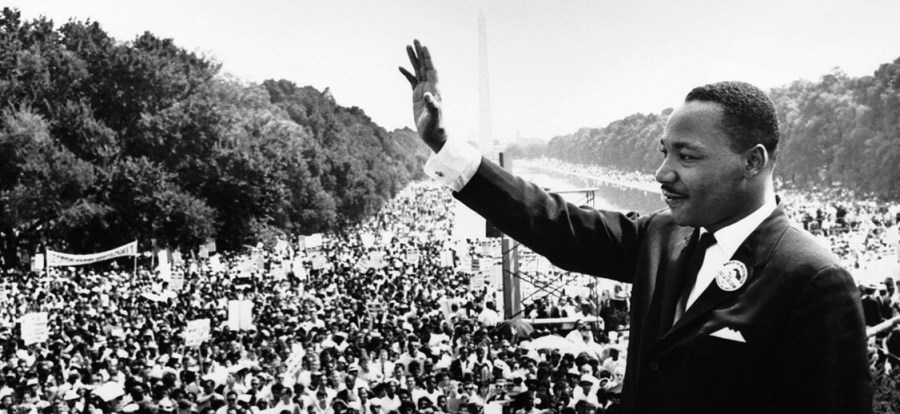
The pilgrimage would take place in November, and King insisted that it would have no political significance whatsoever. The organizers hoped to attract 5,000 participants, with the aim of generating revenue for King’s Southern Christian Leadership Council. King was slated to preach on the Mount of Olives in Jordanian East Jerusalem (November 14), and at a specially constructed amphitheater near Capernaum on the Sea of Galilee in Israel (November 16). The pilgrims would pass from Jordan to Israel through the Mandelbaum Gate in Jerusalem. King had visited the Jordanian side of Jerusalem in 1959, so he knew the situation on the ground, and thought he could strike just the right balance between Israel and Jordan. (The photo above depicts King and the Rev. Sandy Ray, pastor of a Baptist church in Brooklyn, who initiated and promoted the pilgrimage. King is pointing to the Holy Land on the map.)

The June 1967 war threw a wrench into the plan. King was now being asked his opinion of the war and Israel’s territorial gains. His position on both was complex, and perhaps I’ll go into it in a future post. But for now, let’s focus on the pilgrimage. After the war ended, Ray was still keen on going forward, and he immediately sent his own tour agent to Jerusalem to get a read on the situation. She came back enthusiastic: “I firmly believe that Dr. King’s visit will prove to be a much more historic event then we ever dreamed possible. Everyone, from the Governments down to the people on the streets were asking me about Dr. King… We desperately need a new Press Release from Dr. King reaffirming the Pilgrimage plans.”

So what happened? King got cold feet, and this isn’t a guess. We have it right from King himself, in the FBI wiretaps of one of his advisers, Stanley Levison. In a conference call of King and his advisers, on July 24, 1967, King noted that the responses to the pilgrimage promotion had been “fairly good.” (Andy Young said about 600 people had sent in deposits.) But if King went to the Middle East, “I’d run into the situation where I’m damned if I say this and I’m damned if I say that no matter what I’d say, and I’ve already faced enough criticism including pro-Arab.” He had met a Lebanese journalist who told him that the Arabs now had the impression he was pro-Israel, and that “you don’t understand our problem or something like that. And I expect I would run into a continuation of this.” King asked for advice, but set this tone:

I just think that if I go, the Arab world, and of course Africa and Asia for that matter, would interpret this as endorsing everything that Israel has done, and I do have questions of doubt.

King added that “most of it [the pilgrimage] would be Jerusalem and they [the Israelis] have annexed Jerusalem, and any way you say it they don’t plan to give it up.” After some back-and-forth among his advisers, in which it was suggested that he balance an Israel trip with a visit to King Hussein in Amman or Nasser in Cairo, King announced that “I frankly have to admit that my instincts, and when I follow my instincts so to speak I’m usually right… I just think that this would be a great mistake. I don’t think I could come out unscathed.”

King procrastinated out of deference to Ray, who had laid out money on promotion of the pilgrimage. But on September 22, 1967, he wrote the following to Mordechai Ben-Ami, the president of El Al, which was to have handled part of the flight package:

It is with the deepest regret that I cancel my proposed pilgrimage to the Holy Land for this year, but the constant turmoil in the Middle East makes it extremely difficult to conduct a religious pilgrimage free of both political over tones and the fear of danger to the participants.

Actually, I am aware that the danger is almost non-existent, but to the ordinary citizen who seldom goes abroad, the daily headlines of border clashes and propaganda statements produces a fear of danger which is insurmountable on the American scene.

He ended by promising to revisit the plan the following year.

The cancellation took place a month before King attended that dinner in Cambridge. It adds another layer of context for his balancing act on the Middle East, of which his remark about Zionists, Jews, and antisemitism was but a piece.

Update, 2016: This post has been amalgamated into a larger published article on King’s approach to the Six-Day War, here.

(Below: Cover of the promotional brochure for the 1967 pilgrimage. Thanks to Düden Yeğenoğlu, who photographed it for me in the Andrew Young Papers at the Auburn Avenue Research Library in Atlanta.)

The NIC of time

The National Intelligence Council (NIC) has just published its fifth long-term prognostication, Global Trends 2030: Alternative Worlds. This is an officially sponsored guessing game, but much of what government does has long lead times, so long-term projections need to be made by somebody.

By their nature, these hedged predictions say as much about present politics as future probabilities. One prediction (p. 71) is particularly striking, touching as it does on the drivers of anti-Americanism in the Muslim world:

Although al-Qa’ida and others have focused on the United States [as] a clear enemy, the appeal of the United States as the “great enemy” is declining. The impending withdrawal of US forces from Iraq and decreases in US forces in Afghanistan help to reduce the extent to which terrorists can draw on the United States as a lightning rod for anger. Soon, US support for Israel could be the last remaining major focus of Muslim anger.

It’s a peculiar assessment. After all, when al-Qa’ida attacked the United States on 9/11, there were no US forces in Iraq or Afghanistan. The 9/11 attacks undoubtedly did resonate in the Muslim world, and that couldn’t have been the result of an American boots-on-the-ground presence in the region. So what drove anti-Americanism back then? Is there a suggestion here that US support for Israel was already the “major focus”? What about American support for authoritarian regimes? We are told again and again how deeply Muslims have resented such support, and they could resent it even more in 2030, should the oil-saturated monarchies of Saudi Arabia and the Persian Gulf last that long.

And what happened to the assessments in past reports, which cited “globalization” as the source of Muslim anger against the West in general, and the United States in particular? The report issued in 2000, anticipating 2015, offered this: “Popular resentment of globalization as a Western intrusion will be widespread. Political Islam in various forms will be an attractive alternative for millions of Muslims throughout the region, and some radical variants will continue to be divisive social and political forces.” Right on the mark, as evidenced by events unfolding before our eyes. Why isn’t such “intrusion” likely to continue to inflame the Muslim world?

Such resentment has a long history, and so does its neglect by Western analysts. The British historian Arnold Toynbee, in his 1922 book The Western Question in Greece and Turkey: A Study in the Contact of Civilisations, offered a striking allegory to illustrate the West’s effect upon the East:

Savages are distressed at the waning of the moon and attempt to counteract it by magical remedies. They do not realise that the shadow which creeps forward till it blots out all but a fragment of the shining disc, is cast by their world. In much the same way we civilised people of the West glance with pity or contempt at our non-Western contemporaries lying under the shadow of some stronger power, which seems to paralyse their energies by depriving them of light. Generally we are too deeply engrossed in our own business to look closer, and we pass by on the other side—conjecturing (if our curiosity is sufficiently aroused to demand an explanation) that the shadow which oppresses these sickly forms is the ghost of their own past. Yet if we paused to examine that dim gigantic overshadowing figure standing, apparently unconscious, with its back to its victims, we should be startled to find that its features are ours…

It is difficult for us to realise the profound influence on the East which we actually, though unconsciously, exercise… and the relationship described in my allegory cannot permanently continue. Either the overshadowing figure must turn its head, perceive the harm that unintentionally it has been doing, and move out of the light; or its victims, after vain attempts to arouse its attention and request it to change its posture, must stagger to their feet and stab it in the back.

The attacks of 9/11 were just such a stab in the back, and the confusion that ensued over Muslim enthusiasm for them arose precisely from America’s failure to grasp how thoroughly its revolutionary example undermines traditional orders everywhere. Where Toynbee erred, of course, was in his assumption that the West could simply “move out of the light,” thus liberating those in its shadow. No doubt there are still those who believe that if only we were to stand aside or step back, our profile would diminish, and with it the resentment against us. It was the historian and political thinker Elie Kedourie—a relentless critic of Toynbee as historian and seer—who added the necessary refinement.

In his view, the damaging effect of the West upon the East had nothing to do with what the West did. It was an inevitable effect of what the West was, and no amount of sidestepping or backtracking could mitigate the consequences. The West, Kedourie asserted, “cannot help being what it is. By the very fact of its existence, it was a destabilizing force for the Middle East.” And he employed a different allegory: “Someone who has influenza is not really responsible for the fact that someone else catches his disease.” The West could not be blamed for being what it is: the carrier of an aggressive virus that ravages all traditions.

So the suggestion in the NIC report, that Muslim anger against the United States might soon be reduced to a kernel of resentment over US support for Israel, is a species of wishful thinking. The United States will continue to infect the Muslim world, even if its willingness or ability to project hard power declines. The so-called “Arab Spring,” which is so often hailed as the product of indigenous processes, is in fact an inflammation produced by the most contagious of all viruses: the idea of freedom, now linked inseparably to American-style democracy. As long as Muslim societies remain internally divided over freedom and democracy, there will be governments and factions that will stoke hatred of America. In some places, American flags will be waved, but in others American embassies will be burned. In either case, the United States will be regarded, favorably or unfavorably, as the grinding wheel of change in the world.

There is another odd assertion in the report (p. 75):

Resolution of the Israeli-Palestinian conflict would have dramatic consequences for the region over the next two decades. For Israel, a permanent resolution to the conflict could open the door to regional relationships unthinkable today. The end of Palestinian conflict would provide a strategic setback to Iran and its resistance camp and over time undermine public support for militant groups such as Hizballah and Hamas.

This is the myth of linkage, and it echoes almost precisely a claim made by President Obama when he was still a candidate in 2008. “All these issues are connected,” Obama said.

If we can solve the Israeli-Palestinian process, then that will make it easier for Arab states and the Gulf states to support us when it comes to issues like Iraq and Afghanistan. It will also weaken Iran, which has been using Hamas and Hezbollah as a way to stir up mischief in the region.

This thesis (the theatrical NIC version reads like “New Middle East” circa 1995) seems less persuasive with each passing month, as many other “dramatic consequences” unfold, eclipsing or competing with the long-running Israel-Palestine show. The reassertion of linkage here is thoroughly political. It is not a measured assessment, but it is the sort of statement that stands a chance of being echoed by a high administration official, if not by the President himself. And it draws rebuttals from people like me—which helps to keep the NIC, a poor cousin to the agencies that deal in hard intelligence, in the limelight and on a budget line. After all, this was an agency that the Obama administration first thought to entrust to the ministrations of Chas Freeman (click here in case you’ve forgotten). That wasn’t exactly a token of high regard for the institution.

But if one really does believe in linkage, and in the “dramatic consequences” that an Israeli-Palestinian agreement would have for the region, why not reverse it? If such an agreement promises to be so transformative, shouldn’t its pursuit justify delivering hammer blows to Iran, Hezbollah, and Hamas, to keep them from obstructing it? The linkage thesis has dual uses—and abuses—which make it the favorite concept behind all sorts of reductionist approaches to the Middle East. It’s a pity to see it surface in a report that pretends to nuance and sophistication.

“No Democratic president has ever strong-armed Israel”

Whenever the United States has put serious, sustained pressure on Israel’s leaders—from the 1950s on—it has come from Republican presidents, not Democratic ones…. Despite the Republican Party’s shrill campaign rhetoric on Israel, no Democratic president has ever strong-armed Israel on any key national security issue.

— Efraim Halevy, “Who Threw Israel Under the Bus?,” New York Times, October 24

Former Mossad head Efraim Halevy likes Barack Obama and dislikes Mitt Romney. He’s entitled to his opinion. What he isn’t entitled to do is make categorical statements that do violence to the historical record.

I’m teaching a graduate course this semester on relations between Israel and the United States, and one of my purposes in following a historical approach is to fortify my students against people who misrepresent the past for some present purpose. Just the other week, we spent two hours discussing how President John F. Kennedy (yes, a Democrat) put the screws on Israeli Prime Minister David Ben-Gurion and his successor, Levi Eshkol, over Israel’s nuclear end-run. The story has been told at considerable length elsewhere, most ably by Avner Cohen, Zaki Shalom, Michael Karpin, and Warren Bass, so I’ll just recap it here. It’s relevant not only as a corrective to Halevy’s erroneous claim. It’s essential background to the renewed debate over Israel’s nuclear posture that the Obama administration has helped to prompt.

When Kennedy entered the White House in January 1961, the CIA had just concluded that the facility under construction in Dimona, with French assistance, was destined to become a nuclear reactor. U.S. intelligence had been one to two years behind the curve on the pace of Israel’s nuclear program, and Kennedy was worried. He had campaigned on a promise to stop proliferation. In his third debate with Richard Nixon, he had warned that “there are indications because of new inventions, that 10, 15, or 20 nations will have a nuclear capacity, including Red China, by the end of the Presidential office in 1964. This is extremely serious.” The CIA would soon list Israel right behind China as a potential proliferator.

In May 1961, just months after his inauguration, Kennedy raised the issue of Dimona with visiting Israeli Prime Minister David Ben-Gurion, and received a boilerplate assurance that the project had a peaceful purpose. Kennedy and his advisers continued to suspect otherwise, given the size of the plant. Israel allowed informal visits, but they were far from thorough, and in May 1963, Kennedy finally decided to press the issue and insist on regular inspections. He wrote a letter to Ben-Gurion (May 18), warning that an Israeli weapon would throw open the gates of proliferation everywhere:

We are concerned with the disturbing effects on world stability which would accompany the development of a nuclear weapons capability by Israel. I cannot imagine that the Arabs would refrain from turning to the Soviet Union for assistance if Israel were to develop a nuclear weapons capability—with all the consequences this would hold. But the problem is much larger than its impact on the Middle East. Development of a nuclear weapons capability by Israel would almost certainly lead other larger countries, that have so far refrained from such development, to feel that they must follow suit.

Then came the threat. Kennedy, noting the ways the United States had assisted Israel, warned Ben-Gurion that the U.S. commitment to his country “would be seriously jeopardized in the public opinion in this country and in the West as a whole if it should be thought that this Government was unable to obtain reliable information on a subject as vital to peace as the question of the character of Israel’s efforts in the nuclear field.” Years later, Yuval Ne’eman, the physicist who helped Ben-Gurion write his replies, told a journalist that “Kennedy was writing like a bully. It was brutal.” Kennedy’s “Scylla and Charybdis-like letter,” writes Zaki Shalom, “made it absolutely clear that he wanted Israel to accede to his demands unconditionally and immediately, and a request of this sort from the pinnacle of American power, in language so blunt, left Israel no space for maneuvering.”

Within a month, Ben-Gurion had resigned. He had already been weakened politically, but there has long been a suspicion that Kennedy’s pressure contributed to his decision. (Ne’eman believed it was the main cause.) Kennedy did not relent, and after allowing Levi Eshkol ten days to settle in as new prime minister, he reissued his threat (July 5). Kennedy demanded of Eshkol that the United States be allowed to conduct visits

as nearly as possible in accord with international standards, thereby resolving all doubts as the the peaceful intent of the Dimona project…. As I wrote Mr. Ben-Gurion, this Goverment’s commitment to and support of Israel could be seriously jeopardized if it should be thought that we were unable to obtain reliable information on a subject as vital to peace as the question of Israel’s effort in the nuclear field….. It would be essential… that our scientist have access to all areas of the Dimona site and to any related part of the complex, such as fuel fabrication facilities or plutonium separation plant, and that sufficient time be allotted for a thorough examination.

Avner Cohen writes of this letter: “Not since President Eisenhower’s message to Ben-Gurion, in the midst of the Suez crisis in November 1956, had an American president been so blunt with an Israeli prime minister…. Since the United States had not been involved in the building of Dimona and no international law or agreement had been violated, Kennedy’s demands were unprecedented. They amounted, in effect, to an ultimatum.” Israeli journalist Michael Karpin writes that “no American president had ever threatened an Israeli prime minister so bluntly during political negotiations in time of peace.”

Inevitably, Eshkol agreed to the inspections. He had little choice; to borrow Halevy’s words, he had been “strong-armed.” But the change in administration following Kennedy’s assassination in November created a gap that Israel exploited. During the course of the 1960s, Israel succeeded in turning the U.S. “inspections” of Dimona into hurried affairs scheduled well in advance. Parts of the facility were concealed from American scrutiny. By 1968, the CIA had concluded that Israel had built a bomb. It was Richard Nixon (a Republican) who finally sat down with Israeli Prime Minister Golda Meir on September 26, 1969, to finalize the U.S.-Israel understanding that exists to this day. Israel would keep its capabilities under wraps—nuclear “ambiguity” or “opacity”—and the United States would look the other way. The United States would not pressure Israel to sign the Non-Proliferation Treaty (NPT). Thus was born the Israeli exception to the American rule.

Why is this relevant now? The debate over Israel’s nuclear exception is about to be renewed in full vigor. Kennedy wrote to Ben-Gurion: “Development of a nuclear weapons capability by Israel would almost certainly lead other larger countries, that have so far refrained from such development, to feel that they must follow suit.” Now Iran is cast in the role of the “larger country,” and the idea of a nuclear-free zone in the Middle East is gaining momentum. Israel would be called upon to disarm, in exchange for Iran’s disavowal of its nuclear ambitions. Obama’s own vision of a “nuclear-free world,” articulated in 2009, is the context.

An American-supported “Middle East WMD-Free Zone Conference” (with the unpronounceable acronym MEWMDFZ) may or may not take place in December as scheduled. The head of Israel’s own nuclear energy agency has described the conference initiative as “futile,” and the meeting may be postponed. But as former Shin Bet head Ami Ayalon has said, “after the U.S. elections, this issue of the Middle East as a nuclear-free zone will be back on the table.” And Israel’s leading authorities on the subject believe that in light of Obama’s commitment to non-proliferation, Israel “might face new pressure from the administration down the line.”

I’m reasonably certain that Halevy knows the history. Perhaps as a former head of the Mossad, he’s barred from discussing it. That’s understandable, but it’s inexcusable to pretend that the battle over Dimona never happened, and to do so for a purpose—playing American partisan politics—that’s unseemly for a man in his position. I’m now immersed in teaching precisely this subject, and I detect no systemic difference in the approaches of Democratic and Republican presidents to Israel. But when it comes to “strong-arming” Israel on the “key national security issue” of its nuclear posture, the unsurpassed record is held by a Democrat.