Israel’s national interests (not only for Chinese)

On September 7, I addressed a group of visiting Chinese international relations and Middle East experts, who had come to Israel under the auspices of SIGNAL (Sino-Israel Global Network and Academic Leadership). The topic: Israel’s national interests in the Middle East. It’s a challenge to explain the dilemmas of a small state to an audience accustomed to thinking big. Here is the text of my remarks.

Map of Israel in Chinese

I don’t intend to give you my own personal view of Israel’s national interests. My view is not especially important. I do want to suggest what I think most Israelis believe about Israel’s core national interests. These are basic things—I would call them the lowest common denominators. But they define the political center in Israel. Over time, Israeli policy doesn’t drift too far away from them.

In the Israeli national anthem, there is a phrase that expresses the purpose of Zionism and the Jewish state: our hope is “to be a free people in our land, the Land of Zion and Jerusalem.” “Free people” here isn’t a reference to democracy. It refers to the collective freedom of sovereignty. The Jews, through their state, and on their ancestral land, will gain the freedom to determine their own destiny, and not have it determined by others; to act in history, and not only be acted upon; to defend their lives, and not rely on the mercy of others.

The core national interest of the state of Israel is to preserve and enhance this freedom to act independently. How much freedom is enough? If Israel were a vast country with a large population like China, this freedom could be in rough proportion to Israel’s size. But because Israel is small in size and population, because its borders are very narrow and its population is that of one Chinese city, this is not enough. To be free, Israel must have capabilities that are disproportionate to its size and population. Otherwise it would be vulnerable to large neighbors, some of which have ten times its population and even more times its size.

A key national interest, then, is building Israel’s disproportionate power, so that Israel can remain the dominant actor in its own neighborhood—not the only actor, of course, but the dominant actor. This power is military, political, economic, and social. And Israel does have such power—partly due to the weaknesses of its neighbors, but mostly by virtue of its own ingenuity.

Another key Israeli national interest is an alliance with the most effective power of the day. Again, this is a function of Israel’s smallness in size and population. In the period before the creation of the state, this power was Great Britain, which provided the shelter in which the Jews built up their strength prior to 1948. Eventually, with Britain’s decline, Israel’s key ally became the United States. This was facilitated greatly by the fact that the United States is home to the largest number of Jews outside Israel, and the fact that Jews in America have flourished.

The U.S.-Israel relationship is complex, because no two states have identical interests. Neither is it exclusive, on either side. But Israel seeks, and will always seek, a primary relationship with the greatest power in a unipolar world, or one of the great powers in a multi-polar world. Since power ebbs and flows, even at the top level, and because great powers rise and decline, a key interest of Israel, like Zionism before it, is to anticipate such changes in advance.

Another key Israeli national interest is to prevent Israel’s enemies from forming effective coalitions against it. Israel is located in a fragmented part of the world. Although it is surrounding by hundreds of millions of people who speak Arabic and even more who profess Islam, they are divided into numerous states, sects, and tribes, many of them in conflict with one another. Israel is not the cause of these divisions—many of them are quite ancient—but it benefits from them, since these conflicts drain the power of Israel’s enemies.

The most dangerous threats lie in those ideologies that have united Israel’s enemies despite their differences. The two prime examples are Arab nationalism in its golden era of the 1950s and 1960s, and Islamism since the 1980s. The coalitions based on these ideas work to make war with Israel thinkable, despite Israel’s preponderance of power. Israel’s interest is to undermine them and highlight their internal contradictions. Israel can bring these contradictions to the surface by military operations, peace processes and treaties, and many other strategies. But the objective is the same: never to face a large number of adversaries at one time.

The same objective applies to the Palestinians, who constitute Israel’s nearest adversary. History has divided the Palestinians into many fragments—West Bank, Gaza, Israel, Jordan, refugee camps, diaspora. Were they unified, they could impinge on Israel’s own freedom to act. However, each fragment has its own interests, which prevents the Palestinians from forming a unified front. Historical circumstances have worked against Palestinian unity, as have certain weaknesses in Palestinian identity formation. Israel’s interest is to accommodate these divisions, by engaging separately with each Palestinian formation on the basis of its own distinct interests. In some instances, this engagement might be military, in others diplomatic.

Finally, a key national interest is the maintenance of a high degree of internal cohesion. Israel’s Jews constitute a very diverse population, with a large immigrant component, drawn from Europe, Asia, Africa, and America. There are other divisions as well, in approaches to modernity and religion.

It is remarkable how effective Jewish identity has been, in binding very different people to the new Israeli nation. Of course, there are many subcultures in Israel, from secular modernists to religious traditionalists, from Arabs to settlers, from the European-descended to the Ethiopian-born. It is one of the miracles of Israel—and a prime proof for the existence of the Jews as a people—that these subcultures not only coexist in peace, but cooperate at moments of war. The army itself is one of the chief mechanisms for building this solidarity, as is the democratic system.

So how has Israel performed of late in upholding its core national interests? As far as its dominance, Israel’s military and economic power has continued to grow relative to its neighbors, especially in the aftermath of the so-called Arab Spring. Arab peoples are largely turned inward, as struggles for power and resources unfold within each country. Since these revolutions are incomplete, these internal struggles will continue, with all their economic and political costs.

Iran seems to have suffered a setback in its nuclear program, which may be at least partly Israel-induced. Turkey has become more assertive, but it isn’t clear that there is an overriding Turkish national interest in playing that role. Israel, by building its strength, by its self-reliance, probably has as much freedom to act as ever.

As for Israel’s relationship with the United States, while there is no chemistry between Israel’s prime minister and America’s president, and there is some friction on strategy, the relationship remains solid, and has an expanding base in large sectors of American society. The question for Israel is whether the United States will remain the greatest power, both in absolute and relative terms. No one knows whether the present difficulties of the United States, exemplified by the debt crisis, are transitory or the beginning of a gradual decline. In any event, Israel continues to diversify its ties with rising powers (of which China is one).

The neighbors around Israel remain divided. The Arab Spring has particular potential for aggravating the Shiite-Sunni schism along an arc reaching from Lebanon through Syria and into the Persian and Arab Gulf. This would be to Israel’s advantage. But in the past, revolution has set the stage for the rise of charismatic leaders and unifying ideologies. Nasser in his day, and Khomeini in his, created ideological coalitions poised against Israel. The possibility of a populist leader emerging from the present turmoil to forge a coalition against Israel is not unthinkable. There are rising elements in each of the Arab Spring countries, including Egypt and Syria, which are hostile to Israel and linked to one another by transnational Islamism. (The Turkish leadership also has some links to them.) Israel will have to work especially hard to find the fissures in these still-weak formations and expand them.

As for the Palestinians, they remain thoroughly divided. The Palestinians have not joined the Arab Spring, and Israel has succeeded in preserving the status quo vis-à-vis each Palestinian formation Israel faces. So far, challenges to that status quo—most recently, the cross-border attacks from Egypt—have not undermined it. The statehood maneuver by the Palestinians at the UN will be another test. How that will end, one cannot predict, but so far Israel has been very agile in preventing Palestinians from coalescing in a way that would produce, for example, another intifada.

The internal cohesion of Israel has come under some stress, as a result of distortions that have accompanied Israel’s rapid economic growth. The protest movement under the slogan of “social justice” has had much momentum. But this hasn’t been as polarizing as past protest movements, because of its diffuse character. There have been much more polarized moments, from the Lebanon invasion to the Oslo Accords to the Gaza disengagement. Absent a serious peace process, it is unlikely that Israel’s internal cohesion will be tested anytime soon.

During your visit, you will hear many different views. You should understand that it is our habit to express strong opinions and debate loudly. But beneath this, there is a broad consensus on what Israel needs to survive and flourish, and a long-term record of success in creating the conditions that have made Israel the strong state you see today. I hope I have given you some understanding of those deeper considerations at play.

Exodus, myth and malpractice

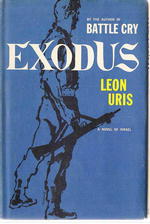
Exodus by Leon Uris must rank high on any list of the most influential books about the Middle East. The novel, published in 1958, popularized the story of Israel’s birth among millions of American readers. The 1960 film, based on the book and starring Paul Newman as Ari Ben Canaan, reached many more millions. Exodus is still of interest, not for what it says about the creation of Israel (the commander of the ship Exodus said Uris “wrote a very good novel, but it had nothing to do with reality. Exodus, shmexodus”), but for what it reveals about mid-twentieth-century America. So more inquiry into the American context of Exodus is welcome—provided you get the facts right.

Last fall, Rashid Khalidi, the Edward Said Professor of Arab Studies at Columbia University, offered his audiences an account of how Leon Uris came to write the book. In a speech at Brooklyn Law School, Khalidi made this claim:

This carefully crafted propaganda was the work of seasoned professionals. People like someone you probably never heard of, a man named Edward Gottlieb, for example. He’s one of the founders of the modern public relations industry. There are books about him as a great advertiser.

In order to sell the great Israeli state to the American public many, many decades ago, Gottlieb commissioned a successful, young novelist. A man who was a committed Zionist, a fellow with the name of Leon Uris. He funded him and sent him off to Israel to write a book. This book was Exodus: A Novel of Israel. Gottlieb’s gambit succeeded brilliantly. Exodus sold as many copies as Gone With the Wind, which up to that point was the greatest best-seller in U.S. history. Exodus was as good a melodrama and sold just as many copies.

Khalidi made a similar assertion in another speech a few weeks later, this time at the Palestine Center in Washington:

Now, I think it’s worth noting that this book was not the unaided fruit of the loins as it were, the intellectual loins of Leon Uris. He wrote it, of course, but the book was commissioned by a renowned public relations professional, a man who was in fact considered by many to be the founder of public relations in the United States, a fellow by the name of Edward Gottlieb, who desired to improve Israel’s image, and who chose Uris to write the novel after his successful first novel on World War II, and who secured the funding which paid for Uris’ research and trip to Israel. Given that many of the basic ideas about Palestine and Israel held by generations of Americans find their origin either in this trite novel or the equally clichéd movie, Gottlieb’s inspiration to send Leon Uris to Israel may have constituted one of the greatest advertising triumphs of the twentieth century. The man deserves his place in the public relations pantheon.

You can see Khalidi make this claim, with his customary self-confidence and much gesticulation, in the embedded clip. (If you don’t see it, go here.)

A myth unravels

Khalidi warned his Brooklyn audience that Gottlieb would be “someone you probably never heard of.” Quite right: I regard myself as reasonably informed about the history of American Zionism, and I had never heard of Edward Gottlieb. Khalidi claimed there were “books about him as a great advertiser,” so I did a search, but I couldn’t find one. When Gottlieb died in 1998, at the age of 88, no major newspaper ran an obituary. That seemed to me a rather scant trail for “the father of the American iteration of Zionism” and “the founder of public relations in the United States.”

One reason for the thin record, I discovered, is that Edward Gottlieb wasn’t the founder or even one of the founders of American public relations. He had been a journalist in the 1930s, and in 1940 joined the long-established public relations firm of a true founder, Carl Byoir. After Pearl Harbor, Gottlieb did radio and informational work for the war effort in the European theater of operations. In 1948 he opened his own shop, Edward Gottlieb and Associates, which grew into a respected mid-size firm, focused primarily on products. Most notably, Gottlieb popularized French champagne and cognac in the United States. When he sold his company in 1976 to a bigger competitor, it ranked sixteenth in size among PR firms in America. He seems to have been well-regarded, but he was not dominant in the business. If the Encyclopedia of Public Relations constitutes “the public relations pantheon,” then Gottlieb is noticeable only by his absence.

Gottlieb is likewise completely absent from works on American Zionism—there isn’t a single reference. Moreover, his name doesn’t appear in the two scholarly studies of Leon Uris: Matt Silver’s Our Exodus: Leon Uris and the Americanization of Israel’s Founding Story and Ira Nadel’s Leon Uris: Life of a Best Seller. I wrote to both scholars, asking them whether they had encountered the name of Edward Gottlieb in Uris’s personal papers, housed at the University of Texas and cited extensively in both studies. Silver wrote back that “I didn’t see anything about Edward Gottlieb” and Nadel answered that “I never came across G[ottlieb]’s name.”

Both biographers are in agreement that the idea for a novel on Israel originated with Uris (encouraged by Dore Schary, a Jewishly-active Hollywood executive); that Uris’s agent Malcolm Stuart pushed him to realize his plan; that Uris successfully shopped the idea in Hollywood studios and New York publishing houses; and that his research trip to Israel in 1956 was financed by advances on the film rights and book from MGM and Random House. (United Artists and Doubleday subsequently acquired the rights.) The contracts and correspondence are preserved in Uris’s papers. And the Gottlieb “commission”? Silver wrote me that “my feeling is that this reference could be a complete canard.” Nadel wrote me that “the story is a complete fabrication.”

Khalidi always presents himself as a historian, so I figured he wouldn’t have concocted the Gottlieb story out of whole cloth. He must have had a source. As it happens, the Gottlieb claim figures in three books that are classics in the Israel-bashing canon. In Deliberate Deceptions (1995), Paul Findley wrote that Exodus “was actually commissioned by the New York public relations firm of Edward Gottlieb.” In Fifty Years of Israel (1998), Donald Neff wrote that Gottlieb “hit upon the idea of hiring a writer to go to Israel and write an heroic novel about the new country. The writer was Leon Uris.” And in Perceptions of Palestine (1999), Kathleen Christison wrote that Gottlieb “selected Uris, and sent him to Israel” in an “astute public-relations scheme.”

And on what source did Findley, Neff, and Christison rely? All of them referenced a 1985 how-to book on public relations, The Persuasion Explosion: Your Guide to the Power and Influence of Contemporary Public Relations by Arthur Stevens, a public relations professional. This is a breezy advice book full of PR do’s and don’t’s, which no one would mistake for a history of the business. (A typical chapter title: “Success DOES Smell Sweet.”) Stevens in his book relates the Gottlieb story to illustrate a point:

The cleverest public relations in the world cannot successfully promote, for any length of time, a poor cause or a poor product. By contrast, skillful public relations can speed up the acceptance of a concept whose time has come. A striking example of this involved eminent public relations consultant Edward Gottlieb. In the early 1950s, when the newly formed State of Israel was struggling for recognition in the court of world opinion, America was largely apathetic. Gottlieb, who at the time headed his own public relations firm, suddenly had a hunch about how to create a more sympathetic attitude toward Israel. He chose a writer and sent him to Israel with instructions to soak in the atmosphere of the country and create a novel about it. The book turned out to be Exodus, by Leon Uris.

So this is the origin of the Gottlieb story: an example in a how-to book. Even so, I wondered how Stevens came to write this paragraph. Did he have a published source or documentary evidence? Was this part of the folklore of the business? So I tracked Stevens down and asked him. In an e-mailed reply, he told me that he had interviewed Gottlieb, “whom I knew well at the time,” around 1984:

The comments he made to me during my interview of him were those that went into the book. It wasn’t hearsay I made use of or the reporting of prevailing folklore floating through the public relations world at the time. What I reported is what he actually told me during my interview. Obviously, I cannot vouch for the accuracy or reliability of what he said.

So this wasn’t a claim based on any document or even part of PR lore. It was Gottlieb himself who told Stevens the story of how he supposedly chose Uris and sent him to Israel. “I didn’t get that information from any other source,” Stevens wrote me, “but directly from the horse’s mouth.” Ultimately, Gottlieb is the sole source of the Gottlieb story—told by him 28 years after Uris set off for Israel.

Gottlieb and Israel

But this still left a question. Since Gottlieb doesn’t appear in any account of American Zionism, why would he expect such a claim to be credible? “Only Edward Gottlieb would know if what he told me was true,” Stevens wrote me. But that isn’t so, because there is a living witness to Gottlieb’s own operations. She is Charlotte Klein, one of the first women to reach the top rungs of a public relations firm. Klein worked for Edward Gottlieb and Associates from 1951 to 1962, making vice president in 1955.

Klein was recently the subject of a short academic study, and there I finally found evidence for some connection between Gottlieb and Israel. The Government of Israel became a Gottlieb client in 1955; Charlotte Klein managed the account, and even traveled to Israel that year. This was about the time Uris began to take his book and film proposal around New York and Hollywood. Could the Gottlieb story still contain a grain of truth?

The study of Klein noted that she was still active at age 88 and living in Manhattan. So I wrote to Klein informing her of Khalidi’s claim that Gottlieb had commissioned Uris to write Exodus. I received this reply:

I was in charge of the Israel account at Edward Gottlieb and Associates and if Ed had ever talked to Uris about Israel I would have known it. As a matter of fact, Ed sought the Israel account because of me. I was one of his top employees and I told him that I was going to leave because I wanted to do work that was socially significant and would seek a job at the United Nations. He didn’t want me to leave and called me from outside the office soon after and said “Is the Government of Israel socially significant enough?” I stayed with him and handled the account which we kept for several years. There was never a discussion about Uris or regarding a possible book about Israel.

When I told her that Stevens said he had heard the story from Gottlieb, she added this:

1984, of course, is a long time from 1955 and Ed may have met Uris and felt he influenced him. However, there never was money enough on the account for Ed to “commission” anyone to write a book. I am also pretty sure that Ed would have bragged about meeting and talking to Uris if this happened. He would have asked me to come up with some ideas of what Uris ought to cover. I would have had a meeting of my staff on the Israel account and would have drawn up a plan to include people in Israel for Uris to contact. As part of our work for Israel we did suggest mainly to media people to go to Israel to write about any special events going on there or to cover specific news that was happening there.

So Charlotte Klein, who handled the Israel account for Gottlieb, was unequivocal: Gottlieb didn’t commission Exodus, and the name of Leon Uris never came up in the Israel work of the firm.

I could have stopped my pursuit here, but I decided to go one more lap. Perhaps there was some record of the Gottlieb-Israel relationship in official Israeli records? So I paid a visit to the Israel State Archives in Jerusalem, and found the Israeli foreign ministry files related to Gottlieb. These include contracts, reports, budgets, invoices, and press clippings, all awaiting a future historian.

The documents explain the relationship in detail. Gottlieb’s firm had a sub-entity, Intercontinental Public Relations, Inc. (ICPR), with offices in Washington and New York. The sub-entity did work that required foreign agent registration. Israel’s contracts with ICPR ran for two years (an initial year and one renewal), from February 1, 1955 thru January 31, 1957. The relationship was handled on Israel’s end by Harry (Yehuda) Levin, counselor at the Israeli embassy in Washington. The PR firm’s biggest coups involved Life magazine. This included arranging a meeting between visiting Prime Minister Moshe Sharett and the top executives of Life, resulting in a Life editorial strongly critical of Arab refusal to accept Israel. This was the firm’s biggest score, but Klein also worked to place Israel-related stories in magazines, newspapers, and trade journals.

The record shows that Israeli officials saw such outsourcing of PR as a (pricey) stopgap, until these tasks could be assumed by professionally-trained Israelis (and soon enough they were). The files make fascinating reading for anyone interested in the early history of Israeli hasbara in America—but they don’t contain a single mention of Leon Uris.

The purpose of myth

In sum, the Gottlieb “commission” never happened. Uris’s biographers dismiss it, Gottlieb’s most knowledgeable associate denies it, and no documents in Uris’s papers or Israeli archives testify to it. It originated as a boast by Gottlieb to another PR man, made almost thirty years after the (non-)fact. And given its origin, it’s precisely the sort of story a serious professional historian would never repeat as fact without first vetting it (as I did).

Yet it persists in the echo chamber of anti-Israel literature, where it has been copied over and over. In Kathleen Christison’s book, it finally appeared under the imprimatur of a university press (California). In Khalidi’s lectures last fall, it acquired a baroque elaboration, in which Edward Gottlieb emerges as “the father of the American iteration of Zionism” and architect of “one of the greatest advertising triumphs of the twentieth century.” What is the myth’s appeal? Why is the truth about the genesis of Exodus so difficult to grasp? Why should Khalidi think the Gottlieb story is, in his coy phrase, “worth noting”?

Because if you believe in Zionist mind-control, you must always assume the existence of a secret mover who (as Khalidi said) “you probably never heard of” and who must be a professional expert in deception. This “seasoned” salesman conceives of Exodus as a “gambit” (Khalidi) or a “scheme” (Christison). There is no studio or publisher’s advance, only a “commission,” which qualifies the book as “propaganda”—an “advertising triumph.” In Khalidi’s Brooklyn Law School talk, he added that “the process of selling Israel didn’t stop with Gottlieb…. It has continued unabated since then.” It is Khalidi’s purpose to cast Exodus, like the case for Israel itself, as a “carefully crafted” sales job by Madison Avenue mad men. Through their mediation, Israel has hoodwinked America.

In fact, the deception lies elsewhere. Exodus, novel and book, was universally understood to be a work of fiction. In contrast, Rashid Khalidi claims to speak in the name of history—that is, carefully validated truth. “I’m a historian,” he has said. “What I can do best for the reader or audience is provide a background for which to see the present, not tell them about the present.” Again: “I’m a historian and I try not to speculate about the future.” And this: “I’m a historian, and I look at the way idealism has tended to operate, and it’s not a pretty picture.” And this one (which truly beggars belief): “I’m a historian, it’s not my job to attack or defend anybody.”

Forget that Khalidi interprets the present, speculates about the future, poses as an idealist, and attacks and defends people with vigor. (If he didn’t, he wouldn’t be a regular on NPR, Charlie Rose and the lecture circuit.) The point is that he proclaims over and again that he is a historian—that his opinions rest on facts about the past that he has subjected to his professional investigation. As I have shown, this is simply untrue. Khalidi will repeat and embellish a story simply because of its utility, without even a cursory check of its veracity. That’s literary license in a novelist. It’s malpractice in a historian.

The Middle East Circa 2016

I have been remiss in not posting my remarks on a panel held on May 12, at the annual Soref Conference of The Washington Institute for Near East Policy. I shared the podium with Robert Kagan and Robin Wright, and the assignment was to envision the Middle East five years hence, in 2016. The Institute has published a précis of the entire conference, including my panel. Below, my remarks as delivered (or you can watch me say the same thing here).

When I received the assignment for today, it reminded me of that 1999 book, Dow 36,000. At the time the authors wrote it, the Dow stood at 10,300, and the book became a bestseller. But today the Dow is only 20 percent higher than it was then—it’s only at 12,700. Last February, one of the co-authors wrote an article in the Wall Street Journal entitled “Why I Was Wrong About ‘Dow 36,000’.” “What happened?” he wrote. “The world changed.” Well, what a surprise.

Now there was a lot of talk that sounded like “Middle East 36,000” just a couple of months ago. This is a new Middle East, everything you thought you knew is wrong, bet on revolution and you’ll be rewarded handsomely with democracy. Let’s face it: Americans like optimistic scenarios that end with all of us rich and the the rest of the world democratic. There’s much in the American century since World War Two to foster such optimism. But while you enjoy reading your copy of “Middle East 36,000,” I’m going to quickly tell you what’s in the small print in the prospectus—the part that’s in Arabic.

First, the competition. For years, the structure was defined by what I’ll call, for short, the circle and the crescent. The circle was comprised of Turkey, Israel, Jordan, Egypt, Saudi Arabia, and the Gulf states, wrapping around the region. It was an informal alliance of unnatural allies. American credibility and the willingness to use its power kept the circle intact. Opposite it was the crescent, beginning in Iran and stretching westward through Iraq, Syria, and into Lebanon’s Hezbollah and the Palestinian Islamists. Iran’s skill in using its leverage has kept the crescent in alignment. The crescent is smaller but more cohesive and integrated than the circle—largely because it’s mostly Shiite.

These two formations are being transformed. In fact, the circle is pretty much broken, a scene of elbowing and shoving. The deterioration between Turkey and Israel started it, now the scuffling has commenced between Egypt and Israel, and this is only the beginning. In contrast, the crescent is still intact. As Syria wobbles, the Western end of the crescent could come undone. But the crescent is a more natural formation than the circle. Some of those in it happen to be cousins, so it’s more resilient. And even as Iran represses its own people, it’s been able to build bridges to Erdogan’s Turkey and post-Mubarak Egypt, capitalizing on disarray in the circle.

Now, what the competition might look like in 2016 is anyone’s guess. Alliances will have shifted; some states may flip alliances. But the key variable, I think, is whether the United States can or can’t resurrect a stable coalition of unnatural allies. If it can’t, a few cohesive middle powers are going to emerge as rivals for dominance, and they will be testing one another as they jostle to fill the void left behind by the United States.

There are four middle powers: Turkey, Iran, Israel, and Saudi Arabia. They are already operating beyond their borders, with flotillas to Gaza, and rockets to Lebanon, and secret bombings of Syria, and troops into Bahrain. By 2016, the middle powers will have developed more capabilities to do these sorts of things, from long-range missiles to surveillance satellites, and nuclear weapons will be next. And their competition will have intensified. In this respect, the Middle East in 2011 bears a certain resemblance to Europe in 1911. Looking five years out, that’s not an analogy we would want to see fulfilled.

Now you notice I didn’t include Egypt as a middle power. There has been much talk of Egypt returning to its Arab vocation, to its past role as a regional leader. It’s unlikely. Egypt is going to have to recover from the revolution, which will depress the economy as long as uncertainty lasts. Is Egypt too big to fail? That’s going to be the Egyptian question in Washington between now and 2016. Egypt desperately needs to raise the rent others pay for its good will, so while we’ll hear the sound of the rattling sabre, more insistent will be the sound of the rattling cup.

What about the other countries that aren’t middle powers? Iraq, Syria, Jordan, Lebanon, Libya, Yemen, the Palestinians? The defining character of these states is that they are highly segmented. Under a ruthless dictator, they have played larger roles—think of Iraq under Saddam, Syria under Hafez Asad, even the Palestinians under Arafat. But as the era of the dictators winds down, the likely outcome will be a mix of quasi-democratic practices with regionalism, sectarianism, and even tribalism. Violence will be endemic, and disaffected groups on the margins will seek to break away from ineffectual central governments. In some places, the very map may be redrawn. Some of these states are little empires, preserving in amber the interests of the long-defunct empires of Europe circa 1916. By 2016, some of these mini-empires could fracture. And in this volatile situation, Israel is unlikely to part from its own best lines of defense, the Jordan Valley and the Golan Heights.

Finally, a warning label on Islamism. Those who were mesmerized by images from Tahrir Square, and thought that Islamism was passé, saw only what they wanted to see. Today Islamists call the shots in Lebanon, they’ve survived a serious challenge in Iran, they dominate the scene in Turkey, they’re busy planning their creeping takeover in Egypt, and they’re poised to set the agenda for the Palestinians. Democracy, such as it is in these places, is usually a mechanism of Islamist empowerment. No one knows how this will play out by 2016. It does mean that Islamism’s opponents will have to be much more agile than they were when the dictators were doing the work.

So I’ve read you the small print. But this is just a caveat, not a prediction, and the story can be changed. It can be changed by what used to be called a “wild card,” but is now called a “black swan”—something unpredictable yet decisive. There could be an Iranian spring. There could be a breakthrough on energy. China could propel itself into the Middle East. Who knows? No one does.

More to the point, though, the United States could do something to help improve the story. Earlier I said that the key variable is whether the United States can or can’t resurrect a stable coalition of unnatural allies. The way to do this isn’t to resolve their age-old differences—you can’t, and you end up looking weaker for failing. The way to do it is to be consistent in rewarding your friends and punishing your enemies. Then people will want to be your friends, even if they don’t like the company. In other words, to resurrect the circle, you have to clip the crescent. You might not get to “Middle East 36,000.” But you might just prevent a crash.