What Bernard Lewis saw in Iran

It is hard to tell whether the Iran war is a masterstroke, a misadventure, or something in between. “The owl of Minerva spreads its wings only with the falling of the dusk.” When we do know, it will only be after the fact, so scoring the war now is premature. My own sense, based on no special intelligence, is that if the war were a boxing match, the referee would have stopped it by now.

My thoughts instead turn to my mentors, and the question of what they’d think if they were still among us. One comes especially to mind. 

Bernard Lewis (1916-2018) is best known as a historian of the Arab lands, the Ottoman Empire, and Turkey. But from the very outset, he had a particular interest in Shi‘ite Islam and Islamic Iran. He first visited Iran in 1950. “I traveled extensively around the country for a few weeks and found it a fascinating and hospitable place. The people were most tolerant of my fragmentary Persian.” He made several subsequent visits and attended the 1971 Persepolis celebrations as an official guest. He had a few audiences with the Shah, one in the year or so before the revolution.
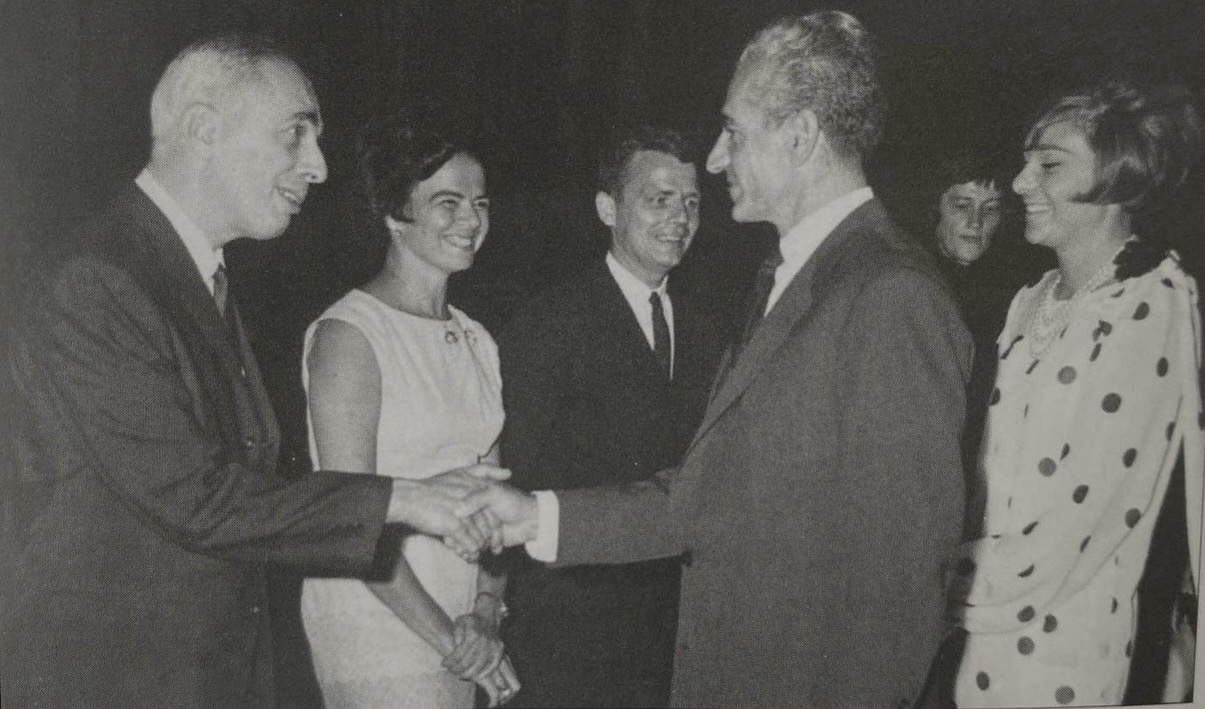
Bernard Lewis meets Mohammad Reza Shah, early 1970s.

Lewis meets Mohammad Reza Shah, early 1970s.

Later, he wrote much-discussed articles on the Iranian revolution, particularly for the New York Review of Books in the 1980s and 1990s. (These can be found in his two collections, Islam and History and From Babel to Dragomans.) He never visited the Islamic Republic, despite receiving an invitation to participate in a conference on religious dialogue. “The subject is a very interesting and important one, but I did not feel inclined to discuss it under the auspices of the current regime.”

I was his student at Princeton during the Iranian revolution, and Lewis shares a revealing story about that time, which I remember well. Few in the West knew much about Ayatollah Khomeini, and neither did Lewis, so he went to the university library to see if Khomeini had written anything. There, he found the Arabic and Persian texts of Khomeini’s lectures in exile, now known in English as Islamic Government. This would later be called Khomeini’s Mein Kampf, a fitting comparison according to Lewis. 

It was a work of unrelenting extremism, promising a harsh and purifying Islamic regime. Lewis struggled to get Washington and the New York Times to take it seriously: many wanted to believe that Khomeini would fade away if the monarchy fell. You can see a youngish Lewis on TV here, eloquently warning of what would happen if Khomeini gained power. He was right, and Iran ended up with a clerical dictatorship. The Iranian revolution brought Lewis into the American spotlight for the first time, although it was 9/11 that later catapulted him into the stratosphere.

If Lewis were here, I think the media would ask him the now-ubiquitous question: Is regime change possible, and will foreign military action accelerate it? From time to time, the media did ask him that question, so we have his past answers spanning twenty years.

Lewis repeatedly insisted that the regime couldn’t last. In 1993, he told Le Monde:

The regime is firmly in place, but sooner or later it risks being replaced by a new Reza Khan. Regional centers that have become stronger could emerge, and Tehran’s power could be diminished. Some general might come with his army into the capital to restore the unity of the nation. This may be how the Islamic Revolution in Iran will end; it could happen tomorrow or in fifty years.

This speculation relied on Iran’s own history for a precedent. Reza Khan was the generalissimo who seized power and made himself shah in 1925. But in 1997, Lewis offered a different analogy, from Europe’s repertoire. The “aging and tiring” regime

faces mounting discontent among ever larger sections of the population at home. The Iranian revolutionaries are in many ways following the path of their French and Russian predecessors—the struggle of radicals and pragmatists, the terror, the Thermidorian reaction. It is not impossible that the Iranian Revolution, too, may culminate in a Napoleon or a Stalin. They would be wise to remember that Napoleon’s career ended at Waterloo and St. Helena and that Stalin’s legacy to the Soviet Union was disintegration and chaos.

Yet, while these analogies from the 1990s differed, Lewis anticipated a strongman would rise, centralize power, and break the fever of the revolution. 

After 9/11, Lewis began to speak of a different engine of regime change: not a man on horseback but the Iranian people. In 2001, he was asked if any country in the region was moving toward democracy. He gave a surprising answer:

I would say Iran is moving in that direction. They do have elections of a sort, it’s true, under a whole series of constraints. Nevertheless, it has been possible in Iran for the electorate, the people in general, to express an opinion. It’s indirect, it’s ineffectual, but it’s not unimportant because of that. And what you have, in effect, now in Iran is two governments: an elected government, which has no power, and a ruling government which was never elected and is not answerable. And that sets up tensions, which may well lead to the development of more democratic institutions.

Not only were Iranians moving toward democracy. They were moving toward America. In 2002, he noted that “after the events of Sept. 11, great numbers of people came out into the streets in Iranian cities, where, in defiance of the authorities, they lit candles and held vigils in sympathy and solidarity with the victims in New York and Washington. This contrasted markedly with the scenes of rejoicing elsewhere.” 

From this, he developed a thesis he repeated again and again: “While the citizens of supposedly ‘friendly’ Arab nations sometimes harbor deep anti-American resentment, the populations living under fiercely anti-American dictatorships—most notably Iran and Iraq—often hold strongly pro-American sentiments.” Indeed, they saw the United States as potential liberators. “You remember the scenes of rejoicing in Afghanistan,” he told an interviewer in 2002, after the United States brought down the Taliban regime. “I’ve been told by Iranian friends that that would look like a funeral compared with the rejoicing in Iran, if America would step in and help them get rid of their government.”

At about the same time, Lewis participated in an independent study group convened at the Pentagon’s behest. Its report, “Delta of Terrorism,” co-signed by Lewis and twelve other people, is remembered for advocating regime change in Iraq. But it also included a section on Iran. Not surprisingly, the Iran discussion followed lines of argument Lewis made elsewhere: Lewis was the senior figure in the group with knowledge of the Middle East, and the other two were his self-described disciples. 

Iran was presented there as “the most populous, developed, sophisticated society in the Muslim Middle East,” and “the region’s universal joint.” Its people were “increasingly pro-American, seeing the United States as the counterforce to a tired and calcified regime.” Thought of “any deals or accommodations” with the regime should be banished; the American goal should be “to undermine and eventually replace” it.

But this would happen from within. The United States “should begin contingency planning now for a U.S. response to a spontaneous popular revolution in Iran,” encouraged by “a Reagan-style information campaign of the kind we waged successfully in Poland and Serbia. Iran constitutes the new Eastern Europe for us. A liberated Iran—like a liberated Eastern Europe—transforms the regional power equation. ” 

Indeed, so powerful were the internal forces for change that they required only encouragement. “I realize I am sticking my neck out,” Lewis said in 2003, “but I would say that the prospects of a reasonably easy transition to democracy are better in Iran than in Iraq, because the regime in Iran, with all its faults, was not as destructive as that of Saddam Hussein.” Easy? In 2007, he discerned a level of discontent at home, which could be exploited. I do not think it would be too difficult to bring it to the point when the regime could be overthrown.”

In 2011, he added another element: fracturing within the regime. He told the Wall Street Journal:

There is strong opposition to the regime—two oppositions—the opposition within the regime and the opposition against the regime. And I think that sooner or later the regime in Iran will be overthrown and something more open, more democratic, will emerge. Most Iranian patriots are against the regime. They feel it is defaming and dishonoring their country. And they’re right of course.

Lewis didn’t specify a timeline for this process, but he still framed it as an internal one.

Alas, the nuclear program made waiting problematic. Lewis had a strong view on Iran’s program. “There is a radical difference between the Islamic Republic of Iran and other governments with nuclear weapons,” he wrote. “This difference is expressed in what can only be described as the apocalyptic worldview of Iran’s present rulers.” Famously, he said that for Iran’s regime (under Ahmedinejad in particular), Mutually Assured Destruction (MAD) was “not a constraint; it is an inducement.” (In 2012, Israeli Prime Minister Netanyahu quoted Lewis before the UN, adding this flourish: “Iran’s apocalyptic leaders believe that a medieval holy man will reappear in the wake of a devastating Holy War, thereby ensuring that their brand of radical Islam will rule the earth.”)

Even so, Lewis repeatedly ruled out a military “invasion” to change the regime. He said this in 2006:

I don’t think it’s a good idea to launch an armed invasion. There is a great deal one can do short of that to indicate displeasure, to make things difficult and to encourage resistance among the subjects of the Iranian government. And there is ample evidence of widespread unhappiness and discontent among the people of Iran. I think we could do more to encourage and help them in a number of ways.

In 2007, he reiterated his objection. What Iranians wanted was “not a military invasion. My Iranian friends and various groups are unanimous on that point. They feel a military invasion would be counterproductive.”

He also hesitated about military action short of invasion. In a lecture given sometime between 2009 and 2011, he insisted that other options hadn’t been exhausted.

What are the possibilities in dealing with this threat from Iran? I think one can divide them into two: one is the obvious military one. It may reach a point when there is no other; I do not personally believe that we have reached that point yet, and I believe that, even in talking about it, it is very important not to give the regime a free gift of something that they do not at present enjoy, that is, the support of Iranian patriotism…. I think one has to handle this very carefully and before deciding that the military option is the only one that remains. There are possibilities internally within Iran, opportunities which I think have been underused or totally neglected.… It seems to me that, for the moment, one should aim at disruption rather than a military action.

He immediately followed this with a caveat: “I must, in concluding, admit the possibility that one may, at some time, reach a situation when there is no other option available.” But for the rest of his life—he died in 2018 just shy of age 102—he never publicly stated that such a “point” or “situation” had been reached. In 2012, when asked whether he supported military action against Iran, Lewis said: “I don’t think it’s the right answer…. We should do what we can to help the Iranian opposition. We could do a lot to help them and we’re not doing a damn thing, as far as I know.” “It may come to [military action],” he added, but it hadn’t yet. 

So Lewis didn’t completely rule out using force, but he viewed it as a last resort that, if mishandled, could spark a patriotic outpouring and turn into a “free gift” to the regime. 

Would he have made the same argument today? It’s a question that cannot be answered, as events since his death would have shaped his perspective. The most significant of these are progress in Iran’s nuclear program, which was less advanced in the 2010s, and the regime’s growing ruthlessness. Lewis lived a very long life and saw historic shifts in power. He stayed relevant for so long because he understood and explained change. So we don’t know how he would have responded to changing conditions in Iran, and we can only regret that no one of his caliber has replaced him.

Still, revisiting Lewis helps us frame the questions that will occupy us moving forward. Is there a foundation for democracy beneath the battered shell of the Islamic Republic? If so, can foreign military and clandestine actions help expand it? If there are two oppositions, inside and outside the regime, could they unite? Or will the war only strengthen the regime? It’s probably fair to say that the threat posed by Iran’s regime has been diminished. The key question now is, will the promise of Iran’s people also be fulfilled?


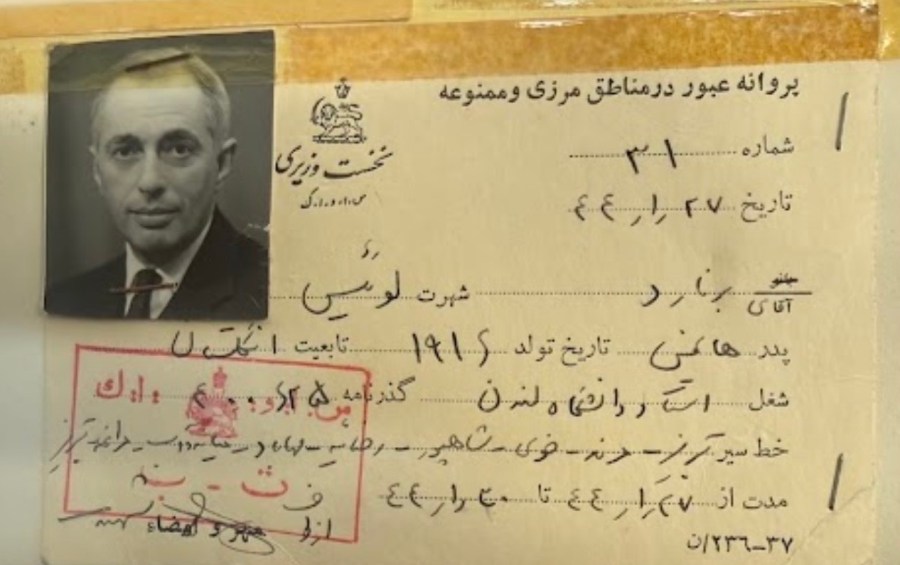
Header image: An official travel permit issued to Lewis in April 1965 for a trip across Iranian Azerbaijan starting in Tabriz. This followed a lecture series delivered by Lewis in Tehran, organized by the British Council.


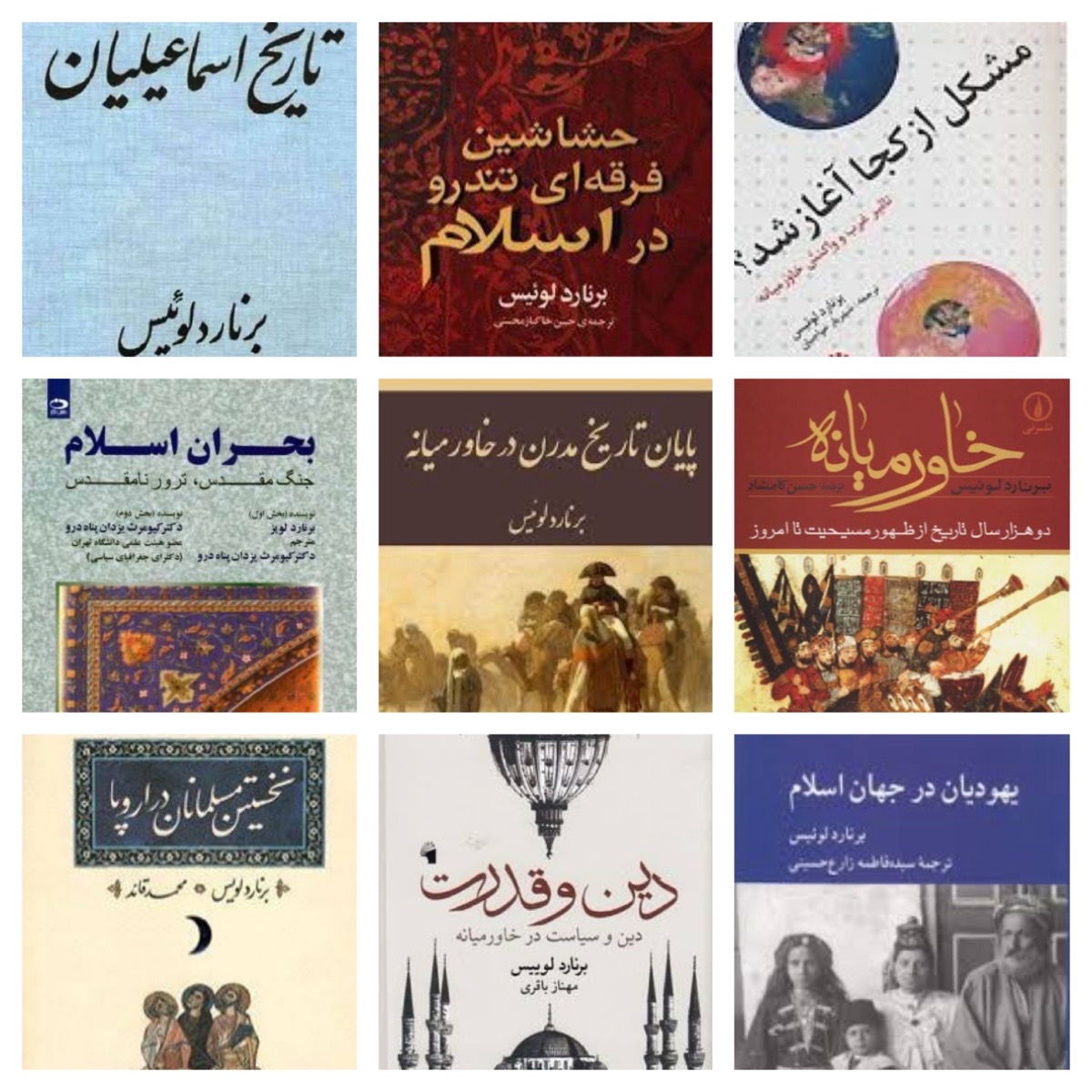
Below: covers of Lewis’s books in Persian translation. Left to right, top row: The Origins of Isma‘ilism; The Assassins: A Radical Sect in Islam; What Went Wrong?: Western Impact and Middle Eastern Response. Middle row: The Crisis of Islam: Holy War and Unholy Terror; The End of Modern History in the Middle East; The Middle East: A Brief History of the Last 2,000 Years. Bottom row: The Muslim Discovery of Europe; Faith and Power: Religion and Politics in the Middle East; The Jews of Islam.
In Iran, survival isn’t victory

On February 27, 1991, President George H.W. Bush addressed the American people, announcing the end of offensive military operations against Saddam Hussein’s forces. Iraqi troops had been completely expelled from Kuwait, which they had invaded the previous summer. During six weeks of bombing and a 100-hour ground campaign called “Desert Storm,” the U.S. and coalition allies destroyed about two dozen Iraqi divisions, hundreds of Iraqi aircraft, thousands of tanks, and Iraq’s weapons industry. A retreating Iraqi column was utterly destroyed during its escape from Kuwait. Gruesome images from that “highway of death” vividly showed the scale of Iraq’s defeat.

The following day, February 28, Bush made this entry in his diary:

It’s now early Thursday morning on the 28th. Still no feeling of euphoria. I think I know why it is. After my speech last night, Baghdad radio started broadcasting that we’ve been forced to capitulate. I see on the television that public opinion in Jordan and in the streets of Baghdad is that they have won. It is such a canard, so little, but it’s what concerns me. It hasn’t been a clean end—there is no battleship Missouri surrender. This is what’s missing to make this akin to WWII, to separate Kuwait from Korea and Vietnam.… The headlines are great. “We Win.” The television accurately reflects the humiliation of Saddam Hussein and it drives the point home to the American people. But internationally, it’s not there yet, at least in the Arab world that has been lined up with Saddam.

The fact that the enemy refused to acknowledge defeat troubled Bush. “Obviously,” he comforted himself, “when the [Iraqi] troops straggle home with no armor, beaten up, 50,000 … and maybe more dead, the people of Iraq will know.” But if they knew, Saddam regime’s made sure they never showed it. In 2003, Saddam shared his perspective with American television journalist Dan Rather:

In 1991 Iraq was not defeated. In fact, our army withdrew from Kuwait according to a decision taken by us. Yes, it withdrew, but when we were back within our boundaries, the boundaries of Iraq, the Iraqi army was not defeated. Nor was the people of Iraq…. It was [Bush’s] decision to…. stop the fighting. And, consequently, Iraq was not defeated.

No one knows how the current Iran war will end, but two things seem certain. The Supreme Leader will not send his representative to sign an unconditional surrender on the deck of the aircraft carrier Abraham Lincoln. And whoever leads the regime will declare victory for Iran, regardless of how much damage the U.S. and Israel inflict. In that respect, the Islamic Republic is no different from Saddam’s Iraq.

Iran has not experienced a military victory against a foreign enemy since the 18th century. As a result, its leaders are skilled at presenting defeats as draws, and draws (like the Iran-Iraq war in the 1980s) as victories. This is a coping strategy that allows Iran to preserve some dignity as the inheritor of past empires, which once thrived on legendary military triumphs and territorial conquests. A self-soothing narrative hides from Iranians the simple truth that Iran isn’t a global power. It’s not even the leading power in the Middle East. It’s too poor, corrupt, mismanaged, and divided to enjoy such a high status, no matter how much the regime tries to rally Iran’s people into sacrifices.

It’s now being said that if the regime remains in power, it’s somehow a triumph. “To survive would count as victory for Iran’s regime,” announces the Economist. But that’s Saddam-think. Survival isn’t victory unless it’s accompanied by a strategic gain that outweighs military losses. Since 1978, the Islamic Republic has aimed for Iran’s dominance of the Persian Gulf and the broader Middle East through ambitious weapons programs and support for proxies across the region. Survival is a poor substitute for losing all that, and most of it is already gone.

In 1991, George H.W. Bush had people around him who reassured him that it didn’t matter what people in the streets of Amman or Baghdad thought. What mattered was the objective achievement of defined war aims. They understood then, and we know in retrospect, that the war finished off Iraq as a pretender to regional power. Mission accomplished.

Thirty-five years later, Operation Desert Storm is remembered as the last decisive victory the United States won in a regional war—even though, at the time, America’s president thought it wasn’t a “clean end.” If that war didn’t end cleanly, the Iran war won’t either. The question is whether those who launched this war have the wisdom to realize it.

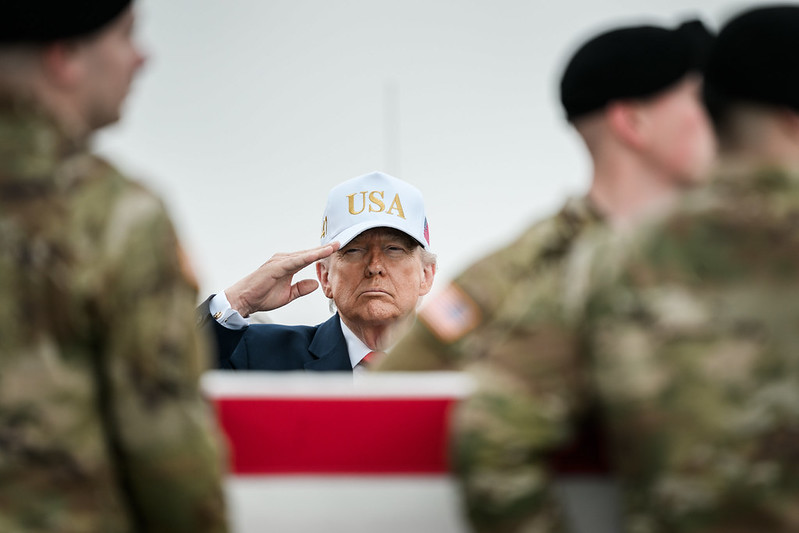
Header image: President Donald J. Trump attends transfer of remains of six US soldiers killed in an Iranian drone strike in Kuwait, March 7, 2026, at Dover Air Force Base, Delaware. Official White House photo by Daniel Torok, public domain.

Syria in the Fertile Crescent


In 2015, I gave a lecture on the deeper historical background to the civil war in Syria, and I published it in my 2016 book The War on Error. Under present circumstances, it seems as relevant as ever, and I wouldn’t change a word. 

When the revolution (or uprising, or insurgency) started in Syria in 2011, many people saw it as the obvious continuation of the so-called Arab Spring. There had been revolutions in Tunisia, then Egypt and Libya—countries with Mediterranean shorelines. When conflict broke out in Syria, analysts initially read it as an extension of the same process.

In retrospect, it was not. The countries of North Africa are fairly homogeneous and overwhelmingly Sunni Muslim. There are regional and tribal differences in Libya, and Egypt has an important Coptic Christian minority. But revolutions in these countries did not involve the transfer of power from one religious or sectarian or ethnic group to another.

In Syria, political transformation threatened to do precisely that. And so what evolved in Syria wasn’t an extension of the “Arab Spring,” but a continuation of another series of conflicts, far more devastating in their effects. Going back from the present moment, chronologically, its predecessors included the post-2003 Iraqi civil war, the Kurdish insurgency in Turkey, the Lebanese civil war from 1975 through 1989, and, still more remotely, the Armenian genocide of 1915. These might conveniently be called the wars of the Fertile Crescent.

What is the Fertile Crescent?

What the Arabs somewhat laboriously call “Iraq and Sham” or “Iraq and the Levant” (from which derive ISIS and ISIL) has a perfectly serviceable English name. It was invented by James Henry Breasted, an American Egyptologist at the University of Chicago, and popularized in his 1916 book Ancient Times. Breasted defined the Fertile Crescent as the expanse of territory set between the desert to the south and the mountains to the north—a place constantly under pressure from invaders, precisely because it is sustaining of life (Breasted called it “the cultivable fringe of the desert”). He marked it as a zone of “age-long struggle … which is still going on.”1

“Fertile Crescent” gained popularity in the West because it seemed fertile in another way, as the site of the earliest biblical narratives and the birthplace of monotheism. It was the presumed locale of the Garden of Eden, which generations of early cartographers sought to place on a map.2 It was the site of the Tower of Babel, which purported to explain the emergence and diffusion of different languages. It was the stage for the wanderings of the patriarch Abraham, who crossed it from east to west—a migration in the course of which he came into communion with the one God. The Bible, before it linked the Holy Land to Egypt, linked it to Mesopotamia. And while the peoples of the Fertile Crescent may have been many, and of many languages, they were the first to imagine God as one.

The Fertile Crescent thus came to signify diversity amidst unity: a multitude of peoples believing in the existence of one God. This was in contrast to Greece and Egypt, which were cases of single peoples of one ethnic origin and language believing in many gods. It was in the Fertile Crescent that Islam would be tested as a unifying force for diverse populations. Only after passing that test did it expand across the globe. The Fertile Crescent itself then would be folded into the great Islamic empires. In the last of them, the Ottoman, it sometimes flourished and more often languished as a single, borderless expanse.

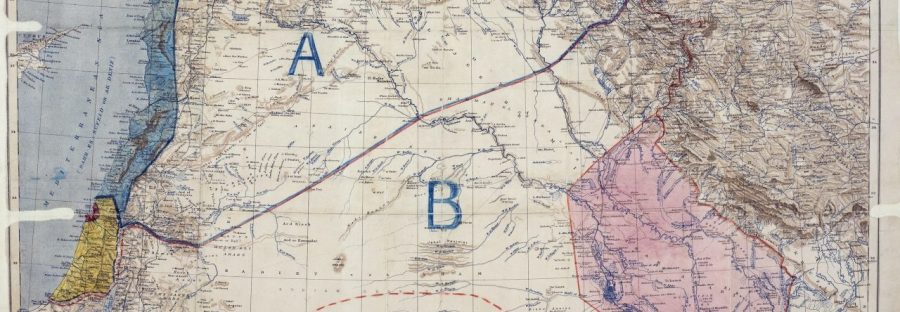
Sykes-Picot

But in 1916, the same year that Breasted popularized the phrase Fertile Crescent, Britain and France concluded the Sykes-Picot agreement for the partition of the Ottoman Empire, dividing this zone into states and drawing straight borders through the desert. Within those borders, Britain and France imposed one faction over all others in political orders that depended to some degree or another on coercion. Power in Iraq and Syria coalesced around minorities. In Iraq, a Sunni minority was imposed over a Shi‘ite majority; in Syria, a Shi‘ite-like minority, the Alawis, over a Sunni majority. (The Kurds, minorities in both countries, were at the bottom of the heap.)

In Mesopotamia, Britain imported a Sunni monarchy from Arabia and bound it to the indigenous Sunnis of Baghdad and its surroundings, giving them dominion over a vast territory unified under the name of Iraq. The French initially tried a very different approach in Syria. Whereas the British sought to unify, the French originally intended to divide: for a period in the 1920s and 1930s, what would become Syria was in fact divided into an Alawite state, a Druze state, the states of Aleppo and Damascus, and Lebanon. In 1937, the French acceded to the demands of Syrian nationalists, and also unified Syria (excluding Lebanon). But at the same time, the French worked to empower minorities, above all the Alawis, by recruiting them into the military, in order to keep Arab nationalism in check. After independence, the Alawis parlayed that advantage into their own dominion.

While the rulers of Syria and Iraq stood, from a sectarian point of view, on opposite ends of the spectrum, they were both cases of post-colonial minority-domination in states engineered from the outside. Still, there was a difference. Syria’s ruling minority was much more of a minority. The Alawis in Syria are probably no more than twelve percent of the population whereas the Sunnis in Iraq are probably about twice that percentage. And while the ruling Sunni minority in Iraq had an integral connection with the wider Sunni majority in the region, the ruling Alawis in Syria had no such backstop, and ended up relying on distant Iran.

Perhaps Breasted would have warned us that this order couldn’t last. That it lasted as long as it did was the result of ruling minorities modernizing their repressive machinery in ways the ancients could never have imagined. But this machinery was discredited and dismantled by the United States in Iraq, and it has broken down from within in Syria. Power is now shifting from one religious or sectarian group to one which happens to be larger or more powerful or more connected to sources of outside support. Or it is fragmenting altogether.

From Strength to Weakness

There is much irony in the contraction of Iraq and Syria. Both states, at their twentieth-century high watermarks, were strong enough to project their power beyond their borders, and they even tried to redraw them. Iraqi nationalists believed that Iraq should have been awarded still wider borders, especially along the Persian Gulf littoral. Syrian nationalists likewise claimed that “greater” Syria should have been incorporated within Syria’s borders. The 1919 General Syrian Congress passed this resolution: “We ask that there should be no separation of the southern part of Syria, known as Palestine, nor of the littoral Western zone, which includes Lebanon, from the Syrian country. We desire that the unity of the country should be guaranteed against partition under whatever circumstances.”3

But it wasn’t to be. A separate Lebanon and Palestine came into existence. For this reason, Syria refused to reconcile itself to its own borders. Indeed, for three years, from 1958 to 1961, Syrians readily agreed to dismantle their own independent state, and incorporate Syria into a union with Egypt called the United Arab Republic.

Iraqi president Saddam Hussein, when he thought he had the opportunity, attempted to redraw Iraq’s borders by force, through his invasion of Iran and his occupation and annexation of Kuwait. Syrian president Hafez Assad likewise occupied Lebanon and gave safe haven to the Kurdish PKK, which was headquartered in Damascus. Iraq and Syria seemed to have become powers in their own right. In the case of Syria, in particular, American secretaries of state and even presidents came to Damascus as supplicants, hoping to win its ruler over to their geopolitical concepts of regional order.

Now all that has been reversed. Not only is Syria no longer capable of projecting its power beyond its borders; others are meddling inside Syria, to advance their own agendas, in alliance with the various domestic factions, while Syrian refugees flee the country in the millions. Syria’s elites once regarded the state’s external borders as inadequate to Syria’s great historical role, but Syria is now incapable of preserving unity even in its “truncated” borders. Syrians were educated to believe that the state of Syria was the nucleus of a greater Syria, itself the nucleus of a greater Arab unity. But in practice, Syria itself could not resist imploding into a de facto partition, driven by deep internal divisions.

Now it is not Syria’s power, but Syria’s weakness, that threatens the region. Albert Hourani, the historian of the Middle East, once wrote this: “Even were there no Syrian people, a Syrian problem would still exist.”4 That is exactly where the Middle East is now stuck. There is no Syrian people, but there is still a Syrian problem, and it will continue to dominate the region and worry the world, perhaps for years to come.

Since this disorder has no name—certainly none as succinct as “Sykes-Picot”—I propose to call it, for now, the Breasted Fertile Crescent. This would be a Fertile Crescent made up of shifting principalities, subject to occasional intervention by surrounding powers, characterized by variety and diversity, essentially without fixed borders—a place where Shi‘ites struggle against Sunnis, Arabs against Kurds, the desert against the sown. The Breasted (dis)order will persist, until some great outside power or group of regional powers proves willing to expend the energy needed to restructure the Fertile Crescent in accord with their interests—something the Ottomans did for four hundred years, Europe did for fifty years, and America has not yet attempted at all.

Notes

  1. James Henry Breasted, Ancient Times: A History of the Early World (Boston, MA: Ginn, 1916), 100–1.
  2. See Alessandro Scafi, Mapping Paradise: A History of Heaven on Earth (Chicago, IL: University of Chicago Press, 2006).
  3. J. C. Hurewitz, The Middle East and North Africa in World Politics: A Documentary Record, vol. 2: British-French Supremacy, 1914–1945 (New Haven, CT: Yale University Press, 1979), 181.
  4. A.H. Hourani, Syria and Lebanon: A Political Essay (London: Oxford University Press, 1946), 6.