The National Association of Scholars has produced a new report on university-based Middle East centers, authored by Neetu Arnold. I participated in the launch webinar, and focused specifically on the funding of the centers. Bottom line: I don’t believe the problem in Middle Eastern studies, including the centers, can be fixed by more transparency or oversight of the funding. It’s baked into academic culture. And I show how reductions in external funding have loosened the last restraints on the radicals when it comes to Israel.
You can watch the entire webinar here, or watch my own opening remarks (duration: 12 minutes) at this link or below.
In 1986, Bernard Lewis published an unexpected book. Entitled Semites and Anti-Semites, it combined a careful typology of Jew-hatred, and a sobering account of how antisemitism had spread through the Arab world. Regarding the latter, Lewis made this arresting judgment:
The level of hostility, and the ubiquity of its expression, are rarely equalled even in the European literature of anti-Semitism, which only at a few points reached this level of fear, hate, and prejudice. For parallels one has to look to the high Middle Ages, to the literature of the Spanish Inquisition, of the anti-Dreyfusards in France, the Black Hundreds in Russia, or the Nazi era in Germany.
Lewis thoroughly documented the extent of the “new antisemitism” with his customary erudition, and the book became a classic. Yet it also stirred controversy. Its conclusions were challenged both by the Palestinian activist Edward Said, and by the historian of antisemitism Robert Wistrich.
Why did Lewis write this book? And why did he conclude that Arab antisemitism owed more to Europe than to Islam? In this illustrated webinar, done for the Institute for the Study of Contemporary Antisemitism at Indiana University, I take a deep dive into the background and substance of Semites and Anti-Semites. View it here or below.
(And a correction: the head of MI6 was Stewart Menzies, not Robert.)
Update, Fall 2024: This lecture has been published as an article in the journal Antisemitism Studies. View it here.
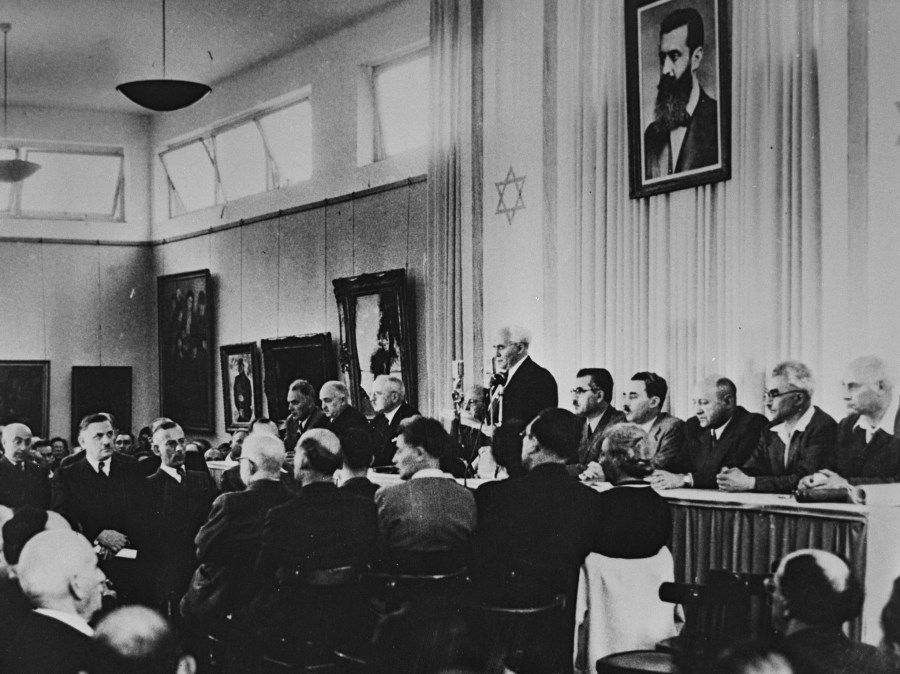
On Israel’s last Independence Day, Mosaic ran the first installment of my series on Israel’s declaration of independence. Since then, it’s published all seven parts. This Independence Day provides a splendid opportunity to read the whole series, and reflect on the subtle text of the declaration, as well as the dramatic events surrounding its drafting and proclamation.
If you subscribe to Mosaic, you can do that right here. If you don’t (why not?), you can download the series right here. The series originated in lectures I gave under the auspices of the Tikvah Fund, and you can still watch them (they’re illustrated!) right here.
If you want to hear a stirring reading of the declaration (by my son Adam),go here or watch below. He does a splendid job.

 Martin Kramer on the Middle East
You must be logged in to post a comment.