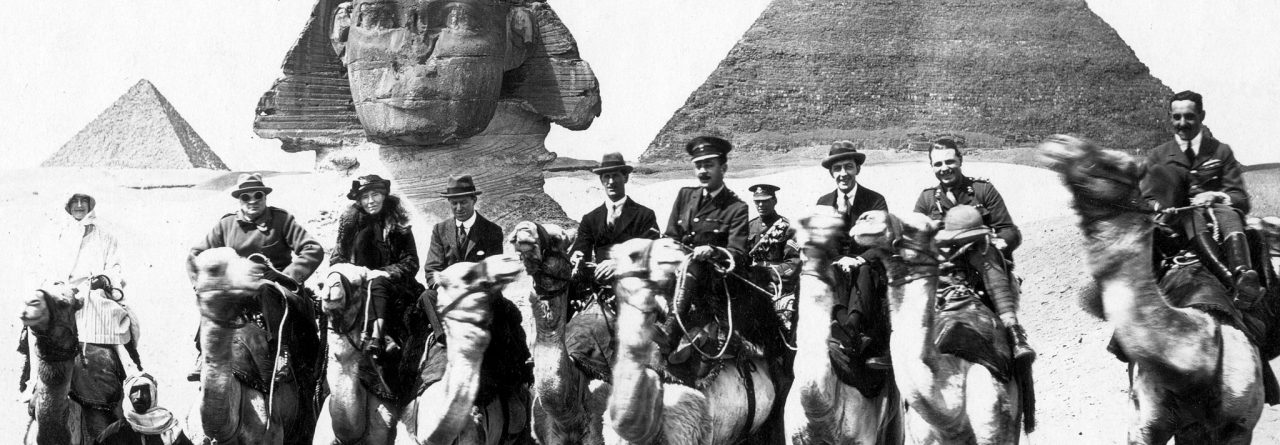
He ain’t heavy, he’s my Muslim Brother

Martin Kramer delivered these remarks on September 24, on a panel entitled “Islam, Islamism, and U.S. Foreign Policy.” He shared the podium with the French Arabist Gilles Kepel, author of a new book, The War for Muslim Minds. The event took place at The Washington Institute for Near East Policy.

On September 11, the Washington Post published an article entitled “In Search of Friends Among the Foes.” The subject was the debate over whether the United States should begin a dialogue with the Muslim Brotherhood and other so-called “moderate” Islamists. The very next day, the newspaper ran a lengthy opinion piece, arguing that the United States should do just that: “We need to listen to the bad guys too to understand where the fissures—and opportunities—might be.”

Reading the article, I had a pervasive sense of déjà vu. A similar debate took place in the early- and mid-1990s, among many of the same participants. The question of dialogue is a perennial one, arising whenever it looks like Islamists may be gaining ground. The debate a decade ago was prompted by the Islamist surge in Algeria and Egypt. That surge subsided, and so did the debate. The renewed debate is prompted by a forboding that Islamists may come out on top in Saudi Arabia or Iraq.

Today, there is an added incentive for pursuing such dialogue. Even if these so-called “moderate” Islamists are not about to take power, they might be useful as a counter to the jihadists. After all, for several decades, the United States looked to “moderate” Islamists to help counter the Soviet threat. Miles Copeland, CIA operative, wrote in his book The Game of Nations about how the United States, circa 1950s, tried to find an Iraqi “holy man” to carry the anti-Communist message. And there was the cooperation with Islamists that flourished after the Soviet invasion of Afghanistan. If the U.S. so effectively played this card against the Soviet Union, why not play it against Al Qaeda? There are rivalries there, so we are told; why not build on them? “You want in a Machiavellian way to have fundamentalists do [our] dirty work,” one veteran of the old battles tells the Washington Post.

Add to this the sense that the U.S. paid a price for not having some Islamic leverage on its side during the Iranian revolution. About 20 years ago, a State Department veteran, Ambassador Hermann Eilts, made the case for dialogue before Congress:

We must develop new modes of diplomacy, potentially involving Islamic leaders, for possible use in crises situations. During the Carter Administration, efforts were made by President Carter to persuade estimable Islamic leaders, respected by Khomeini, to intercede with the Ayatollah for the release of the hostages. It did not work because no Islamic leader could be found with the stature to confront Khomeini on an Islamic level or a willingness to stick his neck out for the U.S. But this type of contingency, that is, soliciting intercession on an Islamic level, should be kept in mind and planned for well in advance. Hence, the desirability of sustaining close and constant dialogue with senior Islamic figures everywhere.

Whenever I hear the word “dialogue,” I ask myself the question: dialogue about what? What does the United States have to say to the Muslim Brotherhood in a “close and constant dialogue”? What does it hope to learn?

There is a facile argument that it is good to hear their ideas first-hand. But there is nothing that cannot be learned about the Muslim Brotherhood’s positions from readily available sources. A good analyst, relying on the mass of openly available texts, will have no trouble eliciting the worldview of, say, Sheikh Yusuf al-Qaradawi, the Muslim Brotherhood’s actual paramount guide. Tell me you want to meet with an Islamist to tempt him with a cash-stuffed envelope, that is one thing. But meet him to sound him out? If you have done your homework, he will tell you nothing you do not know already.

Quid pro quo. The point of dialogue is give-and-take. It is here that the problem arises, and it is this: Islamists would give us very little, and take from us a great deal.

What would the so-called “moderate” Islamists demand from such a dialogue? Here is the laundry list:

  1. Visas for activists seeking refuge or asylum or the chance to proselytize in the United States.
  2. The freedom to raise money in the United States, ostensibly for widows and orphans, for school lunches and prayer rugs (i.e., access to cash-stuffed envelopes).
  3. U.S. agreement to urge or compel Arab-Muslim regimes like Egypt’s to open space for Islamist political activism which is now suppressed.
  4. A U.S. repeal of its Middle East policy, including its support for Israel.

And what do the “moderate” Islamists offer in return?

  1. Condemnations of the jihadists for actions like the September 11 attacks, the March 11 attacks in Madrid, and the slaughters in Bali and Beslan.
  2. The implicit promise that once the United States throws open its doors to Islamist activism, it will be accorded immunity from further attacks. (The implication is that, to improve one’s immune system, one should allow freedom of operation to an even wider range of Islamists.)

Any dialogue with the Muslim Brotherhood or its appendages must inevitably develop along these lines. This is the core deal, the very substance of any “close and constant dialogue.” And there is ample precedent: there are several European governments that have engaged in such dialogue and cut this deal, either in whole or in part.

Let me explain why, to my mind and from the point of view of the United States, this is a raw deal.

If the United States has one achievement to show for the war on terror, it is this: there has not been a repeat of a 9/11-style attack on any scale, even in miniature, on U.S. soil. There are those who claim that U.S. policy has escalated the terror war, and that it has been unsuccessful. But this ignores the fact that the continental United States remains the prime terrorist target. This country’s enemies have been unable to strike it, partly because of the stringent measures of homeland security put in place after 9/11. Why would the United States endanger this indisputable achievement by opening itself up to Islamist penetration? Why would it run the risk of becoming another Londonistan? In return for what?

For we know from experience that Islamist “condemnations” of other Islamists tend to be hedged and conditional. And we know from experience that the money raised for the widows and orphans often gets diverted to assassins and bombers. And we especially know that Islamists use the freedoms of the West to attack precisely those in the East who are willing to work with us closely, whether they be regimes or liberals. This offends Muslim anti-Islamists mightily, and it makes us appear like wavering allies.

And even if, for the sake of argument, we wanted to play this tune in a minor key, there is no certainty that we would know who the “moderate” Islamists are. If there is anything more simplistic than lumping Islamists together, it has been the attempt to divide them into the neat classifications of “moderate” and “extremist.” Gilles Kepel in his book has a crucial passage on the branches of salafism, the pietistic and the jihadist. He comments on

how porous the two branches of salafism really are: to pass from one to the other is quite easy. The intense indoctrination preached by the sheikhists [e.g., the Saudi-style imams] reduces their flock’s capacity for personal reasoning, which makes these followers easy prey for a clever jihadist preacher. The first stage of brainwashing occurs at the hands of a pietistic salafist imam. Later they encounter a jihadist recruiting sergeant, who offers to quench their thirst for absolutes through a bracing activism.

Even if, as Kepel writes, such a migration to jihadism is not inevitable, we cannot know in advance or even in real-time when it is occurring. So why would we take a chance?

Engaging Islamists in a common cause against the Soviets was one thing: the Soviets were unbelievers. Even so, the anti-Soviet partnership was fraught with risks, culminating in the blowback of 9/11. Here we would be engaging Islamists in the hope that they would counter their own radical offspring. The risks here, in trying to turn Islamist against Islamist, would be greater by magnitudes.

Europe’s bind. So the advantages of dialogue are not at all clear, while the disadvantages are obvious. If one needs more evidence, one might look to Europe. Kepel’s last chapter is called “The Battle for Europe,” and he opens with these words: “With events in Madrid in spring 2004, Europe emerged as the primary battlefield on which the future of global Islam will be decided.” This is the same Europe that cut a deal with Islamists years ago, offering visas and asylum on the understanding that Europe was neutral ground. If it is now the “primary battlefield,” as Kepel describes it, it is because the United States has successfully pushed back the front line since 9/11, and because of decades of complacency of European elites.

What Europeans are discovering is that deals with Islamists, once cut, don’t always last. The U.S.-Islamist deal over Afghanistan did not last, and the European-Islamist deal is coming apart now. Europe’s unique dilemma is that Islamism is so thoroughly implanted in vast emigre communities (17 million), that it may be necessary for Europe to cut still another deal, even less favorable than the previous one. Kepel has an interesting section on how some Muslims have come to consider Europe part of dar al-Islam, the abode of Islam. The trade-off these Islamists now offer is a forgoing of violence in return for implementation of Islamic law for Muslims on European soil—nothing less. And when Europe balks at this, as France did when it banned headcarves from schools, it finds itself held hostage.

In fact, dialogue with Islamists has never provided the iron-clad immunity Europeans thought it would. For example, it was from a Paris suburb that Khomeini conducted his campaign against the Shah. When he returned to Iran, an Air France jet carried him home. The French, by their hospitality and solicitude, were quite certain they would enjoy an inside track with the revolutionary regime.

Did they? Over the next few years, their troops were blown up in Beirut by Iran’s clients, their nationals were abducted in Lebanon at Iran’s behest, and Iranian assassins wantonly killed dissidents on their territory. Agents of Iran even subjected Paris to a bombing campaign, which prompted the so-called war of the embassies, during which both countries laid siege to one another’s embassies. In short, the French got the same treatment as the Americans, if not worse, despite a policy that had effectively coddled Iran’s Islamists on their march to power. This has been replicated today: despite France’s opposition to U.S. policy in Iraq, Iraqi Muslim extremists have seized French hostages, and have resisted all appeals for their release.

The wrong Muslims. If some of the Islamists today were on a march to power, the case for dialogue might be more compelling. But where are these Islamists? Where is the Khomeini of Saudi Arabia or Iraq? Skeptical as we may be about the prospects for the Saudi monarchy or the Iraqi government, it is difficult to see Islamists who could replace them. And what would we talk about in a dialogue with the kinds of Islamists who seek to seize power in Saudi Arabia or Iraq? Would not such a dialogue merely antagonize and alienate those forces for stability that still have a chance to see the crisis through? And do we really think that were we to facilitate the ascent of any of these groups, they would be grateful for it? Any more so than the Afghan mujahideen?

In sum, dialogue with “moderate” Islamists, far from undercutting the jihadists, would undercut their opponents. It would muddle the message of the war on terror—the message that there can be no middle ground, and that Muslims must choose. Islamists not only wish to create a middle ground in the Middle East, but they seek to extend it to American soil. Few things could undermine the war on terror more thoroughly than dialogue with them, because it would facilitate just that.

The United States has no use for equivocating Islamists. The United States does have use for dialogue with believing Muslims—those who share its vision of a Middle East that is free, and free of terror.

Sandbox: September 2004

Intifada lessons. I’m on the road, with no time to post, so here’s just a pointer. Brig. Gen. Michael Herzog is an old friend who recently finished a stint as top military aid to Israeli defense minister Shaul Mofaz. He’s written a wise and balanced assessment of four years of Palestinian-Israeli war. Read part one.
Wed, Sep 29 2004 11:01 pm
Foucault’s folly. In France, they’ve been marking 20 years to the passing of Michel Foucault. In America and Britain, the followers of Edward Said are marking the one-year anniversary of his death. In English-speaking academe, Foucault and Said go together like knowledge and power. So read this timely dissection of Foucault’s folly: his take on the Iranian revolution, as it unfolded. Foucault (October 1978): “One thing must be clear. By ‘Islamic government,’ nobody in Iran means a political regime in which the clergy would have a role of supervision or control.” And there’s a lot more where that came from. Edward Said suffered from a milder case of the same myopia when it came to Islamism. Is there a pattern here?
Mon, Sep 27 2004 7:30 pm
Hate speech. Last month, a group called Mouths Wide Open put on a collaborative performance at Washington Square Church in Manhattan, as a counterpoint to the Republican convention. They performed mostly music and sketches, in protest against administration policy. The sympathic reviewer in the New York Times ended by mentioning the low point: “Hamid Dabashi [see right below] delivered an incendiary diatribe, propelled by hatred of Israel and the United States—not just the current government, but the culture in general—that seemed out of place in this program. Yet it drew a standing ovation. The finale, in which Dominic Veconi, a boy soprano, sang ‘How Can I Keep from Singing?’ seemed even stranger coming immediately after Mr. Dabashi’s speech.” Hate speech does have a way of spoiling art.
Sun, Sep 26 2004 1:52 am
Academic fraud. More from the execrable travelogue (see below) of Hamid Dabashi, the Hagop Kevorkian Professor of Iranian Studies at Columbia. “What they call ‘Israel’ is no mere military state. A subsumed militarism, a systemic mendacity with an ingrained violence constitutional to the very fusion of its fabric, has penetrated the deepest corners of what these people have to call their ‘soul’.” Now how did Dabashi manage to glimpse into the deepest corners of the non-soul of the so-called “Israelis”? He doesn’t know Hebrew. On his trip to the West Bank, he skipped all of Israel except the airport. He didn’t have a single encounter with an Israeli who wasn’t on security detail. Yet he presumes to know what resides in Israel’s “deepest corners.” Hamid Dabashi: academic fraud.
Sun, Sep 26 2004 1:51 am
Dabashi gets dirt. Hamid Dabashi, professor at Bir Zeit-on-Hudson (Columbia), sets off for Jerusalem to get a clump of earth to place on the grave of Edward Said in Lebanon. On this, his first visit, he has no contact with Israel and Israelis, except for soldiers on guard duty and security guards at the airport. But he can see into Israel’s being with x-ray vision. “Half a century of systematic maiming and murdering of another people has left its deep marks on the faces of these people, the way they talk, the way they walk, the way they handle objects, the way they greet each other, the way they look at the world. There is an endemic prevarication to this machinery, a vulgarity of character that is bone-deep and structural to the skeletal vertebrae of its culture.” The passage is antisemitic.
Sat, Sep 25 2004 12:31 am
Vote MESA. In the spirit of democracy and mischief, I’m conducting a poll to see who’s the favorite in the elections for president of the Middle East Studies Association (MESA). It’s over at Sandstorm, on the sidebar. Your choices are pretty limited: Juan Cole or Fred Donner. You don’t have to be a member of MESA to join in the poll, but members are especially welcome. Needless to say, the poll ain’t scientific. Just good, clean fun. Read up on the candidates here.
Wed, Sep 22 2004 6:44 pm
The Big Lie. One William Fisher, journalist, has written an article on HR3077 for the Middle East Times. Fisher: “Big Brother will come in the form of an ‘advisory board’, which would have at least two appointees representing national security agencies. The board would oversee curricula, course materials, and even the hiring of faculty at institutions that accept federal government money for international studies.” Every claim in these two sentences is a bald lie. (The second sentence is refuted by the plain English of HR3077: “Nothing in this title shall be construed to authorize the board to mandate, direct, or control an institution of higher education’s specific instructional content, curriculum, or program of instruction.”) To dispel the lies, Congress should pass the bill.
Tue, Sep 21 2004 5:07 pm
Impact of Terror. Last night, CNN Presents broadcast Tim Wolochatiuk’s Impact of Terror, a documentary film on the 2001 suicide bombing of the Sbarro pizzeria in Jerusalem. The terrorist attack killed 15 innocents (seven of them children). One of the film’s merits is that it makes no mention at all of the bomber’s identity or his motive. It’s the fashion in documentaries to juxtapose bomber and victim. This is the profound moral failing of Simone Bitton’s The Bombing, a travesty predicated on a false symmetry, casting the perpetrators as victims. Suicide bombers deserve documentaries—completely separate ones. (See, for example, Suicide Bombers by Tom Roberts, shown by PBS over the summer.) CNN will broadcast Impact of Terror again this coming Saturday, 8pm and 11pm Eastern.
Mon, Sep 20 2004 5:52 pm
Woody, vénéré. So over the weekend I’m passing through Frankfurt airport, and I pick up a copy of Le Monde, and here’s an article about Woody Allen at a film festival in Spain, telling a press conference that Bush’s reelection would be a tragedy. Minor news interest, right? (Not one U.S. paper picked it up). But the Allen item is on page one of Le Monde. France and America: clash of civilizations.
Mon, Sep 20 2004 4:59 pm
French questions. Over the weekend, Richard Cohen wrote a piece for the International Herald Tribune on the French hostage crisis. As I did earlier in the Sandbox, he recalls that this is the second time around for Jacques Chirac on French hostages. Earlier instance: Lebanon, mid-1980s. Since then, France has bowed deeply to Arab public opinion, especially on Palestine and Iraq—but not deeply enough. “The kidnappers scoff at the view of France as friend,” writes Cohen. They say it is the enemy of the Muslims, for backing the Algerian regime against Islamists, for banning headscarves in public schools, and so on. Bottom line: “Chirac desperately needs to do better this time or he will face what he has up to now avoided: intense questioning on French Middle East policy.” Wouldn’t that be refreshing?
Mon, Sep 20 2004 4:40 pm
Bernard Lewis on Jewishness. Read this reflection by Bernard Lewis on Jewish identity. He opens with a personal vignette.
Mon, Sep 20 2004 4:14 pm
“Money was diverted.” After Peter Hoekstra’s appointment as chair of the House Intelligence Committee (see below), he gave the interview at the main link. Q: “Experts say there is still a critical lack of translators of Arabic and other languages. Why isn’t there a greater sense of urgency on these issues?” Hoekstra: “As Congress was appropriating money for languages and these kinds of things, sometimes this money was diverted to go into other areas. There has been a lot of emphasis but sometimes not a lot of results. That is a problem, and Congress shares some of the blame for that.” I italicized the first line because it alludes to academe’s diversion of Title VI money away from languages. And the second, because it points to the solution: more Congressional oversight.
Sat, Sep 18 2004 3:15 pm
Hoekstra and HR3077. The author of HR3077, the Title VI reform bill, is Rep. Peter Hoekstra, a Michigan Republican. The bill’s critics usually fail to mention him at all, as though he were some sort of droid acting on behalf of Stanley Kurtz or me. That’s a dumb mistake, because HR3077 is his idea. Now Hoekstra’s stature has risen: last month, he was named chair of the House Intelligence Committee. (He fills the place vacated by Rep. Porter Goss, Bush’s choice for CIA director.) Hoekstra has been to Iraq four times over the past year. He’s razor sharp, and he’s determined to improve this country’s intelligence. He wrote and introduced HR3077 because the U.S. needs a demonstrable return on its investment in academe. Now that Chairman Hoekstra is Mr. Intelligence in the House, his bill will benefit.
Tue, Sep 14 2004 12:29 pm
Tinfoil cap. I can’t help quoting Eli Lake‘s NYSun column from last week on the conspiracy theorists who’ve come out of the woodwork in the Larry Franklin affair (a case so murky, it hasn’t got a name). Lake cites a few far-out examples, but names Juan Cole as “taking the cake for outrageous libel.” Lake: “Only a few years ago, Mr. Cole’s blather might be consigned to that corner of the Internet reserved for tinfoil-capped witnesses of alien landings and the self-appointed investigators of the British royal family’s drug cartels. But it is a sign of the times that Mr. Cole is appearing as a commentator on National Public Radio and has been quoted in the Washington Post and has spoken before the Senate Foreign Relations Committee.” Lake joins Andrew Sullivan (see below) as a Cole-burner.
Tue, Sep 14 2004 7:45 am
Come over from Slate? If you’ve arrived here via a link from Lee Smith’s article at Slate, he’s referring to the entry “France held hostage” from September 6. Scroll down in this box.
Tue, Sep 14 2004 5:46 am
Same analysis, different diagnosis. Gilles Kepel wrote a piece last week for the Financial Times. (The main link is to a reprint elsewhere.) He argues that Al-Qaeda is at an impasse. The Taliban are out, the U.S. occupies Baghdad, Hamas is stuck behind a fence. In seizing the school in Beslan and abducting French journalists in Iraq, the jihadists sought new “modes of action that will trigger mass mobilization.” I’ll go with him that far. But then he claims that the Russians (and Americans) have missed the point by using force. Far wiser the French, whose restraint has let Muslim opinion build against the jihadists. Here I part with Kepel. Beslan has done more to split Muslim opinion. And the French have mortgaged their foreign policy to win Muslim sympathy. No model there—for a great power.
Mon, Sep 13 2004 8:41 am
1683 and all that. In July, Bernard Lewis gave an interview to the German daily Die Welt. (It’s been translated into 12 languages, but not English. It’s summarized in English here.) In closing, he made this mega-prediction: Europe will have a Muslim majority by the end of the 21st century. It will become an Islamic extension of Arab North Africa. Sequel: EU single market commissioner Frits Bolkestein (Netherlands) gave a speech the other day, quoting Lewis to argue against Turkey’s inclusion in the EU. “I do not know if Lewis is right,” said Bolkestein, “or whether it will be at that speed, but if he is right, the liberation of Vienna in 1683 would have been in vain.” Lewis himself has said, “I don’t see a hope in hell of Turkey being admitted” to the EU—unless the EU “becomes a Muslim state.” And he is Turkey’s friend.
Mon, Sep 13 2004 4:05 am
9/11 context. Three years later, the context of 9/11 is still a contested issue. On September 16, 2001, I published my first take on the attacks, offered here at the main link. I have reread it, and I would not change a word of it. I wrote it at a moment when my academic colleagues were desperately repeating the mantra that the attacks had nothing to do with any extant reading of Islam. (Juan Cole, speaking a full two weeks after 9/11: “I’ve spent 30 years now studying Islam and this scenario does not sound to me like Islamic fundamentalism…it doesn’t sound to me like it has anything to do with Islam.”) I like to think that we understand more about 9/11 than we did in those first days and weeks. But the misunderstandings, many of them deliberate, keep resurfacing. The work must go on.
Sun, Sep 12 2004 4:11 am
Our Muslim brothers. The Washington Post runs a thorough piece on the international Muslim Brotherhood. There’s a contradiction at its heart: the reporters, John Mintz and Douglas Farah, bring all the evidence of the Brotherhood’s links to terrorism, and the “experts” are all quoted as believing the U.S. should engage it anyway. “It is the preeminent movement in the Muslim world,” former CIA official Graham Fuller tells them. “It’s something we can work with.” I thought the U.S. had worked with the Brotherhood, in Afghanistan in the 1980s, and in return got the first World Trade Center bombing. Of course, Fuller also thought it possible to work with Khomeini, and provided the intellectual framework for U.S.-encouraged arms sales to Iran. I tell his story here.
Sat, Sep 11 2004 5:53 pm
Book updates. Head over to the Sandstorm page, and scroll down to the new book updates box. In the box, you’ll find four things: (1) a list of new releases on the Middle East, to which one or two new items will be added daily (with links to Amazon); (2) links to new reviews of Middle East-related books in major media; (3) Amazon’s top seller list for the Middle East; and (4) another top seller or featured list from Amazon, which I select according to circumstances (this week, it’s 9/11). This is beta for sure. It’s a Rube Goldberg machine. If at first the box doesn’t load, refresh, refresh again.
Sat, Sep 11 2004 1:30 pm
News and weather. The news feeds on the Sandstorm/News page are meant to provide you with a quick way to track the reports in a wide range of news sources, from the The New York Times to NPR, from Aljazeera.net to Haaretz. There are almost fifty feeds, all devoted exclusively to the Middle East or a part of it. But what if the feeds still leave you hungry? Now you can just scroll to the bottom of the page, and use the search box for Google News. Try it out. (If you don’t enter a search term, you get the top stories generally.) So bookmark the page, and start your day here. Also have a look at the weather outlook map for the Middle East. It updates automatically, twice a day.
Fri, Sep 10 2004 11:59 am
Kepel coming. Gilles Kepel, the French Islamicist (the French have this wonderful term, islamologue), is coming to the U.S. promote his new book, The War for Muslim Minds. Here’s my review of his last book. If you are on the invitation list of The Washington Institute for Near East Policy, make a note now: Kepel and Kramer share the podium, September 24, noon.
Fri, Sep 10 2004 10:54 am
Requiem. Belated word reaches me from North Carolina, of the passing in April of the composer and recorder virtuoso Tui St. George Tucker. Each summer of my youth, I attended a small boy’s camp where she served as music director. (The camp was directed by the beloved classicist and German-language poet Vera Lachmann.) Tui’s obit: “With fiery red hair and an explosive temper that coincided with her Dionysian lust for life, Tui seared an enduring impression on the campers. The children were often elevated to musical greatness, performing such works as Bach’s Magnificat, and Handel’s Messiah, and even performing at New York’s Town Hall. At least two-dozen of the boys from Camp Catawba have gone on to become professional musicians.” Not I, but the impression has endured. Rest in peace.
Fri, Sep 10 2004 10:53 am
No comment. I’ve been using a comments add-on called Haloscan, which allows readers to post their comments. When Haloscan’s server is down, pages on which its comments feature is implemented don’t load at all. So Sandstorm and Sandbox were completely down this morning. It’s not the first time, and it’s no good. So I’ve expunged Haloscan, and we’ll do without comments until something better comes along. Addendum: Did some quick math: less than one out of every thousand visitors leaves a comment. So I think I’ll join Juan Cole and Daniel Pipes on this one, and dispense with comments altogether. Of course, I’m always eager to hear from readers (many more write than post comments). Mail me from the home page.
Thu, Sep 9 2004 7:45 am
Who’s selective? Zachary Lockman, in his rebuttal to me (see below), writes this: “Kramer claims in Ivory Towers that U.S. Middle East scholars have repeatedly made predictions that did not come true. His accusations are sometimes on target, though he is rather selective. He does not, for example, take his colleague Daniel Pipes to task for inaccurately predicting in the early 1980s that Islamist activism would decline as oil prices fell.” First: I took Pipes to task for that analysis 20 years ago, when I reviewed his book In the Path of God. Read the last three paragraphs of my review. Second: Pipes had the decency to admit error when events went against him. After 9/11, the academic establishment did the opposite, denying all error. Intellectual honesty? I’ll prefer Pipes any day.
Wed, Sep 8 2004 6:05 pm 
NGOs against Israel. In my last issue as editor of the Middle East Quarterly, I published this eye-opening study by Gerald M. Steinberg, entitled “NGOs Make War on Israel.” It’s just gone up on the web. Steinberg: “Major NGOs such as Human Rights Watch, Amnesty, and Christian Aid, working closely with the media and groups such as the U.N. Human Rights Commission, have been instrumental in promoting the Palestinian political agenda, using the terminology of international law.” The blight of political advocacy extends even to Save the Children. Like academics, NGOs believe themselves to be above scrutiny, not to speak of accountability. Steinberg is campaigning to change that.
Wed, Sep 8 2004 5:29 pm
France held hostage. This matter of the French journalists held hostage in Iraq has prompted me to post a review article I published in 1990. The title: “France Held Hostage.” Back then, it was Hizbullah that held France hostage, grabbing journalists and other Frenchmen in Beirut. Jacques Chirac called the shots then too, and the current episode looks a bit like a reenactment. The difference: the pro-Iranian hostage-takers in the 1980s had a real grievance, France’s heavy pro-Iraq tilt. (Iran and Iraq were at war.) Those earlier hostages suffered long, and one of them died a miserable death, but France eventually cut a deal. That may be why France now finds itself held hostage again.
Mon, Sep 6 2004 6:00 pm
Hizbullah redux. Earlier I had mentioned Daniel Sobelman’s study of the rules that govern the “game” between Israel and Hizbullah. It’s now on the web. After explaining the rules, Sobelman concludes that they might have been made to be broken: “It is likely that the day is approaching when restraint by both sides on the northern border will not be enough to preserve stability, either because of an Israeli initiative to attack Hizbullah or because of a response to provocation attributed to the organization in the Palestinian context.” (The reference is to Hizbullah’s active incitement and promotion of Palestinian terrorism.)
Mon, Sep 6 2004 5:14 pm
Cole on a roll. Yeah, I know, I really should stop commenting on Juan Cole’s commentary. It’s just that it gets more outlandish by the day—he must have gone off his medication. And he so perfectly demonstrates my case against the Middle East studies establishment that I am drawn to him like a moth to a flame, like a kid to a candy store, like… Anyway, after another update on what he calls the “AIPAC spy case,” Cole delivers an out-of-the-blue tirade against Waled Phares, a media-savvy prof at Florida Atlantic U. “The FBI should investigate how Phares, an undistinguished academic with links to far rightwing Lebanese groups and the Likud clique, became the ‘terrorism analyst’ at MSNBC.” This is not meant as a joke: an earlier post suggested that Bernard Lewis be investigated (see below). Juan Edgar Hoover.
Sun, Sep 5 2004 5:44 pm
Sullivan on Cole. Andrew Sullivan takes Juan Cole to task, for his “glib and easy assignment of ulterior motives and bad faith.” Cole makes “unproven accusations that this administration is deliberately working against the interests of this country. If you ask me, that’s why the far-left Middle East academic elite has had so little influence over this debate. Their shrillness crowds out their expertise.” Cole responds rather meekly (Sullivan too big?), then makes this lament: “I mean, sure, I situate myself on the left side of the aisle, but ‘far left’? What could that mean? Isn’t it just name-calling?” Well, just the other day, Cole called me an “extremist.” I may be a few degrees right of center, but an “extremist”? Hardly. Name-calling. Cole gets a dose of his own—and he whines.
Sun, Sep 5 2004 3:02 pm 
The antidote. Zachary Lockman’s new book, Contending Visions of the Middle East: The History and Politics of Orientalism, is now out from Cambridge. It wasn’t conceived as such, but it will be used in universities (and maybe beyond) as the antidote to my Ivory Towers on Sand. (About ten pages are entirely devoted to refuting it.) Read the table of contents, the introduction, and the index of Lockman’s book. I’ll have more to say later.
Sat, Sep 4 2004 7:49 am 
Colecism. In one of Juan Cole’s postings yesterday, he speculates on the doings of “Israeli arms merchants connected to the government in Tel Aviv.” Actually, the government of Israel sits in Jerusalem, not Tel Aviv. The Knesset convenes, the cabinet deliberates, and the prime minister sits in Jerusalem. The “government in Tel Aviv” is a stock phrase in Arabic, usually employed to avoid mentioning Israel (as in “the government of Israel”), or simply to deny any association between Israel and Jerusalem. Sometimes a small slip tells a lot, and Cole’s slip tells us this: his vantage point on Israel isn’t just Arabist, it’s Arabic.
Thu, Sep 2 2004 9:41 am
Frozen feeds. The newsfeeds on the Sandbox/News page of this site are frozen in time (as of yesterday, Wednesday evening). Hopefully the problem will clear itself up soon. Update: Feeds are unfrozen! The news is current.
Thu, Sep 2 2004 4:00 am
Fadlallah condemns. Grand Ayatollah Muhammad Husayn Fadlallah, in Beirut, is getting some press for his take on the kidnapping of the two French journalists in Iraq. He’s agin’ it. This recalls his position in the 1980s, when he opposed the abduction of foreign journalists in Lebanon. The bad news is that Fadlallah’s condemnations didn’t count for much even in Lebanon. Terry Anderson, the American journalist, was abducted the day after he met with Fadlallah. The cleric immediately called for his release—and Anderson spent seven years as a hostage. Fadlallah endorsed an appeal for the release of a kidnapped French scholar, Michel Seurat, who was pro-Palestinian. Seurat died of disease in captivity. Not a good record. At the main link: my article (1990) treating Fadlallah and hostages.
Wed, Sep 1 2004 1:20 pm
Investigate Lewis! Juan Cole isn’t happy that the FBI’s Pentagon leak investigation is focused on Larry Franklin, who isn’t even…you know. To Cole’s mind, the “conspiracy of warmongering and aggression” includes not just Franklin’s Pentagon associates, not just AIPAC, but The Washington Institute for Near East Policy, Daniel Pipes, and, yes, Bernard Lewis. Today Cole retails a “tip” from an unnamed source, on Lewis’s supposed influence over a Defense Department appointment. Cole’s tipster: “Were there ever to be a serious investigation of the Israeli infiltration of the Pentagon (unlikely, of course), one would certainly have to examine Bernard Lewis’s role here.” (Left-wing nuts call Lewis an Israeli agent; the right-wingers still think he’s MI5.) I guess this chart of the plot will have to be expanded.
Wed, Sep 1 2004 12:30 pm

Nation and Assassination in the Middle East

Martin Kramer, “Nation and Assassination in the Middle East,” Middle East Quartely, Summer 2004, pp. 59-64. Posted retroactively at Sandbox.

Until modern times, there existed no form of legitimacy in the Middle East outside of Islam. Rulers ruled in the name of God; assassins struck them down in the name of God. The assassinations of the early caliphs and the struggle between the Sunni rulers and the Assassins in the Middle Ages took precisely this form: each side claimed to act in accord with divine will, revealed in divine texts. Religion played a crucial role in the rationale of assassination, but it also played a crucial role in the rationale of government, law, and warfare—indeed, of everything. This invocation of God by the ruler and his assassin characterized the entire pre-modern period in the Islamic world, right up to the end of the nineteenth century.

Assassination in modern times may be divided roughly into three sequential stages, in which the rationales shift dramatically. In the first stage, rulers continued to rule in the name of God as they always had, but their assassins claimed to act in the name of the nation. In the second stage, rulers themselves claimed to rule in the name of the nation; the assassins also claimed to act on behalf of the nation in striking them down. In the third stage, the present one, rulers still claim to rule in the name of the nation, but it is now assassins who claim to act in the name of God. This essay will briefly illustrate these three stages with examples.

Ordinary Men

The break with the pre-modern pattern first occurs at around the turn of the century when the “shadows of God,” traditional Muslim rulers, for the first time faced assassins who were inspired by nationalism and who claimed to be acting on behalf of the people. The origins of national awakening and nationalist assassination can be traced to the same person: Sayyid Jamal ad-Din “al-Afghani,” the Persian activist and agitator who carried the message of national revival across the Islamic world during the 1880s and 1890s.

Afghani is counted as a hero of national revival. He figures in every account of the emergence of modern, liberal interpretations of Islam, and he is hailed as a great reformer and progressive. But he was also a conspirator who plotted assassinations. To bring about national revival, he believed that the rulers of the day had to be removed, if necessary by the bullet. A disciple once found him pacing back and forth, shouting, “There is no deliverance except in killing, there is no safety except in killing.”

These were not idle words. On one occasion, Afghani proposed to a follower, the reformist thinker Muhammad Abduh, that the ruler of Egypt, the Khedive Ismail, be assassinated. As Abduh said, Afghani “proposed to me that Ismail should be assassinated some day as he passed in his carriage daily over the Kasr el Nil bridge, and I strongly approved, but it was only talk between ourselves. … It would have been the best thing that could have happened.”[1]–>

Afghani had more luck in inspiring a disciple to assassinate Nasir ad-Din Shah, ruler of Iran, in 1896. It is interesting to relate what Afghani said about that assassination:

Surely it was a good deed to kill this bloodthirsty tyrant, this Nero on the Persian throne … who nonetheless knew how to throw sand in the eyes of civilized Europe so that it did not recognize his deeds. It was well done then to kill him, for it may be a warning to others. This is the first time that a Shah has found his death not in a palace revolution but at the hand of an ordinary man, and thus for a tyrant to receive just recompense for his deeds.[2]

Afghani rightly identifies a turning point in the assassination of Nasir ad-Din Shah: the shah deserved to die not for deviating from religion, but for betraying the nation. The assassin, this “ordinary man,” had acted on behalf of all ordinary men—on the behalf of the people. The traditional rulers—the shahs of Iran and the Ottoman sultans—had built their defenses in their claim to rule by will of God. But suddenly here appeared new nationalisms that ignored this claim, creating a new rationale for assassination: sovereignty belonged to the “ordinary man,” who had the right to freedom from tyranny. Assassination by the “ordinary man” in an era of populist nationalism tended to level the moral ground, making possible the later emergence of the assassin as national hero.

Modern technology also made it possible for the “ordinary man” to reach the divine-right ruler, who once had been so remote. In 1905, a carriage packed with explosives just missed killing Sultan Abdulhamid in a major square in Istanbul. The ruler now had to fear more than the dagger and the poison of the palace plots. Another kind of plot, hatched among conspirators in secret societies or the army, and justified in the name of the nation, could claim him just as readily.

Rite of Passage

Nationalists did eventually clear the palaces, more often by revolution than by assassination. As the century unfolded, nationalist governments took power throughout the Middle East. But this did not delegitimize violent opposition because the nationalist rulers ruled in authoritarian and even in dictatorial ways. In the name of the nation, the nationalist rulers sent their opponents off to the prisons of Abu Za‘bal and Tura near Cairo, or Mezze in Damascus. And in the name of the nation, assassins plotted the murders of rulers, usually in bids to seize power. If they succeeded, the assassins then became rulers.

Consider two examples. In 1945, the twenty-seven-year-old Anwar al-Sadat and his friends decided to assassinate the on-and-off prime minister of Egypt, Nahhas Pasha. Nahhas had been one of Egypt’s most popular nationalist politicians, but the younger nationalists thought him too pro-British. Listen to Sadat describe the decision to kill him:

When we were schoolboys we had gone out twice a day to have a look at Nahhas, cheering and applauding as he rode down to work and back. He had been a mythical hero—a peerless symbol of patriotism, self-sacrifice, and devotion. But then he lost everything and we came to regard him as a traitor. His disloyalty to Egypt and her people made his removal a national duty. We therefore decided to get rid of him.[3]

This rather blunt passage demonstrates how readily nationalists may replace accolades for the hero with grenades for the traitor. The group staked out Nahhas’s motorcade; one of the members threw a grenade, but luckily for Nahhas, it missed his car. The group was quite disappointed; eager to assassinate someone, they decided to kill the finance minister, Amin Osman. This succeeded, and while Sadat was not the triggerman, he was tried as part of the conspiracy and was acquitted only after a lengthy trial.

In the isolation of Cell 54, Sadat experienced his political epiphany. But what did he say about the deed that put him there? “The assassination of Amin Osman achieved its objective,” he wrote. “We had managed to mar the image of effective colonialism, with unprecedented decisiveness, in the eyes of the people.”[4] The act was done, then, on behalf of “the people.” Sadat nowhere displays any remorse about the resort to assassination to remove a “traitor.”

Another assassin who ended as ruler was Saddam Hussein. In 1959, the twenty-two-year-old Saddam and a group of young Baathists decided to assassinate the then-ruler of Iraq, ‘Abd al-Karim Qassem, a military man who had crushed the monarchy and established himself as “Sole Leader.” Saddam and his colleagues planned to ambush Qassem’s motorcade. Saddam was not supposed to fire at Qassem, only to provide cover. But according to his semiofficial biography, “when he found himself face to face with the dictator, he was unable to restrain himself. He forgot all his instructions and immediately opened fire.”[5] However, Qassem was only wounded, and Saddam fled abroad.

After Saddam’s ascent to power, this experience as a fledgling assassin, far from being deemed a liability, became a deliberately cultivated part of the Saddam myth. In Iraq, there were television shows and even a movie on the tribulations of the heroic young assassin. He is wounded in his brave attempt; he extracts a bullet from his flesh with a knife; he gallops across the desert on a horse; he swims to freedom across the icy Tigris with a knife between his teeth. Here is the assassin as hero, as a role model of commitment and self-sacrifice.

In the cases of Sadat and Saddam, we see how conspiracy to assassinate becomes a rite of passage and valuable preparation for more complex conspiracies to come—those that will carry the plotter to power. To have been an assassin is a credential that enhances the aura of the ruler. And as such, it is inspiration for the next generation of assassins. Assassins cut down Sadat; Saddam, who was cannier, managed to escape them, despite many attempts. The nationalists, from Afghani onward, made assassination heroic; once in power, they could not stop its cyclical repetition, now directed against them.

Holy Murder

I come now very briefly to the last stage, which is the present predicament. The rulers rule on, ostensibly in the name of the nation. But since the widespread revival of Islam as an idiom of protest, it is the assassins who claim to act in the name of God. The first revival of assassination in the name of Islam may be traced in the deeds of the Muslim Brethren in Egypt, whose members assassinated Egypt’s prime minister, Nuqrashi Pasha, in 1948. There were also the actions of Iran’s Devotees of Islam, who assassinated Prime Minister Ali Razmara in 1951. Islamists were suppressed in both Egypt and Iran in the 1950s and 1960s but came back with a roar in the 1970s, 1980s, and 1990s. In Egypt, Islamists assassinated President Sadat in 1981, and in 1995 they came close to assassinating President Mubarak in Ethiopia with an attack on his motorcade.

In Iran, the Islamists made a revolution but failed to assassinate the shah, who managed to get away, and then died of his cancer. One might argue that the shah’s assassination has been an absent element in the heroic narrative of the revolution. Some compensation was found in the fact that the ruler who gave refuge to the shah, Egypt’s Sadat, met his death at the hands of an Islamist assassin. Iran’s official approval for this act found symbolic expression in 1982 when it issued a stamp in the assassin’s honor. The stamp showed the assassin, Khalid Islambuli, shouting defiantly from behind bars. The city of Tehran renamed a street after the assassin: it became Khalid Islambuli Avenue. The street bore that name until January 2004 when Iran decided to mend fences with Egypt and instructed the city to rename the street Intifada Avenue.

In sum, we may look back at the last century as one in which religion, as the motive force of assassination, surrendered primacy of place to nationalism. But that surrender, it seems, was only temporary. Religious assassins are now back claiming victims, who in some cases themselves have been assassins. We may also look back at this century as a continuation of that long tradition of authoritarian if not absolute rule, of the kind that has always fed assassination with legitimacy and sympathy, no matter how it is packaged.

Alas, assassination itself is unlikely to change this tradition. “Surely it was a good deed to kill this bloodthirsty tyrant,” said Afghani. Perhaps, but as this only ushers in the next tyrant, the Middle East may be said to be locked in a tragic cycle of tyranny and tyrannicide. By and large, assassination in the Middle East does not stir the same revulsion as it does in the democracies of the West, and it will not do so until its peoples have a say in who governs them.

[1] Quoted by Nikki R. Keddie, Sayyid Jamal ad-Din “al-Afghani” (Berkeley: University of California Press, 1972), p. 114.
[2] Ibid., p. 412.
[3] Anwar al-Sadat, In Search of Identity: An Autobiography (New York: Harpercollins, 1978), p. 58
[4] Ibid., p. 60.
[5] Quoted in Efraim Karsh and Inari Rautsi, Saddam Hussein: A Political Biography (New York: The Free Press, 1991), p. 18.