A sleepless night in Room 16

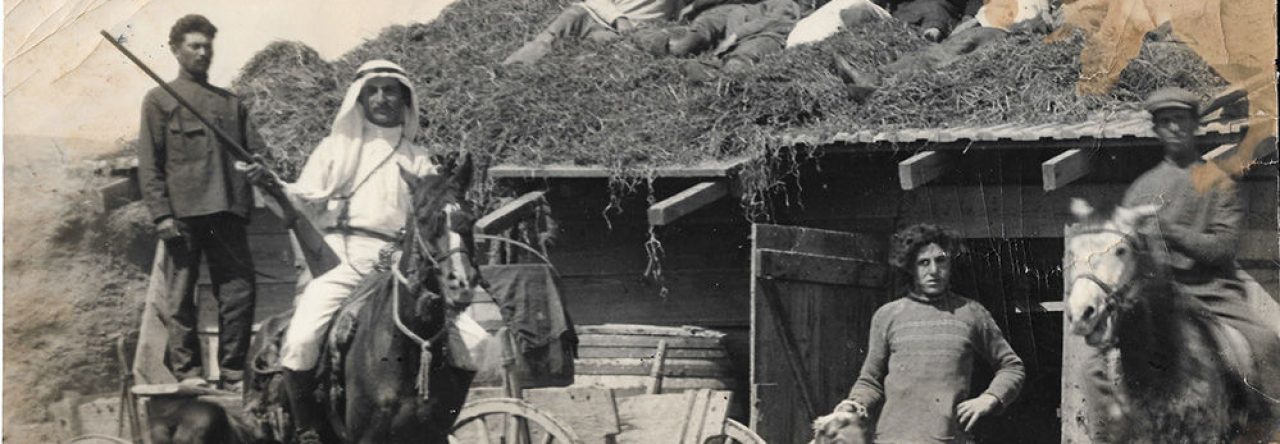
A couple of months ago, my wife and I took a 24-hour vacation in Jerusalem, spent entirely at the historic American Colony, one of Jerusalem’s oldest hostelries. The hotel originated in a messianic Christian commune whose members had arrived from Chicago toward the end of the 19th century in anticipation of the Second Coming. While waiting, they diversified into economic activities, including hospitality. Over the last century-plus, the American Colony has hosted an A-list of dignitaries and celebrities from T.E. Lawrence (“of Arabia”) to the British rock star Sting.

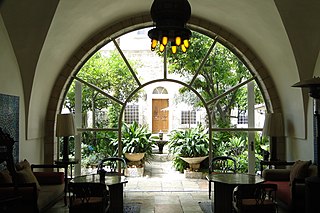
The hotel’s location, on the edge of the Arab downtown, has long facilitated its role as a neutral ground for meetings of Israelis and Palestinians; I’d dined there a few times in the distant past for just that reason. Today its old stone buildings remain charming and its many gardens enchanting—nowhere more so than where they conjoin around a bubbling fountain to form the enclosed patio of the main building.

Since ours was not a business trip but a holiday, to be devoted to rest and relaxation, the setting suited us just fine. To our delight, on check-in we received an upgrade to a suite: Room 16.

A bit of intrigue heightened our excitement. A year ago, the London Daily Mail had run a feature on “the ten best history-making hotel rooms.” It included, among others, Lenin’s room at the Hotel National in Moscow, the “Scandal Room” at the Watergate in Washington, and the Plaza Hotel suite that hosted the Beatles on their 1964 visit to New York. Tenth on the list was Room 16, “our” suite at the American Colony.

And what happened in that suite to merit such distinction? According to one telling of the story, a 1992 meeting in Room 16 was the first step in the “Oslo process” between Israel and the Palestinians that led to the accord signed at the White House in September 1993. “We concocted the start of what became the Oslo channel in Room 16 of the American Colony Hotel,” testifies Terje Rød-Larsen, the Norwegian mediator. “And the rest is history.”

In a new essay at Mosaic Magazine, I look into that history. I discover that Room 16 didn’t lead up to Oslo, but it led down the “road not taken”: namely, the road to an agreement between Israel and the so-called “inside” leadership of the West Bank and Gaza, personified by Faisal Husseini, that would have bypassed the PLO. It didn’t happen that way, but was it even a possibility?

For my full essay on the forgotten alternative to Oslo, continue here.

(And as a special bonus for my subscribers, go here for a look inside Room 16. The lovely woman is my wife.)
The Balfour Declaration and the “Jewish problem”

The anniversary of the Balfour Declaration falls on November 2 (it’s 102 years), and I mark it with an essay on a neglected question. The record shows that British issuance of the declaration originated in the necessities of war. After the war, what kept Britain from throwing the declaration in the trash bin? Especially since it had already become a burden, poisoning Britain’s relations with millions of Arabs?

It’s a question that weighed very much on the mind of Chaim Weizmann, the chief Zionist lobbyist for the declaration. Fearing that the end of the war would erode support for the declaration, he made a provocative rationale for Britain to honor it. If millions of desperate Jews weren’t given a place in Palestine, they would turn into a violent, wandering horde, which would prevent the world from ever knowing peace. To learn how this argument evolved, and ultimately collapsed, read my latest at Mosaic Magazine, right here.

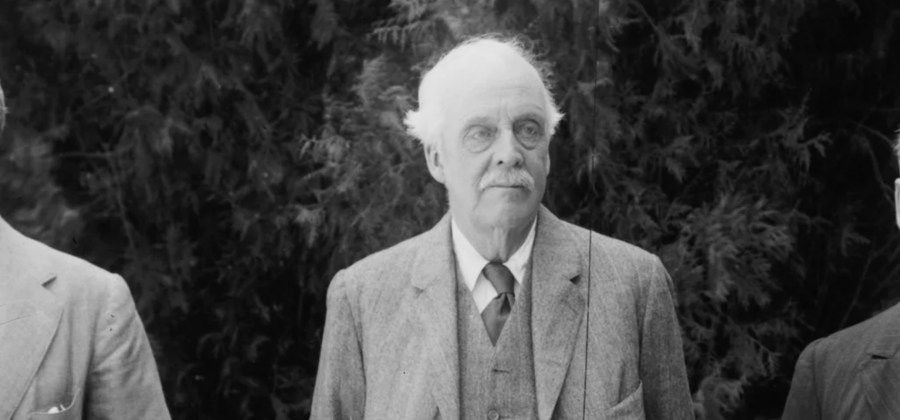
Balfour and Weizmann on Balfour’s 1925 visit to Palestine.

Seven black swans in the Middle East

The subject of strategic surprise is a large one, and it has inspired a fair amount of theoretical literature. The following catalogue isn’t intended as a contribution to theory. It is the evidence behind my personal observation that, for as long as I have studied the Middle East, all of the profoundly formative events have been “black swans,” imagined or predicted by almost no one. For an expert, that’s humbling (or should be).

But, first, what is a black swan? For centuries, it was assumed in Europe that all swans were white. The phrase “black swan” was used as we would use “flying pig”: a metaphor for something that couldn’t exist. But then a 17th-century Dutch explorer observed a black swan in Australia. That single sighting demolished an assumption that had stood since time immemorial.

The concept of a black-swan event was popularized a few years ago in a bestselling book with that title. Its flamboyant author, Nassim Nicholas Taleb, argued that the most dramatic changes in politics, economics, and technology come out of the blue. A black-swan event, ran his definition, “lies outside the realm of regular expectations, because nothing in the past can convincingly point to its possibility” (my emphases).

So a black-swan event is more extreme than a low-probability event. A black-swan event has no prior indication that it’s even possible. It’s unthinkable. And yet, Taleb concluded, while black swans themselves are rare, we live in a world largely fashioned by such once-unthinkable events. This wasn’t an entirely original argument, but his showmanship turned “black swan” into a common figure of speech.

Of course, what constitutes a black-swan event is a matter of perspective. Your assumptions may be upended by a surprise attack, but it’s no surprise to the attacker. For example, the June 1967 Six-Day War, preemptively initiated by Israel, was a black-swan event for Egypt, but obviously not for Israel.

In what follows, the perspective I assume is American. My seven black-swan events not only took Washington by surprise, but had far-reaching impacts on U.S. interests and policies. Also, while it’s tempting to go way back in time for more examples, I’ll limit myself to events within living memory, which (depending on your age) you probably remember, too.

Discover the black swans by reading the rest of this article at Mosaic Magazine, at this link.