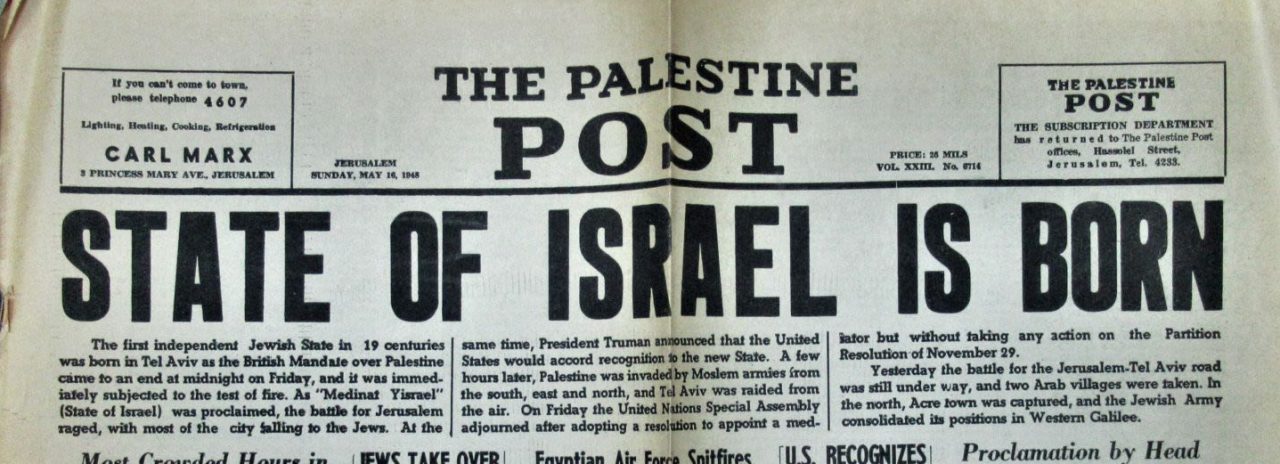
The rise of Israel in three acts

On Israel’s 71st anniversary, I offer a reflection on the incredible (some might say, miraculous) appearance of the leaders who steered the Zionist project through three crucial turning points. Most national movements have one paramount hero. Zionism has at least three: Theodor Herzl, Chaim Weizmann, and David Ben-Gurion.

Why so many? Given the anomalous situation of the Jews, dispersed for two millennia, creating a Jewish state from scratch couldn’t have happened without preliminary and intermediate stages that most national movements don’t require. At any transitional stage, things could have gone wrong (and almost did). That they went right is due to the perfectly timed interventions of these three men. Were these leaders flawed? In some ways, yes. Were they a team? In most ways, no. Yet their flaws seem smaller at a distance, and their actions seem part of one inspired plan.

Israel doesn’t have the equivalent of a Presidents’ Day. All the more reason to take a few moments this day to ponder the role of individual will in the rise of Israel. Do just that at Mosaic Magazine, at this link.
Sudden succession in the Middle East

What’s the effect when Middle Eastern leaders make sudden and unexpected exits? Of course, there’s always a question of who will follow. But beyond succession mechanics, is a leader’s departure necessarily history-changing?

The answer: it depends. And my answer: it depends mostly on where the hand of fate interrupts the leader’s arc of life. The Washington Institute for Near East Policy is running a new series on hypothetical succession scenarios in the Middle East. My contribution, the opening salvo, is a historian’s take on sudden departures.

Illnesses and assassinations account for most of them. Some had profound consequences, but others didn’t, even if they unfolded in dramatic ways. I take a look at some famous cases, from Egypt, Iraq, Israel, Jordan, Lebanon, and Saudi Arabia. At eight pages, it’s obviously more a think piece than an all-encompassing theoretical statement. So read it, think a bit, and come up with your own modifications.

Read here.

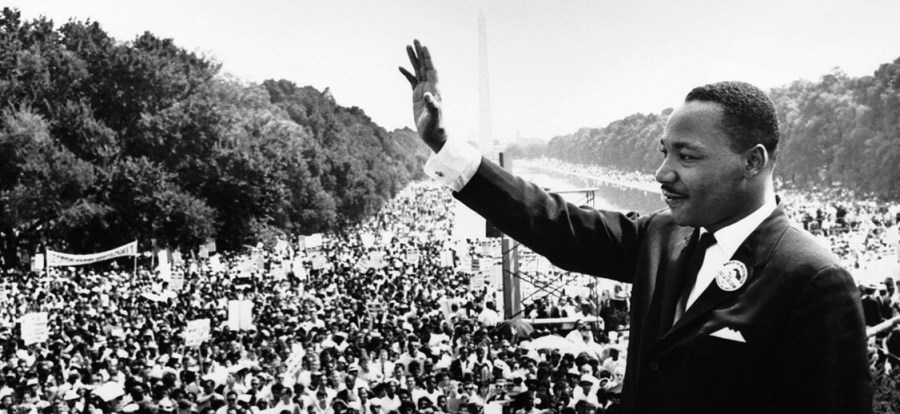
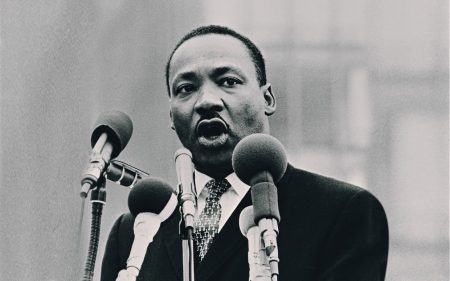
If so, then why didn’t MLK condemn Israel?

You’ll recall the piece by Michelle Alexander that ran in the New York Times this past Martin Luther King Day. Her money quote: “If we are to honor King’s message and not merely the man, we must condemn Israel’s actions.” It set me to thinking: why did MLK not condemn Israel’s actions in the twenty years between 1948 and 1968? It’s not as though there weren’t opportunities: Israel stood repeatedly in the dock during his lifetime. And why didn’t he say anything about the Palestinian “plight”? Especially as he got a high-level tutorial on the subject during a visit to East Jerusalem in 1959? I try to answer these questions in a new piece for Mosaic Magazine.

Read it here.