Me and My MESA

This post first appeared on the Commentary blog on November 23.

Over the coming days, I’ll be attending the Middle East Studies Association (MESA) annual conference in Washington. It’s time for me to catch up on the zeitgeist in my field, and there’s no better place to do that than at MESA. It’s been a long time—to be precise, sixteen years—since my last attendance at a MESA conference. MESA veterans might remember the occasion: Edward Said was being feted for his contribution (such as it was) to Middle Eastern studies. He was on the plenary podium, and I was in the audience. The British historian Robert Irwin hasn’t forgotten:

I well remember the 1998 Middle East studies association meeting held in the Chicago Hilton to mark the twentieth anniversary of the publication of Orientalism. Said appeared on a platform that was packed with his supporters. Critics from the floor were shouted down. I can still see and hear Homi Bhabha on the platform contemptuously booming out “Who are you? Who are you?” to one hapless member of the audience who was trying to make a point from the floor.

That “hapless member” was me. Irwin is accurate, except that there weren’t any other “critics from the floor” aside from me. Said, knowing I was in the audience, specifically invited me to stand up and challenge him, as though he were interested in a debate. That turned out to be a set-up. (Homi Bhabha, Said’s chivalrous defender on that occasion, is now alleged by the keepers of Said’s flame to have betrayed him by criticizing the departed Said through “Zionist argumentation.” Bhabha furthermore stands accused of being “popular in some leftist Israeli academic circles.” A falling out among post-colonialism’s thieves.)

The next time I figured in a MESA plenary, I wasn’t even there. It was in San Francisco in 2001, shortly after 9/11 and the publication of my book Ivory Towers on Sand: The Failure of Middle Eastern Studies in America. Franklin Foer went out to cover the conference for The New Republic, and in his report I read this: “There was one universally acknowledged villain at the conference—it just wasn’t Osama bin Laden. No, the man everyone loved to hate was Martin Kramer.” When my name was mentioned by someone in the plenary, “some in the audience actually hissed.” I suppose that was better than “Who are you?”

So now I’m back, not as a participant but as an observer. I’ve registered for the conference as a non-member, and that non-membership is principled. Its specific origin is the failure of MESA to overcome its political instincts and confer on Bernard Lewis the title of honorary fellow, reserved for a select few who’ve made exceptional contributions to the field. Whatever one thinks of Lewis’s politics, only an ignoramus or hack would deny his massive contribution to the field. Writing of Lewis, one former MESA president has testified to

the extraordinary range of his scholarship, his capacity to command the totality of Islamic and Middle Eastern history from Muhammad down to the present day. This is not merely a matter of erudition; rather, it reflects an almost unparalleled ability to fit things together into a detailed and comprehensive synthesis. In this regard, it is hard to imagine that Lewis will have any true successors.

Yet not only did MESA deign not to confer the honor upon Lewis, it bestowed it upon Edward Said, who brought Middle Eastern studies to the brink of ruin. Lewis never needed any honors from MESA: it was MESA that needed to honor him, and MESA’s failure to do so is evidence that it isn’t a scholarly association in the pure sense. So why join it?

That brings me to this year’s conference. MESA meets once every three years in Washington, to demonstrate its relevance to the powers that be. University-based Middle East centers feed at the taxpayers’ trough, and so it’s important to show up every few years at the doorstep of Congress, in an effort to prove that academe is “relevant” to the national interest. Some aspect of the program is pitched just for that purpose. (This year, it’s a panel on ISIS.)

The problem is that the radicals’ hormones are raging in the wake the Israel-Hamas war, and many of the rank-and-file would like to add MESA to the list of associations that have passed resolutions calling for an academic boycott of Israel. This isn’t such a smart thing to propose in Washington, and MESA’s president, Nathan Brown, has already reminded the members that MESA is “a non-political association.” But some MESA members think otherwise, and they’re always looking for ways to shove MESA even deeper into politics than it already is. In short, the conference is bound to be contentious.

In my next post, I’ll share my impressions of the triumphal reception accorded by MESAns to Steven Salaita, the anti-Israel tweet artist who got canned at the University of Illinois, and who’s become a jobless martyr.

Six (make that seven) greatest stories ever told about the Middle East

On Facebook, I ran a series listing the most influential modern books on the Middle East (in the English language). I selected each not on the basis of quality, but my rough assessment of a book’s impact on readers and politics, short-term and long. It’s rather rare for a book on the Middle East to have much of an influence in America and Britain; at most times, it’s a marginal region. But events have propelled a few books into the limelight, and these six, for better or worse, had an impact, influenced perceptions, and may have changed history.

Arabia of Lawrence


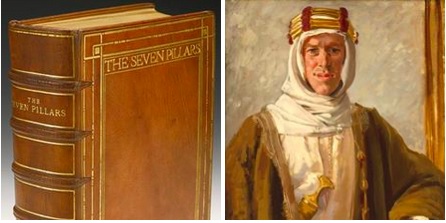
Seven Pillars of Wisdom by T. E. Lawrence (1926). I rather like Charles Hill’s depiction of Lawrence as someone “who wrote himself into history as a fictional character leading Arab tribes in revolt against the Ottoman Turks.” (Hill calls the book “a novel traveling under the cover of autobiography.”) But the book lives, and is even said to have inspired U.S. counter-insurgency theorists in Iraq.

Arise, ye Arabs!


The Arab Awakening by George Antonius (1938). This purported exposé of British double-dealing provided all the pretext that Britain needed to retreat from its support for the Jewish National Home in Palestine, culminating in the 1939 White Paper. The British commander of forces in Palestine in 1946 said he kept the book “on my bedside table.” It also became the bible of American sympathizers of Arab nationalism. “We had our revered texts,” wrote the American Arabist Malcolm Kerr, “such as The Arab Awakening.” It has been refuted on many grounds, but while its influence doesn’t endure, it lingers.

God Gave This Land…


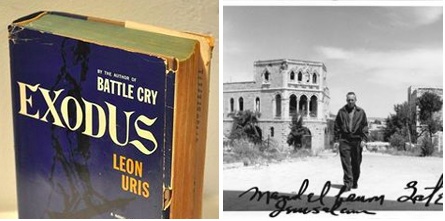
Exodus by Leon Uris (1958). Recently I asked a class of grad students in Mideast studies whether they’d heard of it, and I didn’t get a single nod. But this fictionalized account of Israel’s founding was said to have been the biggest seller since Gone with the Wind, propelled by a blockbuster motion picture starring Paul Newman. The novel, confessed journalist Jeffrey Goldberg, “set me, and many others, on a course for aliyah, and it made American Jews proud of Israel’s achievements. On the other hand, it created the impression that all Arabs are savages.” Arabs have been searching for their equivalent of Exodus ever since.

Snake Charmer


Orientalism by Edward Said (1978). Sigh… I suppose “baneful” is the best adjective. No book has done more to obscure the Middle East, and impart a sense of guilt to anyone who has had the audacity to represent it. The French scholar Jacques Berque (praised by Said) put it succinctly: Said had done “a disservice to his countrymen in allowing them to believe in a Western intelligence coalition against them.” But the book gave rise to a cottage industry in Western academe, and helped tilt the scales in academic appointments. Its influence may be waning, but it’s still on syllabi everywhere.

Fit to Print and Reprint


From Beirut to Jerusalem by Thomas Friedman (1989). It spent nearly twelve months on the New York Times bestseller list and won the 1989 National Book Award for nonfiction. Coming in the wake of the 1982 Lebanon war and the 1987 intifada, it captured the “falling-out-of-love-with-Israel” mood, although it cut no slack for the Arabs either. Friedman has said he keeps threatening to bring out a new edition with this one-line introduction: “Nothing has changed.”

How the East Was Lost


What Went Wrong? by Bernard Lewis (2002). The book appeared in the aftermath of 9/11, and it rocketed to the New York Times bestseller list, where it spent 18 weeks. Lewis used his broad historical repertoire to explain “why they hate us.” (In a word: resentment, at failed modernization and an absence of freedom.) Lewis later summarized his view thus: “Either we bring them freedom, or they destroy us.” Some in Washington took him literally.

Nakba Validation


At a reader’s suggestion, I’m adding a seventh book to my list. It’s The Birth of the Palestinian Refugee Problem, 1947-49 (1988) by Benny Morris. Drawing on Israeli archives, Morris did what no Palestinian Arab historian had managed to do: (partially) validate the Nakba narrative. The book confirmed Israel’s “original sin” in the eyes of the Israeli left, and persuaded Palestinians (wrongly) that Israel might compromise on the “right of return.” Neither the criticism by Efraim Karsh, nor the political swerves of Morris himself, could mitigate the book’s political impact.

This doesn’t exhaust the list of books about the Middle East that made the New York Times bestseller list or won the admiration of scholars. That bibliography would be much longer (and some years ago, I myself put together a different list, of choice scholarly works). But for sheer influence in the longer term, I don’t see another book that deserves inclusion in this club. If you have other ideas, share them at this link on Facebook.

A scholar’s library at Shalem College

Opinions are divided over the future of the printed book. Many believe it is destined to disappear. Already anyone with an iPad in a coffee shop has instant access to several million volumes—a massive library at one’s fingertips. It isn’t hard to imagine the printed book going the way of the cuneiform tablet.

But a book-filled library is fundamental to a college. To be surrounded by books is to feel part of the scholarly chain of transmission that links us to generations past. And it’s not just a matter of nostalgic ambience. There are vast numbers of books that aren’t yet freely available electronically, and that aren’t yet out of copyright. Between the older books in the Internet Archive, and the more recent offerings available through Amazon and other digital publishers, there are decades worth of books that just can’t be had without going to a library. Google Books will change that too, but it hasn’t yet. And when it comes to books in non-European languages, print still reigns.

So from the outset, my colleagues and I resolved that the new Shalem College in Jerusalem would have a respectable library on opening day, October 6, 2013. The core of that library has been provided to us thanks to the generosity of the great historian of Islam, Bernard Lewis.

Bernard Lewis needs no introduction to my readers. In addition to his own prodigious output of authored books on Islamic and Middle Eastern history, Bernard was an avid collector. His personal library, at the time he moved out of his Princeton home two years ago, came to 18,000 volumes. It was then that he sent his library to Tel Aviv University, to which he had promised it many years ago.

But he did so with a proviso: any book in his collection already possessed by Tel Aviv University’s library was to be passed on to the library of the fledgling Shalem College. And so the new college library has come into possession of many thousands of volumes, most dealing with the history of Islam and the Middle East, but also with many other aspects of medieval and modern history. It’s a splendid start for the library, especially as one of the first accredited degree programs in the new college is in Middle Eastern and Islamic studies.

For me, the arrival in Jerusalem of so large a part of Bernard’s library closes a circle. I was his student in Princeton in the late 1970s, when he held a dual appointment at the university and the Institute for Advanced Study. He had one of the largest offices at the Institute, and it was packed tight with his books. A few months after we met, Bernard invited me to the Institute, and proposed that I catalogue incoming offprints for a per-hour wage. (In the pre-internet age, scholars would send printed copies of their articles to one another, a method of dissemination that now seems as remote from us as the carrier pigeon.) He gave me the key to his office, and on evenings and weekends I would enter Aladdin’s cave, seat myself at his desk, and ponder what it must be like to be the most renowned historian of Islam in the world.

I also came to know his library quite well. I much preferred his office to the deepest basement floor of Firestone Library, where the university’s own Middle East collection resided, so I would bring my own work to his desk. And once every week or so, we would have lunch or tea, followed by a stroll in the Institute’s woods. We would then repair to his office, where he would select a shelf and begin a running commentary on the books it held—their relative place in the field, a bit of lore about the authors, and his take on the dedications. In those days, everyone sent everything to Bernard, and practically all of the books carried handwritten dedications. I recall some of his comments to this day. He once took in hand a book by his contemporary, the French Marxist (and rabidly anti-Israel) scholar Maxime Rodinson (who also happened to be Jewish). The dedication was quite admiring, which surprised me, given his politics. Bernard smiled with satisfaction: “He’s a scoundrel,” he said of Rodinson, “but I like him.”

When Bernard retired in 1986, he transformed the master bedroom of his home into a magnificent, light-filled library. His desk faced a wall of glass overlooking the grounds, and massive wooden bookshelves stood perpendicular to the walls. Even this addition didn’t suffice to contain the entire library, and the basement of the house was outfitted with shelves to handle the overflow. In a few of the bedrooms, every flat surface was likewise occupied by still more books. (Some sense of the library at his Princeton home is preserved by BookTV, which interviewed him there ten years ago.)

I feel privileged to have known Bernard’s library in both of its Princeton settings, but its two Israeli settings also do it justice. In January, Bernard visited Shalem College at my invitation, so that he could see the campus and especially the library: a two-tiered structure, featuring a large atrium-like gallery that provides ample room for books and for study. He selected the design of an ex libris plate to be placed in each volume, and I said some grateful words about his remarkable gift.

Now that we are deep into the digital age, few scholars will ever build so large a personal library. Bernard amassed his collection during the explosion of scholarly publishing that followed the Second World War, and before the advent of the Internet and ebook. Scholars in future won’t leave great collections behind, and in the libraries we do have, shelves will gradually yield to screens.

But scholars and students will always find inspiration in the physical book, for as the word “volume” suggests, the full appreciation of a scholarly achievement is much enhanced by an encounter with its heft. Book design is also evidence for past conventions that provide context for text, and the elegance of a well-designed book will always evoke pleasure. Bernard Lewis has given Shalem College a voluminous gift. When it is combined with the immense contribution represented by his scholarship, it secures his place in the pantheon of those who have nurtured the life of the mind in Jerusalem.

Martin Kramer accepts books from Bernard Lewis,
Shalem College, January 14, 2013.