Israel is at war in Lebanon. In times like these, one wishes the voice of Charles Malik could be heard once more. Malik, a philosopher and Lebanon’s first ambassador to the United States and the United Nations, and later its foreign minister, firmly believed that Lebanon should avoid the Palestine question to preserve its freedom.
Malik was a Christian, but not a Christian Zionist. Yet he understood the historical forces that led to the creation of Israel and saw Israel as a reality that should be accepted. In a 1982 interview, he noted that in a state of peace, “there will be a creative interaction between the Lebanese and the Israelis that will stun the world on all levels of human endeavor.”
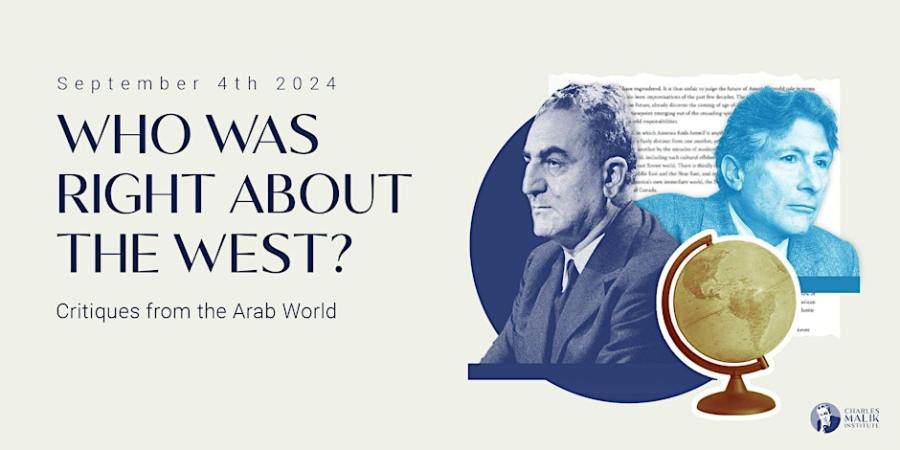
In a lecture for the Charles Malik Institute, I compare the views of Malik and Edward Said (to whom he was related by marriage). Said is venerated on the American left, while Malik is largely forgotten in the United States, even on the conservative right. I explain why this is the case, highlight the differences between the two thinkers, and also identify a common driving force.
They had one more thing in common: I met them both—Malik in Beirut in 1982 and Said in New York in 1986. I recount those stories in the preface.
 Martin Kramer on the Middle East