Review by Martin Kramer of Robert Irwin, Dangerous Knowledge: Orientalism and its Discontents (Woodstock: Overlook Press, 2006). The review appeared in Commentary, March 2007. Posted retroactively at Sandbox.
 THE British historian Robert Irwin is the sort of scholar who, in times past, would have been proud to call himself an Orientalist.
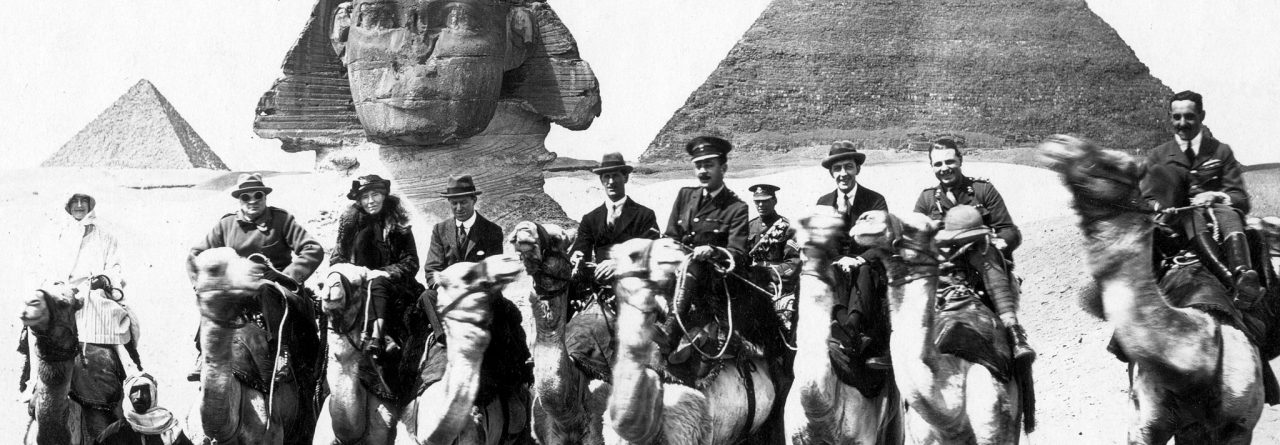
The traditional Orientalist was someone who mastered difficult languages like Arabic and Persian and then spent years bent over manuscripts in heroic efforts of decipherment and interpretation. In Dangerous Knowledge, Irwin relates that the 19th-century English Arabist Edward William Lane, compiler of the great Arabic-English Lexicon, “used to complain that he had become so used to the cursive calligraphy of his Arabic manuscripts that he found Western print a great strain on his eyes.” Orientalism in its heyday was a branch of knowledge as demanding and rigorous as its near cousin, Egyptology. The first International Congress of Orientalists met in 1873; its name was not changed until a full century later.
But there are no self-declared Orientalists today. The reason is that the late Edward Said turned the word into a pejorative. In his 1978 book Orientalism, the Palestinian-born Said, a professor of comparative literature at Columbia University, claimed that an endemic Western prejudice against the East had congealed into a modern ideology of racist supremacy—a kind of anti-Semitism directed against Arabs and Muslims. Throughout Europe’s history, announced Said, “every European, in what he could say about the Orient, was a racist, an imperialist, and almost totally ethnocentric.”
In a semantic sleight of hand, Said appropriated the term “Orientalism” as a label for the ideological prejudice he described, thereby neatly implicating the scholars who called themselves Orientalists. At best, charged Said, the work of these scholars was biased so as to confirm the inferiority of Islam. At worst, Orientalists had directly served European empires, showing proconsuls how best to conquer and control Muslims. To substantiate his indictment, Said cherry-picked evidence, ignored whatever contradicted his thesis, and filled the gaps with conspiracy theories.
Said’s Orientalism, Irwin writes, “seems to me to be a work of malignant charlatanry in which it is hard to distinguish honest mistakes from willful misrepresentations.” Dangerous Knowledge is its refutation. An Arabist by training, Irwin artfully weaves together brief profiles of great Orientalist scholars, generously spiced with telling anecdotes. From his narrative, Said’s straw men emerge as complex individuals touched by genius, ambition—and no little sympathy for the subjects of their study.
SOME of the Orientalist pioneers were quintessential insiders. Thus, Silvestre de Sacy founded the great 19th-century school of Arabic studies in Paris; Bonaparte made him a baron, and he became a peer of France under the monarchy. Carl Heinrich Becker, who brought sociology into Islamic studies, served as a cabinet minister in the Weimar government. But it was marginal men who made the most astonishing advances. Ignaz Goldziher, a Hungarian Jew, revolutionized Islamic studies a century ago by applying the methods of higher criticism to the Muslim oral tradition. Slaving away as the secretary of the reformist Neolog Jewish community in Budapest, Goldziher made his breakthroughs at the end of long workdays.
Some great scholars were quite mad. In the 16th century, Guillaume Postel, a prodigy who occupied the first chair of Arabic at the Collège de France, produced Europe’s first grammar of classical Arabic. Irwin describes him as “a complete lunatic”—an enthusiast of all things esoteric and Eastern who believed himself to be possessed by a female divinity. Four centuries later, Louis Massignon, another French great at the Collège, claimed to have experienced a visitation by God and plunged into the cult of a Sufi mystic. When lucid, Massignon commanded a vast knowledge of Islam and Arabic, but he held an unshakable belief in unseen forces, including Jewish plots of world domination.
Above all, many Orientalists became fervent advocates for Arab and Islamic political causes, long before notions like third-worldism and post-colonialism entered the political lexicon. Goldziher backed the Urabi revolt against foreign control of Egypt. The Cambridge Iranologist Edward Granville Browne became a one-man lobby for Persian liberty during Iran’s constitutional revolution in the early 20th century. Prince Leone Caetani, an Italian Islamicist, opposed his country’s occupation of Libya, for which he was denounced as a “Turk.” And Massignon may have been the first Frenchman to take up the Palestinian Arab cause.
Two truths emerge from a stroll through Irwin’s gallery. First, Orientalist scholars, far from mystifying Islam, freed Europe from medieval myths about it through their translations and studies of original Islamic texts. Second, most Orientalists, far from being agents of empire, were bookish dons and quirky eccentrics. When they did venture opinions on mundane matters, it was usually to criticize Western imperialism and defend something Islamic or Arab. In fact, it would be easy to write a contrary indictment of the Orientalists, showing them to be wooly-minded Islamophiles who suffered from what the late historian Elie Kedourie once called “the romantic belief that exquisite mosques and beautiful carpets are proof of political virtue.”
IN other words, Edward Said got it exactly wrong. Other scholars said as much in the years after his book came out; Irwin’s critique echoes those made by Jacques Berque, Malcolm Kerr, Bernard Lewis, and Maxime Rodinson. These doyens of Islamic and Arab studies came from radically different points on the political compass, but they all found the same flaws in Said’s presentation. Even Albert Hourani, the Middle East historian closest to Said personally, thought that Orientalism had gone “too far” and regretted that its most lasting effect was to turn “a perfectly respected discipline” into “a dirty word.”
Yet the criticisms did not stick; what stuck was the dirt thrown by Said. Not only did Orientalism sweep the general humanities, where ignorance of the history of Orientalism was (and is) widespread; not only did it help to create the faux-academic discipline now known as post-colonialism; but the book’s thesis also conquered the field of Middle Eastern studies itself, where scholars should have known better. No other discipline has ever surrendered so totally to an external critic.
As it happens, I witnessed a minute that perfectly compressed the results of this process. In 1998, to mark the 20th anniversary of the publication of Orientalism, the Middle East Studies Association (MESA) invited Said to address a plenary panel at its annual conference. As Said ascended the dais, his admirers leaped to their feet in an enthusiastic ovation. Then, somewhat hesitantly at first, the rest of the audience stood and began to applaud. Fixed in my seat, I surveyed the ballroom, watching scholars whom I had heard privately damn Orientalism for its libel against their field now rising sheepishly and casting sideways glances to see who might behold their gesture of submission.
This may help us understand something in Irwin’s account that might otherwise leave a reader bewildered. Why should Said have singled out for attack a group of scholars who had done so much to increase understanding of Islam, and who had tirelessly explained Muslim views to a self-absorbed West? The answer: for the same reason that radicals usually attack the moderates on their own side. They know they can browbeat them into doing much more.
By exposing and exaggerating a few of the field’s insignificant lapses, Orientalism stunned Middle East academics into a paroxysm of shame. Exploiting those pangs of guilt, Said’s radical followers demanded concession upon concession from the Orientalist establishment: academic appointments and promotions, directorships of Middle East centers and departments, and control of publishing decisions, grants, and honors. Within a startling brief period of time, a small island of liberal sympathy for the Arab and Muslim “other” was transformed into a subsidized, thousand-man lobby for Arab, Islamic, and Palestinian causes.
THE revolution did not stop until Said was universally acclaimed as the savior of Middle Eastern studies and, in that ballroom where I sat in 1998, virtually the entire membership of MESA had been corralled into canonizing him. It did not stop until he was elected an honorary fellow of the association—that is, one of ten select scholars “who have made major contributions to Middle East studies.” (No similar majority could be mustered to accord the same honor to Bernard Lewis.) It would not stop until it achieved the abject abasement of the true heirs of the Orientalist tradition.
This is the missing final chapter of Dangerous Knowledge. The established scholars in Middle Eastern studies never did deliver the crushing blow to Orientalism that it deserved. With the exception of Bernard Lewis, no one went on the warpath against the book (although, according to Irwin, the anthropologist Ernest Gellner was working on a “book-long attack” on Orientalism when he died in 1995). Going up against Said involved too much professional risk. He himself was famous for avenging every perceived slight, and his fiercely loyal followers denounced even the mildest criticism of their hero as evidence of “latent Orientalism”—or, worse yet, Zionism.
Still, the power of Said and his legions did begin to wane somewhat after the attacks of 9/11. Said had systematically soft-pedaled the threat of radical Islam. In a pre-9/11 revised edition of Said’s Covering Islam, a book devoted to exposing the allegedly biased reporting of the Western press, he mocked “speculations about the latest conspiracy to blow up buildings, sabotage commercial airliners, and poison water supplies.” After the planes struck the towers, Said declined to answer his phone. Irwin writes that when, unrepentant, he finally responded, “he put the terrorists’ case for them, just as he had put the case for Saddam Hussein.” September 11 broke Said’s spell. “Does this mean I’m throwing my copy of Orientalism out the window?” quipped Richard Bulliet, a professor of Islamic history at Columbia, in the week following the attacks. “Maybe it does.”
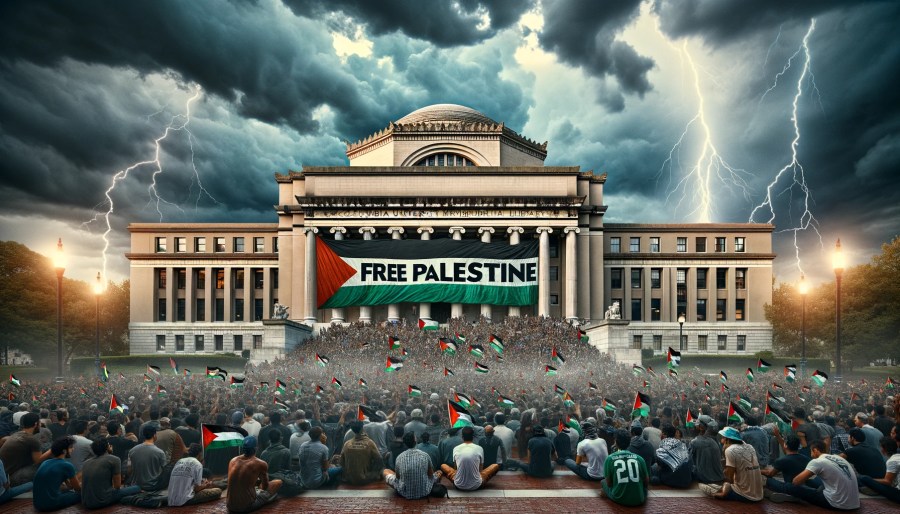
Since Said’s death in 2003, more doubters have found the courage to speak out. Some of Columbia’s own students did so in 2005, when they took on a number of Said’s most extreme acolytes, whom he had helped to embed as instructors in the university’s department of Middle East studies. Irwin’s Dangerous Knowledge is a challenge to that minority of scholars in the field who still preserve a spark of integrity and some vestige of pride in the tradition of learning that Said defamed. They won’t ever call themselves Orientalists again. But it is high time they denounced the Saidian cult for the fraud that it is, and began to unseat it. Irwin has told the truth; it is their responsibility to act on it.

 In August 2006, I wrote a
  Martin Kramer on the Middle East
You must be logged in to post a comment.