Endless expertise


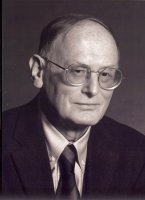
Werner Ende (1937-2024), who passed away on August 6, was described in these words in an obituary by a former student, published in the Frankfurter Allgemeine Zeitung:

His students now work in intelligence services, media outlets, and universities: Werner Ende, who profoundly influenced modern Islamic studies in Germany, has passed away. 

In Germany, research into contemporary issues of the Middle East doesn’t have a long tradition. Philologists and cultural scholars were often too afraid of being co-opted for political purposes. For a long time, they preferred to focus on ancient manuscripts and retreat into the academic ivory tower. When the world became interested in the Islamic world after the Iranian Revolution of 1979, there was little from the Orientalist departments that could explain what was happening in neighboring regions. This has changed; today, Islamic studies as a branch of Orientalism is no longer seen as an obscure or irrelevant field. 

This shift is thanks in part to Werner Ende, a pioneer in modern Islamic studies.

It was this role that drew me to Ende, the German scholar with whom I had the closest relationship. By the time I met him in 1986, he had moved beyond his early work on Arab nationalist historiography to establish himself as a leading expert on Salafi Islam and Shi‘ism in its Arab contexts. Sunni-Shi‘ite polemics became his special field of interest, and he approached them from both sides with the factual and philological precision characteristic of the German scholarly tradition.
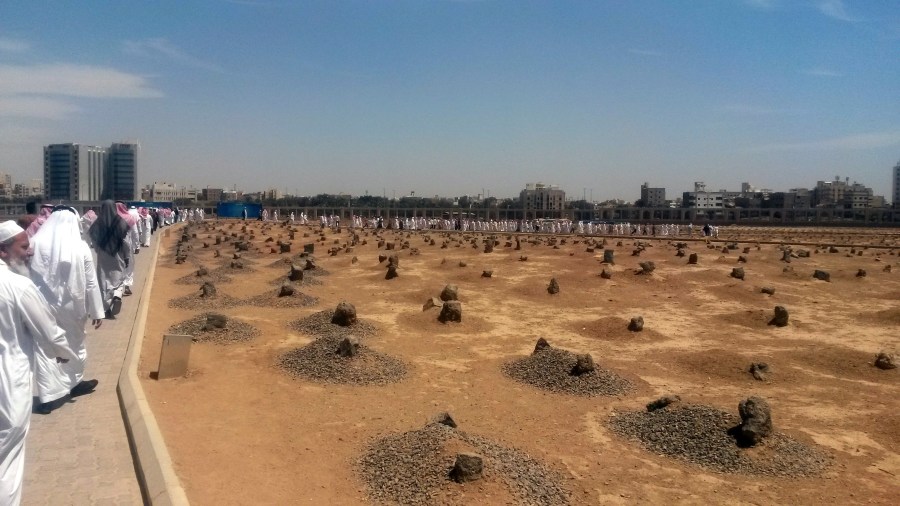
Like my mentor, Bernard Lewis, Ende insisted that the politics of Islamic movements could not be understood without a profound grasp of early Islamic history. Only Ende could explain, with absolute authority and clarity, how today’s Saudi-Iranian dispute over a cemetery in Medina encapsulated centuries of Wahhabi-Shi‘ite rivalry. His study of the Shi‘ites of modern Medina is a typical gem, all the more remarkable since, as he admitted, he had “not been able—and most probably never will be—to do research on the spot.” These deep dives into difficult texts revealed him as a virtuoso researcher, whose resourcefulness was truly astonishing.

In 1986, I went to Freiburg im Breisgau, where he held the chair in Islamic studies, to spend a month under his tutelage. Ende became my guide to many things that summer: the revival of the German Orientalist tradition after the devastation of the Second World War, Shi‘ism in Lebanon (where he had spent several years before that country’s civil war), and Wahhabi ideology. His tutorials over Kaiserstuhl wine atop Freiburg’s Schlossberg were unforgettable.

We stayed in touch; I last saw him over breakfast in Berlin in 2016. He had retired by then and moved to the reunited capital. (In his youth, he had lived in East Berlin near the Wall and escaped to the West in pursuit of freedom. Life under communism made him wary of all forms of indoctrination.) I last corresponded with him in 2023, when he told me he had fallen seriously ill and had returned to the care of family in Freiburg, where he passed away.

Ende was largely unknown outside the German-speaking world. He published some articles in English, but not a book (apart from two co-edited volumes), and he didn’t attend conferences in America. However, he exhibited a keen and mischievous curiosity about the battles over Middle Eastern studies across the Atlantic. While he kept his distance from the Arab-Israeli conflict, he did not distance himself from Israel or Israeli scholars. His most accessible summary of Sunni polemics against Iran’s revolution appeared (in English) in an Israeli conference volume—an article that is more relevant than ever today.

More important than international renown, he was a devoted mentor to many students, who attest to his lasting influence on their work and careers. They compiled a fine collected volume in celebration of his 65th birthday, the title of which takes on a different meaning today. It played on his name: Islamstudien ohne Ende (‘Islamic studies without end’). Now Islamic studies in Germany are without Ende, but hopefully not without his standards of rigorous scholarship.

In 1988, he reviewed my first book, Islam Assembled, published in 1986. I reproduce it at this link (translated from German) not because it flattered me. My book was a revised doctoral dissertation, and from my present perspective, I’m embarrassed by its flaws. It’s also true that by the time Ende wrote his review, we were already on friendly terms. But it reflected his generosity of spirit, and his emphases suggest why we connected. Rereading it now, almost forty years later, it strikes me as a model of how a senior scholar should review the work of a promising junior one. There is always fault to be found, but it should be weighed against the value of unqualified praise for someone launching a career. I shall always be grateful for his kindness.


Header image: Baqi‘ cemetery in Medina. Source: Wikimedia Commons.
The day the Mufti died

Fifty years ago, on July 4, 1974, Hajj Amin al-Husayni, the “Grand Mufti” of Jerusalem, passed away in Beirut, Lebanon, at the American University Hospital. At age 79, he died of natural causes. The Mufti had faded from the headlines a decade earlier. In 1961, his name had resurfaced numerous times during the Jerusalem trial of Adolf Eichmann. But a couple of years later, the Palestinian cause gained a new face in Yasser Arafat. With that, the Mufti entered his final eclipse.

When he died, the Supreme Muslim Council in Jerusalem asked the Israeli authorities for permission to bury him in the city. Israel refused the request. Any Palestinian who wanted to attend the funeral in Lebanon would be allowed to do so, but the Mufti of Jerusalem would not be buried in Jerusalem. Instead, the Mufti was laid to rest in the Palestinian “Martyrs’ Cemetery” in Beirut.

The Mufti was appointed to his position by the British in 1921. Within the British Empire, authorities preferred to work through “native” institutions, even if they had to create them on the fly. So they established a supreme council for Palestine’s Muslims and placed the Mufti at its helm. Although he lacked religious qualifications, he came from a leading family and appeared capable of striking deals.

In fact, he used his position to oppose the Jewish “National Home” policy of the Mandate. The “Arab Revolt” of 1936 finally convinced the British that he had to go, and in 1937 he fled the country.

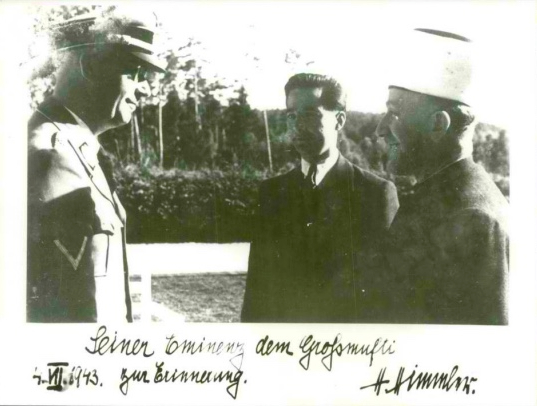
After a period in Lebanon, he ended up in Iraq, where he helped foment a coup against the pro-British regime. When British forces suppressed the coup, he fled again, making his way through Tehran and Rome to Berlin. There, the Nazi regime used him to stir up Arabs and Muslims against the Allies. He was photographed with Hitler and Himmler, recruited Muslims to fight for the Axis, and attempted to secure promises of independence for colonized Arabs and Muslims. None of his efforts met with much success. His role, if any, in the Holocaust is a contested matter. Hitler and his henchmen hardly needed any prompting to execute their genocidal plans. Clearly, though, the Mufti rooted for Jewish destruction from the fifty-yard line.

After the Nazi collapse, he fell into French hands, and spent a year in comfortable house detention near Paris. Later, he fled to Egypt and subsequently moved in and out of Syria and Lebanon. Following the Arab debacle of 1948, Egypt established an “All Palestine Government” in the refugee-choked Gaza Strip, leaving the presidency open for the Mufti. It didn’t last long. He continued to maneuver through Arab politics, but he was yesterday’s man to a new generation of Palestinians born in exile. During the Eichmann trial, the prosecution sought to implicate the Mufti as an accomplice. Yet the Mossad never came after him, and he didn’t die a martyr’s death.

Man without a country

The Mufti was a formidable politician. In 1951, a State Department-CIA profile of him opened with this evocative enumeration of his many talents, which is worth quoting at length:

King of no country, having no army, exiled, forever poised for flight from one country to another in disguise, he has survived because of his remarkable ability to play the British against the French, the French against the British, and the Americans against both; and also because he has become a symbol among the Arabs for defending them against the Zionists. His suave penchant for intrigue, his delicate manipulation of one Arab faction against another, combined with the popularity of his slogan of a united Muslim world, has made him a symbol and a force in the Middle East that is difficult to cope with and well nigh impossible to destroy. The names of Machiavelli, Richelieu, and Metternich come to mind to describe him, yet none of these apply. Alone, without a state, he plays an international game on behalf of his fellow Muslims. That they are ungrateful, unprepared, and divided by complex and innumerable schisms, does not deter him from his dream.

Profilers would later write similar things about Arafat, but the Mufti had none of Arafat’s cultivated dishevelment. He was manicured, even chic:

The Mufti is a man of striking appearance. Vigorous, erect, and proud, like a number of Palestinian Arabs he has pink-white skin and blue eyes. His hair and beard, formerly a foxy red, is now grey. He always wears an ankle length black robe and a tarbush wound with a spotless turban. Part of his charm lies in his deep Oriental courtesy; he sees a visitor not only to the door, but to the gate as well, and speeds him on his way with blessings. Another of his assets is his well-modulated voice and his cultured Arabic vocabulary. He can both preach and argue effectively, and is well versed in all the problems of Islam and Arab nationalism. His mystical devotion to his cause, which is indivisibly bound up with his personal and family aggrandizement, has been unflagging, and he has never deviated from his theme. For his numerous illiterate followers, such political consistency and simplicity has its advantages. The Mufti has always known well how to exploit Muslim hatred of ‘infidel’ rule.

So why did the Mufti fade into obscurity? (By 1951, he was on his way out.) Many mistakenly believe his collaboration with Hitler and the Nazis discredited him. It didn’t. Not only did the Arabs not care, but Western governments eyed the Mufti with self-interest. The general view in foreign ministries held that he had picked the wrong side in the war, but not more than that.

The above-quoted American report expressed this view perfectly: “While the Zionists consider him slightly worse than Mephistopheles and have used him as a symbol of Nazism, this is false. He cared nothing about Nazism and did not work well with Germans. He regarded them merely as instruments to be used for his own aims.” If so, why not open a discreet line to him and let him roam the world unimpeded?

Nakba stigma

What finally discredited the Mufti in Arab opinion, where it mattered most, was his role in the 1948 war. It was a war he wanted and believed his side would win. In late 1947, the British sent someone to see if there might be some behind-the-scenes flexibility in his stance on partition, which he had completely rejected. There wasn’t. He explained:

As regards the withdrawal of British troops from Palestine, we would not mind. We do not fear the Jews, their Stern, Irgun, Haganah. We might lose at first. We would have many losses, but in the end we must win. Remember Mussolini, who talked of 8,000,000 bayonets, who bluffed the world that he had turned the macaronis back into Romans. For 21 years he made this bluff, and what happened when his Romans were put to the test? They crumbled into nothing. So with the Zionists. They will eventually crumble into nothing, and we do not fear the result, unless of course Britain or America or some other Great Power intervenes. Even then we shall fight and the Arab world will be perpetually hostile. Nor do we want you to substitute American or United Nations troops for the British. That would be even worse. We want no foreign troops. Leave us to fight it out ourselves.

This underestimation of the Zionists proved disastrous, even more so than his overestimation of the Axis. He later wrote his memoirs, blaming “imperialist” intervention, Arab internal divisions, and world Zionist mind-control for the 1948 defeat. To no avail: his name became inseparable from the Nakba, the loss of Arab Palestine to the Jews. His reputation hit rock bottom, along with that of the other failed Arab rulers of 1948.

Upon his death in 1974, he received a grand sendoff in Beirut from the PLO, Arafat presiding. In 1970, Arafat had transferred the PLO headquarters from Jordan to Lebanon, and the funeral finalized his status as the sole leader of the Palestinian people. Four months later, Arafat addressed the world from the podium of the UN General Assembly, achieving an international legitimacy that the Mufti could never have imagined.

The PLO then dropped the Mufti from the Palestinian narrative; nothing bears his name. Even Hamas, which inherited his uncompromising rigidity and Jew-hatred, doesn’t include him in their pantheon. (Their man is Izz al-Din al-Qassam, a firebrand “martyr” killed by the British in 1935.)

If anyone still dwells on the Mufti, it’s the Israelis, including their current prime minister, who find him useful as a supposed link between the Palestinian cause and Nazism. One can understand Palestinians who push back on this; the Mufti was no Eichmann. But that doesn’t excuse Palestinian reluctance to wrestle candidly with the Mufti’s legacy. He personified the refusal to see Israel as it is and an unwillingness to imagine a compromise. Until Palestinians exorcise his ghost, it will continue to haunt them.

Highlights from the funeral of the Mufti. Yasser Arafat appears in his trademark keffiyeh.

Header image: “To His Eminence the Grand Mufti as a memento. H. Himmler. July 4, 1943.” Israel State Archives.