In Iran, survival isn’t victory

On February 27, 1991, President George H.W. Bush addressed the American people, announcing the end of offensive military operations against Saddam Hussein’s forces. Iraqi troops had been completely expelled from Kuwait, which they had invaded the previous summer. During six weeks of bombing and a 100-hour ground campaign called “Desert Storm,” the U.S. and coalition allies destroyed about two dozen Iraqi divisions, hundreds of Iraqi aircraft, thousands of tanks, and Iraq’s weapons industry. A retreating Iraqi column was utterly destroyed during its escape from Kuwait. Gruesome images from that “highway of death” vividly showed the scale of Iraq’s defeat.

The following day, February 28, Bush made this entry in his diary:

It’s now early Thursday morning on the 28th. Still no feeling of euphoria. I think I know why it is. After my speech last night, Baghdad radio started broadcasting that we’ve been forced to capitulate. I see on the television that public opinion in Jordan and in the streets of Baghdad is that they have won. It is such a canard, so little, but it’s what concerns me. It hasn’t been a clean end—there is no battleship Missouri surrender. This is what’s missing to make this akin to WWII, to separate Kuwait from Korea and Vietnam.… The headlines are great. “We Win.” The television accurately reflects the humiliation of Saddam Hussein and it drives the point home to the American people. But internationally, it’s not there yet, at least in the Arab world that has been lined up with Saddam.

The fact that the enemy refused to acknowledge defeat troubled Bush. “Obviously,” he comforted himself, “when the [Iraqi] troops straggle home with no armor, beaten up, 50,000 … and maybe more dead, the people of Iraq will know.” But if they knew, Saddam regime’s made sure they never showed it. In 2003, Saddam shared his perspective with American television journalist Dan Rather:

In 1991 Iraq was not defeated. In fact, our army withdrew from Kuwait according to a decision taken by us. Yes, it withdrew, but when we were back within our boundaries, the boundaries of Iraq, the Iraqi army was not defeated. Nor was the people of Iraq…. It was [Bush’s] decision to…. stop the fighting. And, consequently, Iraq was not defeated.

No one knows how the current Iran war will end, but two things seem certain. The Supreme Leader will not send his representative to sign an unconditional surrender on the deck of the aircraft carrier Abraham Lincoln. And whoever leads the regime will declare victory for Iran, regardless of how much damage the U.S. and Israel inflict. In that respect, the Islamic Republic is no different from Saddam’s Iraq.

Iran has not experienced a military victory against a foreign enemy since the 18th century. As a result, its leaders are skilled at presenting defeats as draws, and draws (like the Iran-Iraq war in the 1980s) as victories. This is a coping strategy that allows Iran to preserve some dignity as the inheritor of past empires, which once thrived on legendary military triumphs and territorial conquests. A self-soothing narrative hides from Iranians the simple truth that Iran isn’t a global power. It’s not even the leading power in the Middle East. It’s too poor, corrupt, mismanaged, and divided to enjoy such a high status, no matter how much the regime tries to rally Iran’s people into sacrifices.

It’s now being said that if the regime remains in power, it’s somehow a triumph. “To survive would count as victory for Iran’s regime,” announces the Economist. But that’s Saddam-think. Survival isn’t victory unless it’s accompanied by a strategic gain that outweighs military losses. Since 1978, the Islamic Republic has aimed for Iran’s dominance of the Persian Gulf and the broader Middle East through ambitious weapons programs and support for proxies across the region. Survival is a poor substitute for losing all that, and most of it is already gone.

In 1991, George H.W. Bush had people around him who reassured him that it didn’t matter what people in the streets of Amman or Baghdad thought. What mattered was the objective achievement of defined war aims. They understood then, and we know in retrospect, that the war finished off Iraq as a pretender to regional power. Mission accomplished.

Thirty-five years later, Operation Desert Storm is remembered as the last decisive victory the United States won in a regional war—even though, at the time, America’s president thought it wasn’t a “clean end.” If that war didn’t end cleanly, the Iran war won’t either. The question is whether those who launched this war have the wisdom to realize it.

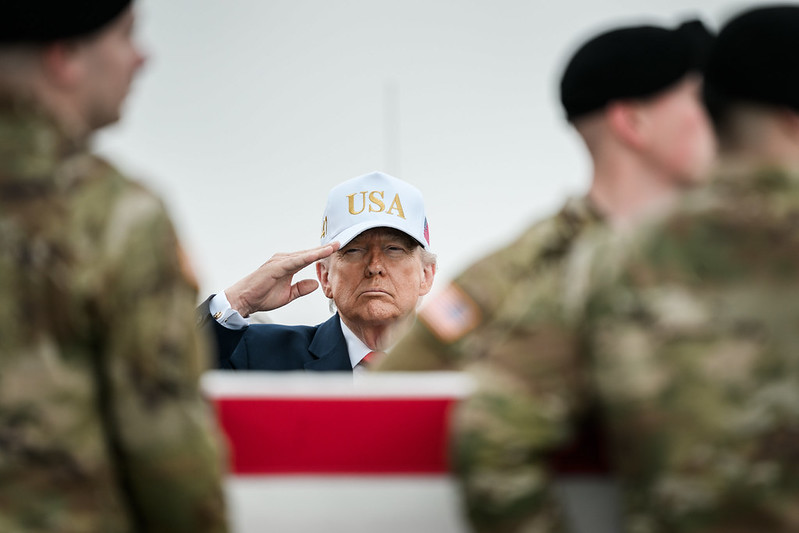
Header image: President Donald J. Trump attends transfer of remains of six US soldiers killed in an Iranian drone strike in Kuwait, March 7, 2026, at Dover Air Force Base, Delaware. Official White House photo by Daniel Torok, public domain.

Ardeshir Zahedi: legend and lesson

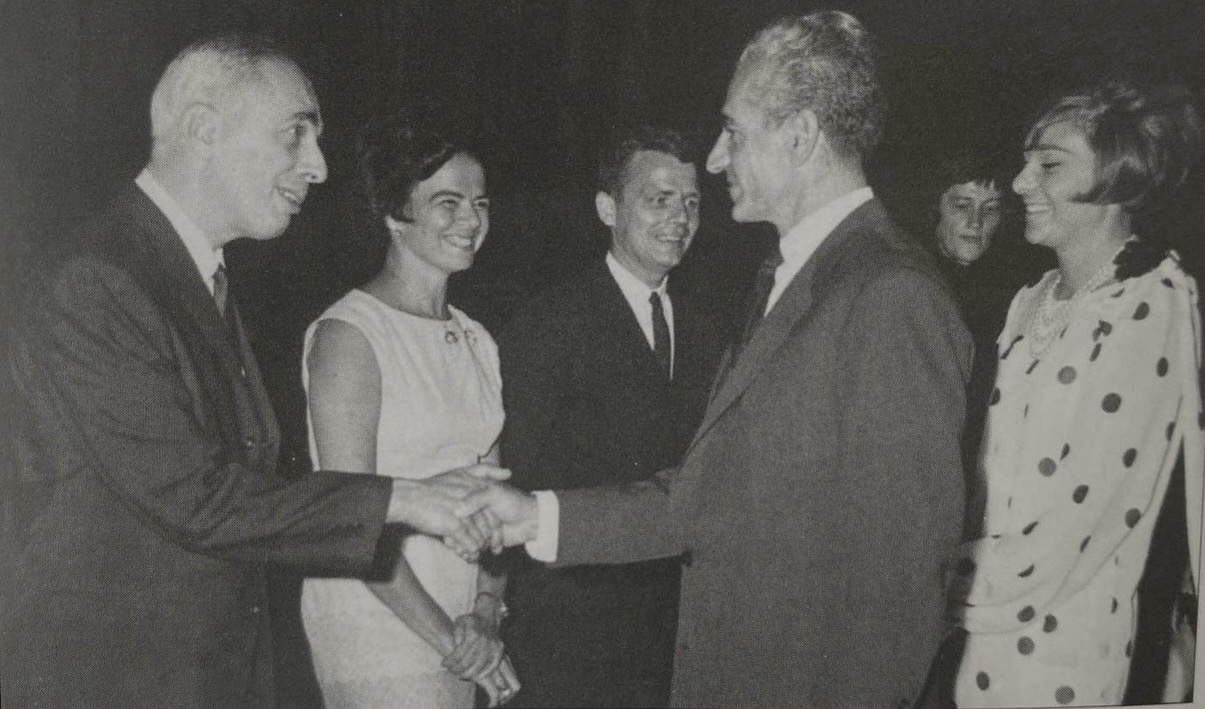
PAHLAVI Iran’s last ambassador to the United States, Ardeshir Zahedi, who died on Thursday at the age of  93, was nothing short of legendary. He was arguably the most flamboyant foreign ambassador in the history of Washington, an icon of 1970s excess. There isn’t a superlative that wasn’t used to describe him: charming, elegant, extravagant, glamorous, handsome, suave, courtly, energetic, generous, devil-may-care.

All of this celebrity served a clear purpose. Zahedi persuaded Americans that the richer Iran became, the more stable it became, and that selling it arms on a massive scale would spread that stability. He so charmed and mesmerized America that it failed to see the weaknesses of his master, Mohammed Reza Shah. Zahedi even created space for the Shah to beat the revolution—had the Shah wished to do so.

Zahedi’s life is more than a juicy story. It demonstrates the vulnerability of American policy to foreign manipulation. The United States is often accused of interfering in the domestic affairs of other countries. As Zahedi’s case shows, it works both ways.

An unlikely diplomat

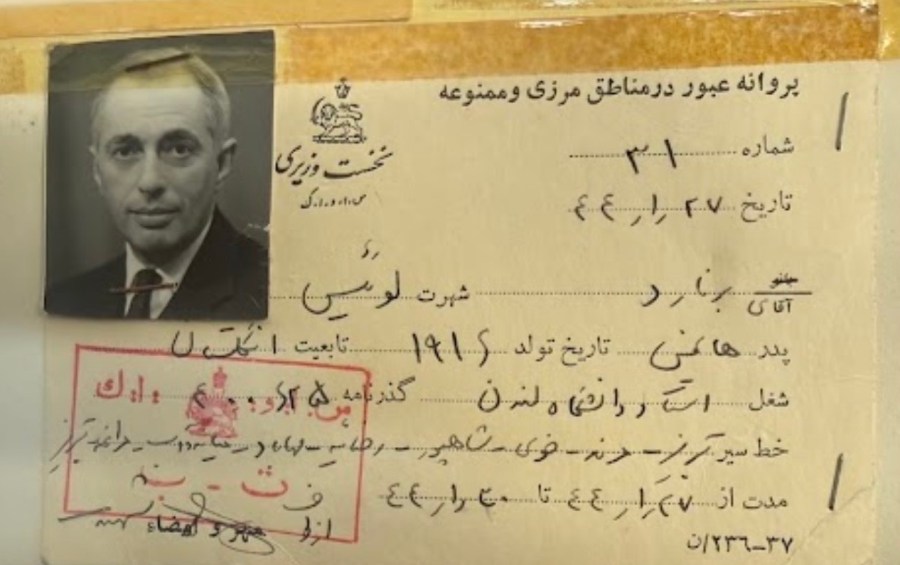
Zahedi was born around 1928 in Tehran. His father had been a general, Fazlollah Zahedi, who hailed from a wealthy landowning family. Zahedi the father had been close to the founder of the Pahlavi dynasty, Reza Shah, and a faithful servant of his son and heir, Mohammad Reza Shah. He was a complete insider.

In 1946, when Ardeshir was about 18, his father sent him to America to study. He enrolled at Utah State University in Logan, Utah, where he graduated in agriculture in 1950. It was a popular destination for Iranian students of agriculture and engineering, and far from politics. In summers, he would travel around America, one time as far as Alaska, working menial jobs. Zahedi knew America up close, which later would serve him well. 

It was in Utah that he first met the Shah, who passed through on a visit. On Zahedi’s return to Iran, he reinforced his tie to his monarch. In 1953, a popular movement forced the Shah into exile. It was General Zahedi who carried out the coup to restore him, becoming prime minister; his son, Ardeshir, also played a key role on the ground. 

This made young Ardeshir a favorite of the Shah, and effectively a member of the royal court. Zahedi belonged to one of the so-called “thousand families,” Iran’s traditional oligarchy, with a seat near the throne and direct access to the monarch. For a time he was even married to the Shah’s daughter. 

The Shah sent Zahedi to Washington as ambassador when he was only 32. He had no diplomatic experience, but he had the Shah’s daughter, and the Shah’s confidence. When he protested to the Shah that he had no understanding of diplomacy or the foreign ministry, the Shah reassured him:  “I am personally in charge of foreign policy…. And since you have studied in America, you know America and the Americans quite well.”

Learning the ropes

Iran’s problem in America was simple: the Shah’s regime looked increasingly out of step with American values. In the 1950s, the United States had no problem backing despots. But by the 1960s, the world had moved on. Some in America began to worry that monarchs and dictators supported by America were a liability. The Soviets could exploit spreading discontent, and the only way to stop that was to promote American-style democracy. 

Zahedi arrived in the spring of 1960. Time Magazine put the Shah on its cover in September 1960, under the headline “Struggle for Stability.” It warned of a “new discontent, among the country’s swelling city masses,” and concluded: “Iran can no longer be governed by the simple kingly fiat: ‘I have given orders. Let them be carried out.’”

But instead of making the counter-case, Zahedi got sidetracked in a war against dissident Iranian students in the United States. Then he got into a scrape with Robert Kennedy, attorney-general, over an audience the president’s brother gave to some dissident students. It led Robert Kennedy to cancel a stopover in Iran that he had planned during an Asian visit. 

From that point, Zahedi was more a liability than an asset at the Kennedy White House. The Shah pulled him, sending him off to London instead. Zahedi had learned a lesson he would apply later: in Washington, a foreign ambassador doesn’t tangle with the president’s people. And an ambassador doesn’t tangle with student dissidents. Better to ignore them, and let the secret police handle them.

Zahedi went on from the London ambassadorship to become foreign minister. He did much to improve Iran’s relations with Arab countries, by retracting a long-standing Iranian claim to Bahrain. Then, in early 1973, the Shah sent him back to Washington as ambassador. Within months, the world had turned upside-down.

Celebrity diplomat

The October 1973 Arab-Israeli war led to an Arab oil embargo, and sent the price of crude oil skyrocketing. The “Great Oil Shock,” as it would be called, saw the price of oil quadruple. While the industrialized world reeled, Iran’s coffers overflowed. The Shah already had delusions of grandeur; now he imagined he could turn Iran into a regional superpower.

Zahedi’s mission had become even clearer. America was hurting, and much of the hurt came from the recession that lasted from 1973 to 1975. Popular anger was directed against price-gouging Arabs, and most Americans didn’t distinguish between Arabs and Iranians. And while the Shah didn’t join the boycott, he band-wagoned in pushing price hikes. How could Iran stay aligned with the United States? By appearing friendly and stable. Enter Zahedi.

His return to Washington was well-timed, because Zahedi already had a friend at the very top: Richard Nixon. Nixon had been vice president in the 1950s, when the CIA had helped restore the Shah. Zahedi had met him back then; after Nixon’s defeat in 1960, Zahedi hadn’t turned away, but kept Nixon close. That paid off from 1969, and Zahedi could count on a warm welcome from the Republican establishment when he arrived in 1973. 

But Zahedi wouldn’t rely only on a few well-placed friends in the foreign policy firmament. He knew that in America, foreign policy depended on domestic support. Iran had no natural domestic constituency in America, so he would have to build one. It would have to include leaders in journalism, entertainment, business, and education. The astonishing thing about Zahedi’s second ambassadorship is just how easy it was to line them up.

He did it by a hugely successful campaign of branding. Zahedi was astute enough to grasp something fundamental about Washington. The 1960s had liberated the city. The Kennedys had brought glitz and glamor to Washington, and helped to meld the world of politics and entertainment. The opening of the Kennedy Center for the Performing Arts in 1971 finally gave Washington a first-class venue, and the stars began to appear. Zahedi set out to break the Embassy Row mold of the discreet ambassador and the buttoned-down diplomatic reception. He would turn Iran into a splashy luxury brand, by turning himself into a celebrity. 

Zahedi, when he returned, was no longer an amateur. He oozed charm, described well by another Iranian (the historian Abbas Milani):

I once saw him work a room. His performance was a work of art, with an infinite variety of nuanced gestures, nods, smiles, embraces…. To some ladies, he offered a nod; others got a handshake; a few received a perfunctory, but discernible, bow toward their slightly raised hands; still fewer had their fingertips kissed.

As this suggested, he cultivated the image of a ladies’ man. He had returned to Washington a bachelor, having parted with the Shah’s daughter. (That amicable divorce had no impact on his relations with the Shah.) Pearl Bailey, the actress and singer, who was a regular performer at the embassy, wrote in her memoirs:

Ardeshir and his entourage would sweep into places and heads would turn at the entrance of this imposing figure. The ladies all vied for his attention; they did not hide their intentions. Zahedi was Washington; the Iranian embassy was the place to be.

It was the place because Zahedi turned the embassy into a non-stop party venue, no expense spared. In the recollection of television news celebrity Barbara Walters, 

Zahedi believed in large parties with hundreds of guests, flowing champagne, mounds of fresh Iranian caviar, and a bulging buffet with every kind of treat from hummus to hamburgers. You could eat your fill, mingle and mix, or just stand around and watch. There was plenty to watch. There were belly dancers to clap to, musicians to listen to, bands to dance to, politicians to talk to, and movie stars to ogle.

Zahedi wanted to stand out, and his invitations went beyond the normal run of Cabinet secretaries, senators, congressmen, and Supreme Court justices. He imported celebrities: Liza Minelli, Gregory Peck, Andy Warhol, and most famously, Liz Taylor, with whom he reputedly had a fling. (Henry Kissinger was the matchmaker; Zahedi would later describe the relationship as “platonic.” According to Taylor’s biographers, she was keen, but Zahedi dropped her.)

Then there was the embassy itself. It was constructed in a modernist style in the 1950s, on a prime location on Massachusetts Avenue. Zahedi’s contribution was to bring in a high-end interior designer from London, to add glitz to a restrained building. He installed a mix of European furniture and massive Iranian carpets. But the centerpiece was the Persian Room, under an enormous domed ceiling. This was encrusted “with a kaleidoscope of mirrored mosaics, glittering medallions and tendrils cascading thirty feet down the walls.” Attendees of soirees reported that it was amazing at night when lit by candles, their reflections repeated thousands of times.

The social columns regaled the uninvited with tales of Zahedi’s parties, dwelling on the caviar and the champagne, the Hollywood stars and the dancing on table tops. The numbers also tell the story. In 1977, for example, the embassy hosted 7,000 guests for social events. This included 2,000 in October 1977 to celebrate the Shah’s birthday. (That party caused a two-hour delay for Washington commuters, and the city police chief had to issue a statement the next day.)

The diplomacy of distraction

People magazine called him “the Sun King of the capital social whirl.” But the point of it all was serious: to anesthetize Washington, to distract from the glaring defects of the Shah’s regime. 

Just why was Iran, supposedly our friend, working in tandem with the Arabs to jack up oil prices? Just why was Iran, our friend, being cited in Amnesty International reports for systematically detaining and torturing thousands of political prisoners? Just why was Iran, our friend, running agents of its secret police, the SAVAK, in the United States? And why was Iran, our ally, buying up every piece of military hardware it could put its hands on?

It was this last aspect that gave rise to a large question. Between 1972 and 1977, Iranian purchases of U.S. arms increased more than sevenfold, and Iran became the largest single purchaser of U.S. military equipment. In 1975, Iran imported more weapons than Saudi Arabia, Iraq, the UAE, Qatar, Oman, Bahrain, Kuwait, Afghanistan, Pakistan, and India, combined. Some strategists became alarmed: what was all this weaponry for? As one wrote,“in Iran’s case, arms transfers can cause more instability than they are designed to prevent.” Could an incautious Iran even drag America into a war?

One might think that the journalists, at least, would ask some very hard questions, and a few did. But Zahedi succeeded in anesthetizing much of the media too. He did it in two ways. First, journalists figured high on his invite and gift list—not just invitations to dinner, but to Iran junkets. Barbara Walters was at the top of all these lists; he once even sent her a Cartier watch (which she returned). 

But he understood something else: there were journalists and there were journalists. A 1975 Washingtonian article declared the rise of the “mediacracy,” a new aristocracy based upon media visibility. These weren’t your run-of-the-mill correspondents; they were themselves creations of television. And they needed high-level access for on-camera interviews. Who topped the list of desirable interviewees? The Shah of Iran. America remained fascinated by monarchy and wealth, and the Shah combined both.

Zahedi became the access man for American journalists who wanted to interview the Shah. Zahedi didn’t give many interviews of his own; the Shah didn’t trust anyone but himself to represent Iran’s views in the prestige American media. So Zahedi decided whom he would see, and on which terms. Naturally, the would-be interviewers did everything to remain in Zahedi’s good graces.

The results were sometimes unsatisfactory, and Zahedi could find himself ordered to block transmission of an interview already given. This happened, for example, in 1974, when Mike Wallace interviewed the Shah for “60 Minutes.” Zahedi was told that Wallace’s questions were “impertinent, unfriendly, and provocative.” “We would prefer this interview not be televised,” Zahedi was instructed. Even Zahedi couldn’t meet this request. But most interviewers showed the Shah more deference.

Did the trading in access and excess work even on skeptical journalists? Some resisted it. The syndicated columnist Joseph Kraft reportedly urged the Shah to recall Zahedi after the election of Jimmy Carter. Zahedi was too “Republican,” and he had turned the Iranian embassy into a Playboy club. But other journalists saw the point of Zahedi’s charm offensive. Philip Geyelin, a Washington Post columnist, put it this way: “If you come away with a nice feeling, the next time you hear the Shah attacked, you say, ‘Well, they’re nice people.’” Sally Quinn, also of the Washington Post, said: “People felt good about the ambassador, so they had a positive image of the country.” 

Toppled by revolution

As late as March 1978, as Iran’s regime tottered, the gossipy Washington Dossier ran a cover featuring Zahedi and Beverly Sills, the soprano. The occasion was a party he hosted for her, prior to her opening in a Washington run of The Merry Widow. It was business as usual for Zahedi, even thought the streets of Iran were beginning to seethe.

But nothing better exemplified the extent of Zahedi’s achievement. Right up to the revolution, America was in the fog about Iran. If the Shah had been willing and able to do so, he probably could have used force to keep his throne. Key figures in the administration and the media would have looked the other way. Zahedi’s campaign had built up a bank of good will that could have been used by the Shah in the crisis.

Indeed, as the revolution gained steamed, Jimmy Carter, prompted by his national security adviser Zbigniew Brzezinski, called Zahedi to the White House and urged him to go back to Iran and buck up the Shah. Who but Zahedi could best convey the message that the United States would back him? 

That’s a long story, but when Zahedi arrived in Tehran, he discovered the well-kept secret that the Shah was battling cancer, and wasn’t up to the fight. Zahedi did all he could to persuade the Shah not to leave the country. To no avail. As Zahedi put it later: “Defeat is always bitter, but losing without a fight is the bitterest kind of defeat.”

The revolution led to Zahedi’s downfall. He fled his embassy; staff sympathetic to the revolution emptied the champagne bottles. Zahedi pulled all his strings to find refuge for the Shah, whom he accompanied around the globe. Such shelter as the Shah found, he owed to Zahedi’s machinations. Zahedi now suffered all the indignities of having been the Shah’s “last ambassador.” He even had to endure an FBI investigation in 1979, to see whether the gifts he had dispensed constituted bribery. 

Zahedi later settled in a villa inherited from his father in Switzerland. Even into his nineties, he continued to write the occasional Washington Post op-ed, assuming the posture of an Iranian patriot, who argued that pressure on Iran was counter-productive. He published a partial memoir in Persian and English, and shipped his papers to the Hoover Institution at Stanford, assuring his place in the work of future historians.

And the embassy? The State Department is in charge of minimal maintenance, but the building shows forty years of neglect, inside and out. It has become a modern ruin, unlikely to be inhabited anytime soon, and not by the likes of Ardeshir Zahedi.

A cautionary tale

Ardeshir Zahedi deserves admiration. He performed a miracle of acculturation, much like a hugely successful new immigrant. The weak learn the ways of the strong, so as to capture some of their strength. Zahedi mastered Washington’s ways. No American ambassador in Tehran ever read Iran like Zahedi read America. To Zahedi, America was an open book, whose pages he expertly flipped.

But admiration should be tempered with concern. The vulnerabilities Zahedi exploited back then haven’t been plugged, because they can’t be. America can be charmed, dazzled, and seduced, because its political system mingles celebrity and money with policy. Washington is full of foreign diplomats and agents who come to their offices every morning looking for ways to divert the foreign policy process of the United States. For them, the Zahedi story isn’t just a bit of 1970s nostalgia. It’s a playbook. 

It’s happened more than once, and it could happen again. And as the Iranian instance shows, it could happen when America can least afford it.

Martin Kramer is the Walter P. Stern fellow at The Washington Institute for Near East Policy. He is writing a book on influential ambassadors from the Middle East.

Does Israeli intelligence favor the Iran deal?

This post first appeared at the Commentary blog on August 24.

J.J. Goldberg at the Forward has been running a campaign to persuade Americans that Israel’s intelligence community is at odds with Prime Minister Benjamin Netanyahu over the Iran deal. Not only the preponderance of retired professionals, but also currently serving ones, dissent from Netanyahu’s read of the deal. Netanyahu can’t silence the former, but he’s given a “gag order” to the latter—to no avail. Military intelligence has even produced a “surprising,” “game-changing” assessment that undermines him completely, according to which the “upsides [of the deal] aren’t perfect,” but “the downsides aren’t unmanageable…. The disadvantages are not too calamitous for anyone to cope with them.” Military intelligence sees “an imperfect but real opening in Iran. It believes that opportunities are being lost.” Netanyahu’s own “diagnosis doesn’t match his own intelligence.”

It’s all polemical and politicized nonsense.

A real expert, Emily Landau (at the Institute for National Security Studies in Tel Aviv) has already taken Goldberg to the woodshed about the retired professionals (Goldberg has a weird predilection for calling them “spooks”). Landau, without naming the names of these “experts,” points out that Iranian politics and nuclear issues are well beyond the expertise of most of them. Not everyone with a pension and an opinion is equal. And most of those who think that Israel should back off a fight over the deal still think it’s a bad one. They just argue that it’s inevitable anyway, so why provoke Barack Obama? This isn’t support for the deal, it’s resigned acquiescence. (The military correspondent of The Times of Israel did a parallel debunking, after the White House began to tweet similar claims.)

But what about the “game-changing” assessment by those who serve now? Goldberg is referring to an analysis prepared by Israel’s military intelligence branch (Aman), which was presented to Netanyahu and the political echelon. The main points of the analysis appeared immediately in the Israeli press. To read Goldberg, you’d think that this document is an endorsement of the Iran deal, and that the deal’s flaws are equally balanced by its advantages. Neither Goldberg nor I has seen this document. But even a cursory reading of the press reports (here, here, and here) shows that it’s not what Goldberg claims it is.

Yes, the intelligence assessment is that Iran won’t be able to build a bomb under the terms of the agreement. (That is, if Iran doesn’t cheat—the assessment says the mechanisms for inspection are flawed.) Iran might even show short-term restraint over support for terror, to consolidate its gains from sanctions relief. But the estimate also holds that when the agreement expires, Iran will be only weeks away from a nuclear breakout. In the meantime, Iran gains undeserved legitimacy from the deal, which provokes Arab states to stock up on conventional weapons and accelerate their own nuclear programs. Some of these programs could be militarized over time. The bottom line of the assessment, as reported in the press, is that the risks of the deal outweigh the opportunities. (This formula appears in more than one press report. Goldberg omits it.)

The reason that this “game-changing” assessment isn’t turning the world upside-down is simple. It isn’t “game-changing.” Goldberg’s headline announces that it’s the report “That Bibi Fears,” for “defying the gag order.” But I doubt that Netanyahu experienced even a moment’s discomfort upon hearing it, and it hasn’t been “game-changing” or even especially noteworthy in Israel. Leave it to Goldberg to cherry-pick a few bullet points from the assessment and inflate the whole thing into some sort of insurgency. He’s counting on readers of the Forward not to know any better.

He also elides an important point about the authors of the brief. At one point, Goldberg writes that earlier Israeli press reports flagged “trepidation within the military” among officers who “feared retribution.” The link at “press reports” leads to just one, a piece by Ha’aretz military correspondent Amir Oren. In that piece, Oren attacks the head of military intelligence, Maj. Gen. Herzl Halevi (pictured, far right), and the chief of the research division, Brig. Gen. Eli Ben-Meir, for backing Netanyahu. Oren accuses the two generals of “falling into line toward the right. Eating with their mouths closed, in unison. Hiding any disturbing thoughts.” (Oren doesn’t explain how he’s accessed these thoughts.) Oren claims that “there are those in the Intelligence Corps, including those in the research division dealing with Iran, who have a very positive view of the nuclear agreement.” But Halevi and Ben-Meir have “concealed them from the public,” and in doing so, are “in breach of their national duty.”

Oren (and his newspaper) never stop grinding their axe against the prime minister, but even Oren admits that the top heads of military intelligence are on board with Netanyahu (“falling in line,” in his demeaning words). Indeed, they’re the ones (he alleges) who are silencing “those” analysts further down the chart. (Who or how many are “those,” if they exist? Anyone’s guess.) Yet Goldberg would have us believe that these same two generals have just delivered an assessment that blows away Netanyahu’s case against the deal.

Well, the “eruption of dissent” is imaginary, and so is the “gag order.” Debates in Israel’s intel community not only occur, they’re encouraged (there’s even an officer in military intelligence who’s a designated “devil’s advocate”). Likewise, it’s vital for Israeli planners to think about the day after a done deal on Iran, and how Israel can make the most of it. But that’s all it is. Goldberg’s latest job is a conspiracy theory for the gullible. You don’t have to be an intel officer to know that it’s a red herring.

Addendum: Yossi Melman, Israel’s best-regarded intelligence correspondent (and no admirer of Benjamin Netanyahu), has written this in response to Amir Oren, and it could just as well be taken for a reply to Goldberg:

There is almost no expert or researcher, junior or senior, serving in military intelligence, the Mossad, the general staff or the different branches of the IDF, the National Security Council, or the Ministry of Intelligence Affairs, who thinks that the agreement reached between the powers and Iran is positive. The grades they give to the agreement range from “awful” to “not good” to “bearable” to “we can live with it.” But there is no enchantment with the agreement, even if it has some positive clauses…. There is also almost total consensus that it was possible to achieve a better agreement…. In this respect, there is a convergence of opinion, with different emphases, among the political echelon led by the prime minister, the intelligence community, and retired senior officials, that a different agreement would have been preferable to the one that was signed.

Melman has heard criticism of Netanyahu’s tactics vis-à-vis Obama, but that’s already politics. On the agreement itself, according to Melman, the views cover a narrow range, and are close to unanimous.