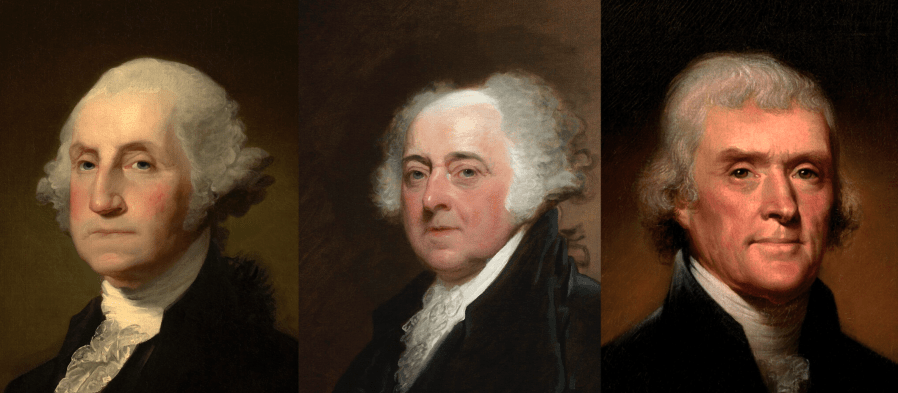
When in doubt, ask what the Founders would have done. This has been the American way for 250 years, since the United States declared independence in 1776. In this presentation, under ten minutes, I pose the question in relation to the Iran war and the dilemma of the closed Strait of Hormuz.
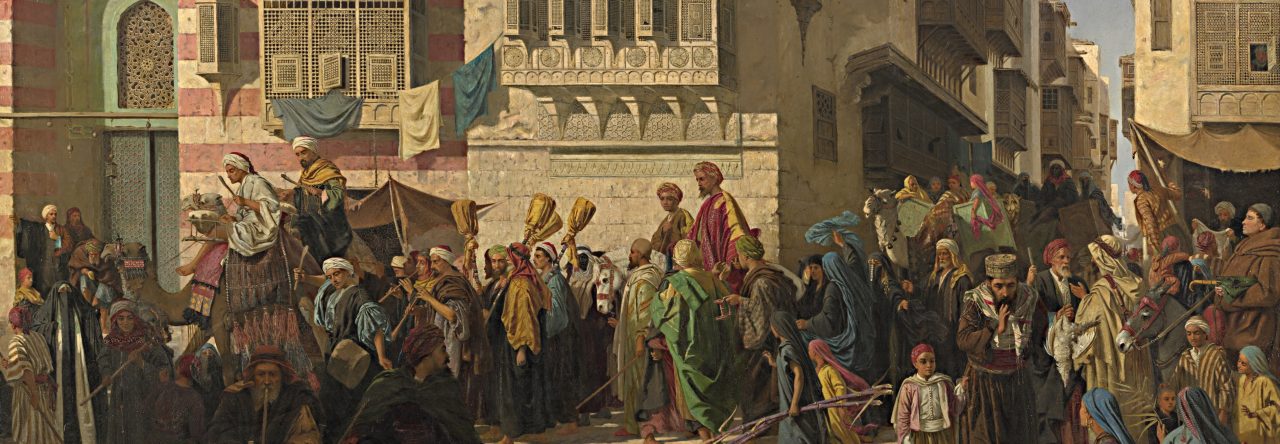
For George Washington, John Adams, and Thomas Jefferson, the choke point was the “Barbary” coast of North Africa. Corsairs operating under the sanction of Muslim-ruled states, especially Tripoli and Algiers, put a stranglehold on American maritime commerce in the Mediterranean.
I draw revealing comparisons between that crisis and today’s Hormuz straitjacket, using the Founders’ pithy words and the Truth Social posts of the eminently quotable Donald J. Trump. Rhetorical style aside, were they really saying the same thing? You decide. Watch here.
(The occasion was the Weinberg Founders Conference dinner of The Washington Institute for Near East Policy. No better or feistier audience.)
There is much talk about how Israel promoted the idea of regime change in Iran to the Trump administration. It’s been particularly primed by a New York Times piece by Maggie Haberman and Jonathan Swan (“How Trump Took the U.S. to War With Iran,” April 7), based on interviews with participants. First, here’s a recap of that report.
On February 11, Israeli Prime Minister Benjamin Netanyahu made his case to Trump in the White House Situation Room. Haberman and Swan:
Mr. Netanyahu and his team outlined conditions they portrayed as pointing to near-certain victory: Iran’s ballistic missile program could be destroyed in a few weeks. The regime would be so weakened that it could not choke off the Strait of Hormuz, and the likelihood that Iran would land blows against U.S. interests in neighboring countries was assessed as minimal.
Besides, Mossad’s intelligence indicated that street protests inside Iran would begin again and—with the impetus of the Israeli spy agency helping to foment riots and rebellion—an intense bombing campaign could foster the conditions for the Iranian opposition to overthrow the regime.
According to the Times report, “Netanyahu delivered his presentation in a confident monotone. It seemed to land well with the most important person in the room, the American president.”
The next day, in a meeting with Trump, CIA Director John Ratcliffe called the Israeli regime-change scenarios “farcical”—a judgment Secretary of State Marco Rubio restated more bluntly as “bullshit.” But Trump signed off on the operation anyway, more drawn to decapitating and degrading the regime than to changing it.
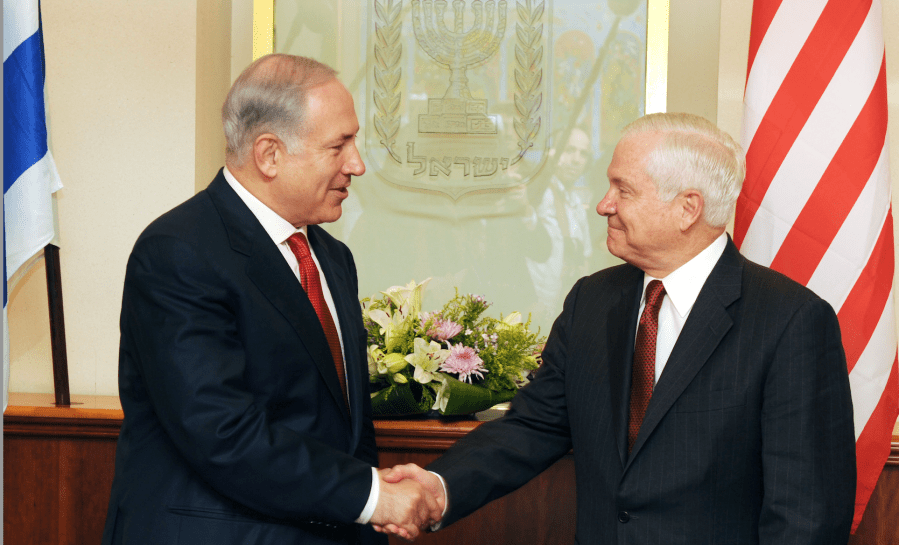
Reading the Times report left me with an acute sense of déjà vu, as if I’d seen this exchange before. After a bit of digging, I found the reason: this conversation had already taken place. Specifically, on July 27, 2009, in Jerusalem, between Netanyahu and Robert Gates, then Secretary of Defense and former CIA director. The evidence is on the bookshelf: Gates’s memoir, Duty (published in 2014), and Netanyahu’s autobiography, Bibi: My Story (published in 2022). The parallels are uncanny.
In mid-2009, Iran had just experienced an aborted “Green Revolution,” which brought protesters into the streets and raised hopes for change. Barack Obama had been president since January, but Gates was not part of his original team. He had served as defense secretary under George W. Bush and was the first defense secretary retained by a president of the opposing party, carrying over into the Obama administration.
In his memoir, Gates called the July 2009 meeting with Netanyahu “our first no-punches-pulled discussion of Iran.” According to him,
Bibi was convinced the Iranian regime was extremely fragile and that a strike on their nuclear facilities very likely would trigger the regime’s overthrow by the Iranian people. I strongly disagreed, convinced that a foreign military attack would instead rally the Iranian people behind their government.
“All the experts can be wrong”
Netanyahu, in his autobiography, gives a slightly more colorful version:
“Besides,” [Gates] said, “all the experts tell us that an American strike on Iran’s nuclear facilities would unite the Iranian public behind the regime. Can all the experts be wrong?”
“Yes,” I said, “all the experts can be wrong. They often are. Most Iranians hate this tyranny. They just tried to rebel against it. They’ll cheer when you deliver a knockout punch to the regime. It would be a tremendous psychological blow to the mullahs’ image of invincibility!”
I related to Gates what President Museveni of Uganda told me of the psychological effect of the [Israeli] raid in Entebbe [in 1976, to free hijacked passengers], that before the raid Ugandans had “believed Idi Amin was invincible” and after it they knew they could “bring him down.”
“You have the power to achieve the same result with the Iranian regime,” I said to Gates. “You are Gulliver.”
The conversation shifted to how Iran might respond to an attack. Gates:
Netanyahu also believed Iranian retaliation after a strike would be pro forma, perhaps the launch of a few dozen missiles at Israel and some rocket salvos from Lebanese-based Hizballah. He argued that the Iranians were realists and would not want to provoke a larger military attack by the United States by going after American targets—especially our ships in the Gulf—or by attacking other countries’ oil facilities. Closing the Gulf to oil exports, he said, would cut the Iranians’ own economic throats. Again I disagreed, telling him he was misled by the lack of an Iraqi response to Israel’s destruction of their Osirak reactor in 1981 and the absence of any Syrian reaction to destruction of their reactor in 2007. I said the Iranians—the Persians—were very different from Iraqis and Syrians. He was assuming a lot in anticipating a mild Iranian reaction, and if he was wrong, an attack on the Iranian nuclear facilities would spark a war in the region, I said.
Netanyahu’s account of this exchange is brief in comparison and frames it more as a disagreement over whether Iran would rebuild its nuclear program after an attack:
Gates argued that the delaying effects of any Israeli military action against Iran’s nuclear capabilities would be short-lived. I noted that the same thing was said of Israel’s strike on Saddam Hussein’s Osirak reactor, referring to our successful 1981 operation against a nuclear facility that never resumed operation. Gates countered that an Israeli strike would result in a full-scale war.
To which Netanyahu added this aside: “Whether it would or not, I was willing to sustain a conventional war with Iran in order to avoid a war with a nuclear-armed Iran.”
For at least sixteen years, Netanyahu’s arguments—regime fragility, decisive action, and limited retaliation—failed to carry the day in Washington. They were countered by U.S. objections: regime resilience, the rally effect, and the risk of escalation. At any point, Netanyahu might have left the political stage without achieving his prime objective. But he held on to power long enough for the churn of American politics to finally produce a president willing to take the leap.
Header image: Prime Minister Benjamin Netanyahu meets U.S. Secretary of Defense Robert Gates at the Prime Minister’s Office, Jerusalem, July 27, 2009. Photograph: Moshe Milner / Government Press Office (Israel).
The Iran war has entered a new phase, a “double-sided ceasefire.” Eventually, we will learn the backstory, and it won’t look like anything we were led to believe while it was unfolding. Much of what seems true today will turn out to be false, and vice versa. If it weren’t always so, the world wouldn’t need historians like me.
In the meantime, I seek insights in the wisdom of mentors now gone. Bernard Lewis was one; I wrote about Lewis and Iran the other week. This time, I’ll consider Uri Lubrani (1926-2018), an Israeli diplomat and defense official.
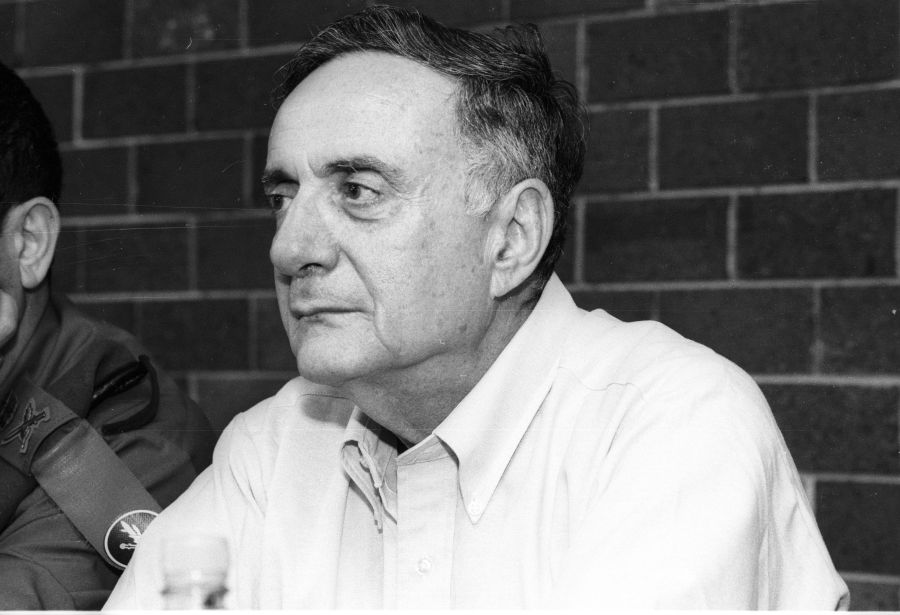
Lubrani, who served the state from its founding, had the unusual distinction of being posted, time and again, to the epicenters of crisis. From 1967 to 1971, he served as ambassador to Ethiopia, which positioned him to play a crucial role in the emergency emigration of 14,000 Ethiopian Jews to Israel in 1991 (Operation Solomon). It was his greatest achievement.
But he was also known for serving as head of the Israeli mission to Iran (with ambassadorial rank) from 1973 to 1978. His claim to fame: he anticipated the rise of religious extremism and the Shah’s fall before anyone else did.
As early as 1975, he warned a U.S. senator visiting Tehran that “the most serious problem that the Shah had domestically was from the religious elements who were hostile and very difficult for him to deal with.” The U.S. diplomat who accompanied the senator later recalled: “I never heard anyone say that in the American embassy. I never heard any journalists say it or any Iranians say it. This was the first time that I heard that analysis.”
Lubrani remained ahead of the curve. In a June 1978 dispatch, he reported to Jerusalem that the Shah’s position was undergoing an “accelerated process of destabilization… a process from which there is no return and which will ultimately lead to his downfall and a drastic change in the form of government in Iran.” Again, he was alone. The State Department at the time estimated that the Shah had “an excellent chance to rule for a dozen or more years,” and the CIA held that “Iran is not in a revolutionary or even a pre-revolutionary situation.” Lubrani emerged from the Iranian revolution as an acclaimed oracle.
I got to know him in the mid-1980s, when he ran an office for Lebanese affairs at the defense ministry. Israel was occupying much of South Lebanon and rubbing up against Hezbollah, Iran’s Shi‘ite proxy. I was beginning to work on Hezbollah myself, and we had much to discuss. Lubrani was also an old friend of Lewis, and I often found myself at dinner with both of them. I wish I’d taken notes.
“We have to try”
Lubrani was renowned for his persistent assertion that regime change in Iran was not only feasible but inevitable. Initially, like Lewis, he hoped a strongman might overthrow the ayatollahs. “I believe that Tehran can be taken over by a relatively small force, determined, ruthless, cruel,” he told the BBC in 1982. “I mean the men who would lead that force would have to be emotionally geared to the possibility that they would have to kill 10,000 people.” (In retrospect, the number seems modest.)
But Iran wasn’t his formal brief, and only after Israel withdrew from Lebanon in 2000 did Lubrani devote himself almost entirely to the country. Trading on his reputation for feeling the pulse of the Iranian people, he insisted that they would overturn the regime, but that it would happen sooner if they received a boost from the outside. From a small office in the defense ministry, on a minimal budget, he tried to stitch together a network of Iranian dissidents and informants who might one day deliver the goods.
By then, he had passed the formal retirement age, and the political and defense establishment viewed him as a holdover from the distant past. In Washington and Jerusalem, they’d concluded that the regime wouldn’t fall, neither now nor later. Policy focused instead on behavior modification. Lubrani admitted he’d come to be seen as an “alte kaker” (an old fart) who “doesn’t know what he’s talking about… I’ve become the village idiot.” He had a license to whisper to exiled Iranians in hotel lobbies and trawl Washington in pursuit of allies, but not much more.
Yet his faith never flagged because he believed the Islamic Republic was fundamentally alien to the Iranian character. “I believe that there’s a popular basis for a change in Iran,” he said in 2006.
The Iranians do not want to be a nation that has religion forced upon it. It’s true that this is a nation with a profound connection to religion, which incidentally includes antisemitic overtones. But the Iranians do not want religion to be forced on them.
Lubrani put the percentage of Iranians who wanted a change of regime at 80 percent “at least.”
The problem was that Israel’s intelligence agencies weren’t detecting signs of a resistance that could be mobilized. Lubrani replied that he had a “gut feeling,” just as he had in 1978. “On the matter of Iran, with all possible humility, I haven’t been wrong…. My feeling is that there is a green movement. It’s mature. It’s ripe. It ought to be helped. And it’s going to do the job.” As for intelligence, he acknowledged its absence: “I have no proof. But when they tell me that something is not possible, that I’m a dreamer, I reply that as long as the opposite cannot be proved, we have to try what I’m recommending.”
Just what did he recommend? In the first instance, good old-fashioned Cold War-type Psychological Operations:
What is required is an international effort to topple the regime. Exactly as the United States under the leadership of Ronald Reagan did to topple the Soviet Union and the communist Iron Curtain in Europe…. I am talking about propaganda, about psychological warfare, about financial assistance.
In particular, he wanted to create an anti-regime media outlet on a large scale:
I once dreamed that Israel would be strong enough and wealthy enough to set up an Israeli version of Al Jazeera, without visible Israeli fingerprints. It would cost a great deal [elsewhere, Lubrani put the cost at £50 million a year], but only small change compared with our total defense budget. The hub should not be in Israel, but in London or Cyprus.
Alas, he couldn’t find any takers in the Israeli establishment. “There is no senior official in Israel’s finance ministry who would understand this and approve the budget. They would think Lubrani had lost his mind.” Instead, he had to make do with a modest Persian-language radio station that aired only two hours a day.
Lubrani had another idea, this one for the Americans: “Pay [oil] workers [in Iran], in money and food, to stay home instead of going to work. It would make not going to work worth their while…. The United States has spent a hundred billion dollars on Iraq so far [2006]—and with just a fraction of that sum, the objective could be achieved.” The Americans didn’t bite.
The one alternative Lubrani ruled out was military action. First, it would kill any chance of a popular uprising: “Any military action will only rally the Iranian people—a proud people with a developed national consciousness—around the regime.” Second, Iran would acquire a nuclear weapon anyway: “Unfortunately, I estimate that Iran will eventually reach nuclear weapons. Even if you bomb them, you will postpone the end by a few years until they once again achieve the capability.”
Lubrani regarded military action as “a doomsday weapon. Only if all ends have been exhausted…. I do not accept the talk as though there is only a military option in order to prevent Iran from getting the bomb.” At a 2010 conference of the Foundation for Defense of Democracies, “they asked me about the military option. I said I oppose the military option. For me as an Israeli, it should always be on the table. But that’s only for the end of days. When the sword is at my throat, I’ll use it.” (Watch him here calling military action “the very, very last resort for Israel, and I wouldn’t use it.”)
This made Lubrani a dissenter. It wasn’t just that he doubted the efficacy of military action. He thought highly of Iranian persistence and concluded that they would get a nuclear weapon sooner or later anyway. The only way to neutralize the threat was to change the regime itself:
People focus on the danger of Iran obtaining nuclear weapons and argue that everything possible must be done to stop it. In my view, they will get such a weapon whether we like it or not. But the real issue is not the weapon itself, but who has their finger on the trigger. The answer is not one agreement or another, nor destroying the nuclear reactors, but replacing the current regime with a rational one.
This led him to a logical conclusion: “Practically, I’m much more concerned about regime change than about the nuclear matter. I’m absolutely convinced that the nuclear matter will resolve itself once there is a regime change.”
Unlimited patience
Years turned into decades, and Lubrani eventually became Israel’s oldest civil servant. In 2009, the press reported that his office was slated for closure. Lubrani received a reprieve when the Green Movement filled the streets of Tehran the following month. In 2015, he retired at 89 and died less than three years later. No representative of the Netanyahu government attended the funeral. “A prophet is not without honor, except in his own country” (Matthew 13:57).
In the rare instances when Lubrani’s name comes up today, it’s often as a synonym for Don Quixote. Yet Lubrani posed the key questions the present war must answer. It’s not whether to resort to military force: that train has left the station. Would Lubrani have approved? Who knows? Iran’s nuclear program wasn’t as advanced in his day, and its ballistic missile program wasn’t even on his radar. Perhaps he would have thought that “doomsday” had arrived, though he wouldn’t have taken any politician’s word for it.
Lubrani challenged conventional wisdom in a more profound way. He argued that any military campaign would only delay the regime’s nuclear program; that no negotiated agreement would permanently block its path to nuclear weapons; that “a rogue regime” combined with nuclear weapons was a “lethal” combination; that only regime change could neutralize the threat; and that the Iranian people could overturn that regime, provided the United States and Israel had their backs.
Has Lubrani’s premise finally taken hold in Israel? Last spring, Mark Dubowitz, CEO of the Foundation for Defense of Democracies, flagged “a sea change with respect to how Israel sees the Iran issue today. And I think for the first time ever in Israeli history, they’ve made maximum support for the Iranian people a central pillar of their strategy. And it’s not just rhetorical.” Just the other day, Mossad chief David Barnea doubled down: “Our commitment will only be complete once this extremist regime is replaced. This regime that seeks our destruction must pass from this world. This is our mission.”
That will take substantial resources, political finesse, cultural understanding, and steady resolve. Above all, it will require a virtue that’s in short supply. “The Iranians have a quality that we and others lack,” Lubrani once said. “Patience. Unlimited patience.” Whether Israel has it will determine whether this war is remembered as a turning point or a prelude to another round.
Header image: Uri Lubrani, 1991. Dan Hadani Collection, The Pritzker Family National Photography Collection, National Library of Israel. CC BY 4.0.
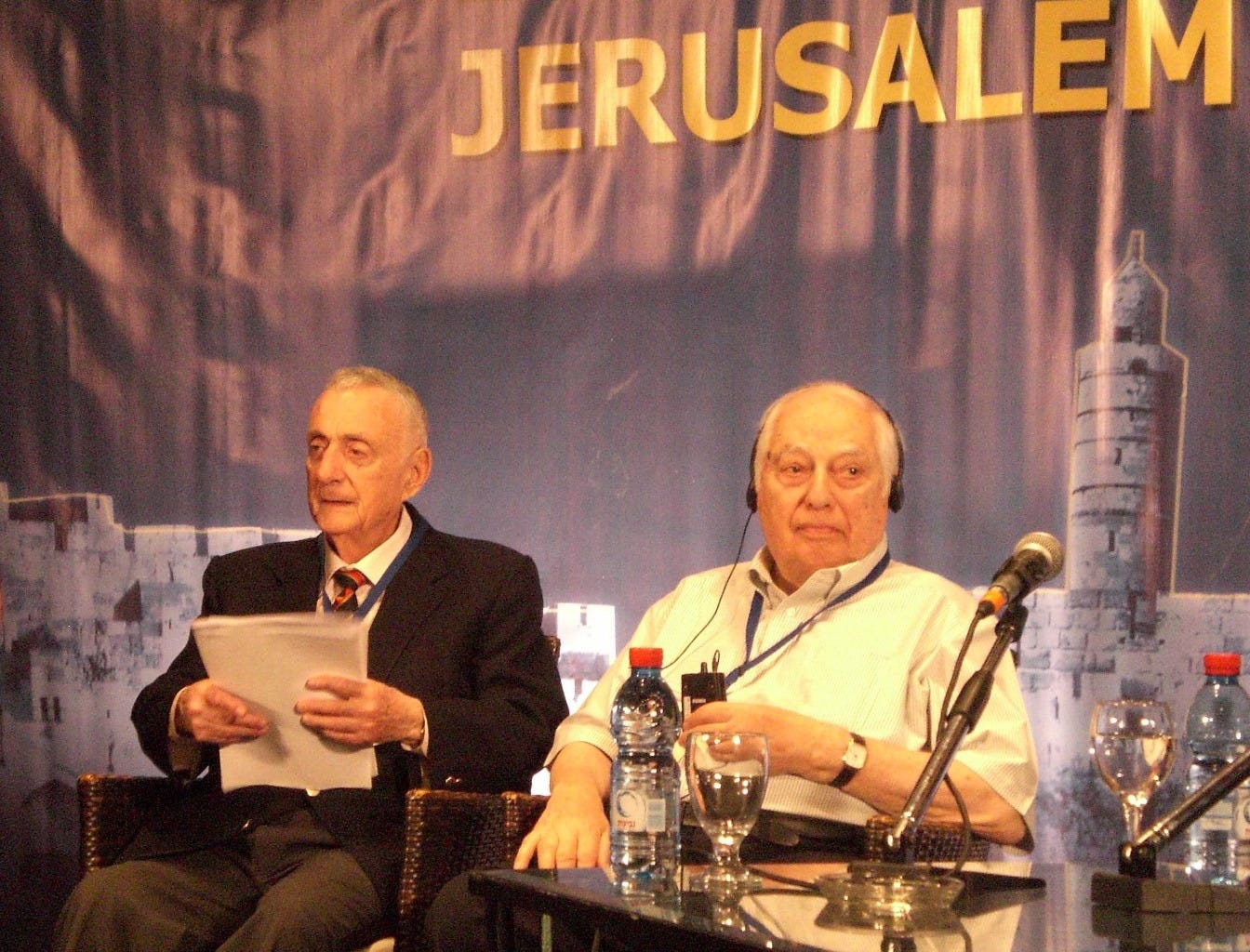
Uri Lubrani (left) and Bernard Lewis at a conference in Jerusalem.
 Martin Kramer on the Middle East
You must be logged in to post a comment.