Boycott me. Please.

This article first appeared at Foreign Policy on December 20.

I am now subject to a boycott by the American Studies Association (ASA), an organization of professors that includes roughly 5,000 members. The resolution, passed by the organization’s rank-and-file on Dec. 15, supposedly doesn’t apply to individuals, but it applies to me. The ASA explains:

The American Studies Association understands boycott as limited to a refusal on the part of the ASA in its official capacities to enter into formal collaborations with Israeli academic institutions, or with scholars who are expressly serving as representatives or ambassadors of those institutions (such as deans, rectors, presidents and others) … until Israel ceases to violate human rights and international law.

Since I am the president of Shalem College in Jerusalem, an accredited Israeli academic institution, I’m clearly subject to the ASA boycott. And while my fledgling liberal arts college doesn’t have any “formal collaborations” with the ASA, it’s the thought that counts.

So just what was the ASA thinking? I don’t follow American studies—my field is the Middle East—and until this episode, I hadn’t heard of the organization. What I know about such associations comes from the Middle East Studies Association (MESA), an organization of scholars who study the region. Needless to say, MESA has had plenty of boycott advocates among its leadership and rank-and-file. A few years back, they tried to pull MESA onto the boycott cart, but they failed.

Boycott advocates haven’t tried since, and for good reason: There are just too many people in MESA who know something about the Middle East. And by those standards, it’s not self-evident that Israel should be singled out and boycotted for its supposed transgressions. All you have to do is peruse the “intervention letters” sent by MESA’s Committee on Academic Freedom. These letters-in-a-bottle to the likes of Iran’s Supreme Leader Ali Khamenei and Turkish Prime Minister Recep Tayyip Erdogan protesting dismissals and show trials of scholars and police violence on campuses are a pretty good indicator of where academic freedom in the Middle East is truly imperiled.

ASA president Curtis Marez acknowledged that some countries in the region have worse human rights records than Israel. However, he then justified the boycott with the unforgettable claim that “one has to start somewhere.”

If you know nothing about the Middle East, and have made a studied effort not to know more, you might think that “somewhere” is Israel. That’s because Israel and the Palestinians get outsized attention—in America. The crimes of others are ignored: What Syrians do to Syrians, Egyptians do to Egyptians, and Iranians do to Iranians—especially to professors—just isn’t compelling news, no matter how horrific. In that sense, the boycott resolution perfectly mirrors the U.S.-centric bias of the ASA: Everything over the horizon, beyond the continental scope of “American studies,” is just a vague blur of media caricatures.

One of the ASA’s central ideological prisms appears to be that the United States is an aggressive empire. Just scan the program of last year’s annual conference, titled “Dimensions of Empire and Resistance,” which was billed as a reflection “on indigeneity and dispossession,” the “course of U.S. empire.”

The United States has a range of allies and clients in the Middle East—but only Israel is viewed positively by a large majority of Americans, while Israelis themselves are overwhelmingly pro-American. For the ASA, that appears to be the bill of indictment right there. The surly Saudis are deeply ambivalent about America, but they’ve spread hush money across the American academic landscape, so don’t expect them to be boycotted. No, it will be Israel—as punishment not for its offenses, which aren’t the worst by any means, but for its “special relationship” with the United States.

I’m not exactly sure what I should do to get myself off the ASA’s blacklist. The organization posed this very question in an explainer about its decision, and could only conclude: “This is a difficult question to answer. The boycott is designed to put real and symbolic pressure on universities to take an active role in ending the Israeli occupation and in extending equal rights to Palestinians.”

Although this isn’t an answer at all, it suggests that I should abandon what I believe under pressure—acting not out of conviction, but out of fear for the fate of my institution. Instead of speaking truth, I am supposed to distort my truth. The boycott presumes that I am akin to a widget exporter, so focused on my bottom line that I can be turned into a lobby for just about any cause with the sufficient application of “pressure.”

Here is the fatal flaw in the boycott’s design: If I, as a scholar, were to change my tune under “pressure,” my credibility would be rightly destroyed, and I would lose my power to convince anyone of anything.

Let’s say that I’m on a first-name basis with a few Israeli cabinet ministers (I am). According to the boycott’s strategy, I should request a meeting with each of them, and tell them it is time to “end the occupation and extend equal rights to Palestinians.” “Why?” they would ask. What has changed since the last time we had a conversation?

In the past, I spoke out of conviction, in terms of what would best serve the interests of the State of Israel and the Jewish people. So why should they give a whit if, now, I tell them I speak out of fear for the standing of one institution, cherished though it may be? I would not only be unconvincing, I would become contemptible in the eyes of others and, above all, myself.

So I regret to inform the ASA that I will not knuckle under. I would sooner resign my presidency than alter, by one iota, my considered view of what is best for Israel. I may not be right (especially by the standards of the ASA resolution, which, if Peter Beinart’s assessment is correct, implies that the best thing for Israel would be its total dissolution). But it is my truth, arrived at freely, and the suggestion that I might be pressured into distorting it presumes that I, and my fellow heads of Israeli universities, lack all intellectual integrity. To which my reply is: Boycott me. Please.

While we languish under boycott, Shalem College will continue to do our best to bring to Israel the benefits of an American-style education. Ours is the first institution in Israel to find inspiration in the American tradition of the small liberal arts college. Shalem Press, our scholarly imprint, has commissioned and published outstanding Hebrew translations of The Federalist Papers, Thomas Paine’s Common Sense, and Alexis de Toqueville’s Democracy in America. These works are now assigned in dozens of university courses throughout Israel. We will continue to bring the most important American ideas to Israeli readers in Hebrew. And we will continue to teach our Israeli undergraduates the fundamental ideals behind the world’s greatest democracy, and their origins and resonance in the Jewish tradition. Boycott or not.
Special Relationships

This post first appeared on the Commentary blog on December 2.

Last week, John Kerry appeared with British foreign secretary William Hague in London, and they congratulated one another on concluding their nuclear deal with Iran. Kerry expressed American gratitude for Britain’s support. “We are determined to press forward,” he said, “and give further life to this very special relationship and to our common objectives.”

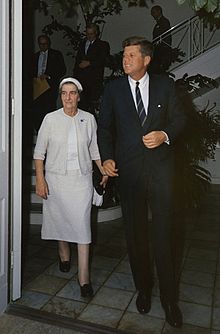
It was President John F. Kennedy who first extended the concept of a “special relationship” beyond Britain to include Israel. In December 1962, Kennedy met with Israel’s then-foreign minister, Golda Meir, in Palm Beach, Florida, and the American memorandum of conversation reported his assurance in these words: “The United States, the President said, has a special relationship with Israel in the Middle East really comparable only to that which it has with Britain over a wide range of world affairs.”

The State Department disliked this. A few months earlier, the Near East and South Asia Bureau had put together a memo on U.S.-Israel relations. “Israel’s proposals for a special relationship with the U.S. would be self-defeating if executed,” it argued. “We consider it important not to give in to Israeli and domestic pressures for a special relationship in national security matters.” But Kennedy spoke the words, and even if their definition remained foggy, they provided some reassurance to Israel every time an American president or secretary of state uttered them.

Which is why it’s worth noting that John Kerry doesn’t utter them. To the best I can determine, in his present job, he hasn’t ever described the U.S.-Israel relationship as “special.” Susan Rice, while at the UN, did so on several occasions, and Senator Kerry did it when he ran for president back in 2004 and again to AIPAC in 2009. But as best as I can tell (and I would welcome contrary evidence), he hasn’t done it as secretary of state, and that stands in striking contrast to his repeated invocation of the “special relationship” with Britain.

For example, last February he visited London and said this (Hague beaming at his side):

When you think of everything that binds the United States and Great Britain—our common values, our long shared history, our ties of family, in my case, personal and friendship—there is a reason why we call this a special relationship, or as President Obama and Prime Minister Cameron wrote, really, a partnership of the heart. It is that.

In June, Kerry (again with Hague at his side) stressed the “special relationship,” which he declared to be “grounded in so much—our history, our values, our traditions. It is, without question, an essential, if not the essential relationship.”

And in September, when Britain’s parliament voted down a motion to join the U.S. in the use of force in Syria, Kerry rushed to declare the “special relationship” intact:

The relationship between the United States and the United Kingdom has often been described as special, essential. And it has been described thusly, quite simply, because it is. It was before a vote the other day in parliament, and it will be for long afterwards after that vote. Our bond, as William [Hague] has just said, is bigger than one vote; it’s bigger than one moment in history. It’s about values. It’s about rules of the road, rules by which human beings try to organize their societies and offer people maximum freedom and opportunity, respecting rights, and finding a balance in a very complicated world. And we have no better partner in that effort than Great Britain, and we are grateful for that.

Quite early, the Obama administration earned a reputation in British public opinion for showing insufficient respect for the “special relationship,” and Kerry may see his mission as repairing that impression. But then the Obama administration stands no higher in Israeli public opinion, and Kerry sees no need to do any work of repair (and a few things he has said have heaped insult on injury).

President Obama does refer to the “special relationship” with Israel, but coming from him, the phrase means a bit less than it once did. That’s because he’s upgraded Britain to something even higher. On the eve of Obama’s visit to Britain in May 2011, he and British prime minister David Cameron published a joint op-ed in the London Times that included this sentence: “Ours is not just a special relationship, it is an essential relationship—for us and for the world.” (The headline: “Not Just Special, But An Essential Relationship.”) Suddenly, the word “essential” started cropping up in references to the relationship with Britain (see also two of the Kerry quotes above). “Essential” is now the new platinum card in relations with the United States, and Britain alone holds one. (That’s why having Britain on board the Iran deal was so important to the Obama administration, and it’s why Hague was assigned the role of setting Israel straight: “We would discourage anybody in the world, including Israel, from taking any steps that would undermine this agreement and we will make that very clear to all concerned.” How pleased he must have been to categorize Israel among the world’s “anybodies.”)

Still, while Obama may have promoted Britain, he didn’t demote Israel. And as John Kennedy made clear more than fifty years ago, the two belong in a league of their own. Just what makes a “special relationship”? It’s more than democracy—the world is full of democracies. It’s not “shared values,” since American values are widely shared around the world. What compels the United States openly to acknowledge two “special relationships” is that two foreign states embody old cultures to which the American public feels profoundly and uniquely indebted.

Given that debt, the U.S. government assumes the obligation to show a bit of respect and work a little harder to make its case, when its biggest-knows-best policies impinge on the interests of those two states. When they dissent, as Britain did over Syria and Israel now does over Iran, it’s their privilege to do so and still win American praise as “special” friends who are entitled to speak their minds freely. For an example of how it’s done, see the Kerry quote above, following the British balk on Syria. So far, there’s no equivalent for Israel over Iran.

The U.S. government’s recognition of a “special relationship” doesn’t create a fact, it acknowledges a debt felt deeply by the American people. John Kerry apparently doesn’t fully grasp that reality in regard to Israel. But then, little in his Mideast diplomacy suggests that reality constrains him anyway.

Superpower Outage

This post first appeared on the Commentary blog on November 13.

Jonathan Tobin, writing at the Commentary blog, rightly dismisses as dangerous any Israeli attempt to play China or Russia off the United States out of frustration with the Iran policy of the Obama administration. When it comes to dealing with the immediate threat posed by Iran, only Washington has superpower leverage, and if Israel wanders off the reservation, it will only damage itself.

But Jonathan makes a further claim: “Israel’s long-term safety must be seen as linked to the ability of the United States to maintain its status as the leader of the free world. Even at times of great tension with Washington, Israelis must never forget that it is not just that they have no viable alternatives to the U.S. but that American power remains the best hope of freedom for all nations.” This “linkage” is problematic, and its acceptance could blind Israelis to what they need to do to survive through the next half-century.

The problem with American power, like all power, is that it waxes and wanes. We have become used to the notion that U.S. preeminence in the world and the Middle East is a constant. But it isn’t so. Geography has rendered the United States the most self-contained superpower in history. As a result, it goes through manic bouts of interventionism and isolationism, and sometimes awakens to the responsibilities of its power too late. It did so during the Holocaust, and it did so during the first years of Israeli independence, when the fledgling Jewish state had to look to the Soviet Union and France for the arms essential to its defense. The simple truth is that Israel cannot rely on the United States to do just the right thing at just the right time. That’s at the heart of the crisis of confidence between the United States and Israel over Iran, and its sources run deeper than the particular world view of Barack Obama.

More than six years ago, before Obama even declared his candidacy, I told the Conference of Presidents that “America’s era in the Middle East will end one day,” and that “it is possible that in twenty years’ time, America will be less interested and engaged in the Middle East. What is our Plan B then?” Obama accelerated that timetable, but the long-term trend has been clear for years. And one doesn’t have to be a “declinist” to realize that the United States can lead the free world and still write off the Middle East, which isn’t part of it. That’s precisely the mood in America today.

Hedging has been a fundamental principle of Zionism from its inception. That’s how it managed to outlast the fall of two empires that dominated the Middle East in the pre-state decades. When political Zionism emerged, the Ottoman Empire still held sway over the land, and Theodor Herzl went as a supplicant to the sultan’s palace in Istanbul. As late as 1912, the future first prime minister of Israel, David Ben-Gurion, and the future second president of Israel, Yitzhak Ben-Zvi, went to Istanbul to study Ottoman law, on the assumption that they would have to build the Yishuv under the same Ottoman power that had ruled the country for four centuries. (Here they are, looking like the deputies to the Ottoman parliament they planned to become.) A few years later, Ottoman power collapsed. Fortunately, Chaim Weizmann had laid the foundations for the support of the Allied victors, above all the British, whose empire now expanded to encompass the core of the Middle East.

British dominance in Palestine lasted for thirty years, during which London became the center of Zionist political activity. Britain was the mother of democracy, bastion of freedom, and home to a strong tradition of philo-Judaism and Christian Zionism. Much was made of “shared values.” But Britain, after facilitating the remarkable growth of the Yishuv, backtracked on its commitment to Zionism at the very moment of paramount Jewish need. It was Ben-Gurion who understood that the world war would bring down the British empire across Asia and Africa, Palestine included, and who sought an alliance with the ascendant United States. Still, years would pass before the United States would admit Israel to a “special relationship,” leaving Israel to fend for itself in the world’s arms market. That insecurity drove Israel to ally with Britain and France against Nasser’s Egypt—to Washington’s chagrin—and to build a nuclear capability with French assistance—in defiance of Washington.

Those days may seem distant, and Israel and the United States have had an extraordinary run. But history stands still for no people, and if our history has taught us anything about geopolitics, it is this: what is will not be. However enamored we are of the status quo, Israel needs a Plan B, and it has to consist of more than editorially flogging America for failing to maintain its forward positions in the Middle East. The State of Israel, like Zionism before it, must be agile enough to survive a power outage of any ally, and to plug in elsewhere. If Israel’s long-term safety really did depend on America’s will to govern the world, then it would be a poor substitute for Judaism’s own survival mechanism, by which the Jewish people outlasted the fall of countless host empires. But Israel’s future depends upon something within its own grasp: its ability to read the changing map of the world, to register the ebb and flow of global power, and to adapt as necessary.

Let us pray for the perpetuation of America’s power to do good in the world. Let us prepare for something less.

• Jonathan Tobin replies to this post.