Israel’s Gaza strategy

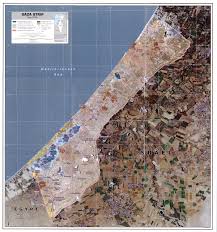
In the fog of war, it isn’t just the truth that falls casualty. So does common sense. Quite a few pundits seem to think that Israel lacks a strategy in Gaza. But unlike the Lebanon war of 2006, this war has been planned in advance, and every stage has been war-gamed. Here is my read of Israel’s strategic plan, which lies behind “Operation Cast Lead.”

Israel’s long-term strategic goal is the elimination of Hamas control of Gaza. This is especially the goal of the Kadima and Labor parties, which are distinguished by their commitment to a negotiated final status agreement with the Palestinian Authority led by Mahmoud Abbas. The Hamas takeover in Gaza reduced Abbas to a provincial governor, who no longer represents effective authority in all the areas destined for a future Palestinian state. Hamas rule in Gaza is a bone in the throat of the “peace process”—one Israel is determined to remove.

Struggle over Sanctions. But how? After the Hamas takeover in June 2007, Israel imposed a regime of economic sanctions on Gaza, by constricting the flow of goods and materials into Gaza via its crossings to Israel. The idea was gradually to undermine the popularity of Hamas in Gaza, while at the same time bolstering Abbas. Israel enjoyed considerable success in this approach. While the diplomatic “peace process” with Abbas didn’t move very far, the West Bank enjoyed an economic boomlet, as Israel removed checkpoints and facilitated the movement of capital, goods, workers, and foreign tourists. So while Gaza languished under sanctions, with zero growth, the West Bank visibly prospered—reinforcing the message that “Islamic resistance” is a dead end.

Hamas in power, from the outset, sought to break out of what it has called the Israeli “siege” by firing rockets into Israel. Its quid pro quo was an end to Hamas rocket fire in exchange for a lifting of the Israeli “siege.” When Israel and Hamas reached an agreement for “calm” last June, Hamas hoped the sanctions would be lifted as well, and Israel did increase the flow through the crossing points, by about 50 percent. Fuel supplies were restored to previous levels. But Hamas was fully aware that sanctions were slowly eroding its base and contradicting its narrative that “resistance” pays. This is why it refused to renew the “calm” agreement after its six-month expiration, and renewed rocket fire.

Were Israel to lift the economic sanctions, it would transform Hamas control of Gaza into a permanent fact, solidify the division of the West Bank and Gaza, and undermine both Israel and Abbas by showing that violent “resistance” to Israel produces better results than peaceful compromise and cooperation. Rewarding “resistance” just produces more of it. So Israel’s war aim is very straightforward, and it is not simply a total cease-fire. At the very least, it is a total cease-fire that also leaves the sanctions against Hamas in place. This would place Israel in an advantageous position to bring about the collapse of Hamas rule sometime in the future—its long-term objective.

Cease-Fire on Israel’s Terms. The Israeli operation is meant to impress on Hamas that there is something far worse than the sanctions—that Israel is capable of hunting Hamas on air, sea, and land, at tremendous cost to Hamas and minimal cost to Israel, while much of the world stands by, and parts of it (including some Arabs) quietly applaud. Israel’s aim is not to bring down Hamas at this stage, but to compel it to accept a cease-fire on Israel’s terms—terms that leave the sanctions in place.

Many Western and Arab governments see the logic of this. They would like to see Abbas and the Palestinian Authority back in authority over Gaza, thus restoring credibility to the “peace process.” Because they wish to see Hamas contained if not diminished, they have moved slowly or not at all to respond to calls for action to stop the fighting. The question now is how Israel turns its military moves into political moves that achieve the shared objectives of this coalition of convenience.

A hint of the solution Israel envisions comes from a senior Israeli diplomatic source: “Israel cannot agree that the only party responsible for implementing and regulating the cease-fire be Hamas.” Israel’s objective is to put another player on the ground in Gaza, which over time would be positioned to undermine Hamas. And since the objective is gradually restoring Gaza to control by Abbas and the Palestinian Authority, it seems logical to assume that this mechanism will be designed to enforce Hamas submission to that authority. Hamas would swallow the pill in the name of “national unity,” but it would become beholden to the PA.

It is the PA, for example, which could be reinserted at the Egyptian border crossing at Rafah (as already demanded by Egypt). It is the PA that could be given exclusive control of reconstruction budgets to repair damaged and destroyed ministries, mosques, and homes. (In the eventual reconstruction boom, Israel will hold all the cards: Gaza has no construction materials, and gravel, aggregate, and cement must be trucked in from Israel.) The premise is that if economic sanctions are to be lifted—and post-war Gaza will be desperately in need of all material things—it must only be through the agency of the PA. Finally, PA security forces could be reintroduced in a police capacity, as part of the “national” reconciliation. An envelope for this restoration of the PA could be provided by the international community.

It isn’t impossible that Israel would go beyond its declared aims and bring Hamas down if Hamas appeared sufficiently damaged by initial ground operations. If Israeli forces are positioned to do this, and Hamas begins to unravel, the impetus to finish the job would be strong. This could make for a much quicker handoff to the PA, via some internationalized body. Israeli disavowals of interest in this outcome, at this time, should be taken with a grain of salt. Israel won’t miss an opportunity if it presents itself.

Possible Complications. What could go wrong with this scenario? A lot. Hamas assumes (probably correctly) that its Palestinian opponents fed Israel with much of the intelligence it needed to wage precision warfare against Hamas. There is likely to be a vicious settling of scores as soon as a cease-fire is in place, if not before, and which could approximate a civil war. This could open space for small groups like Islamic Jihad and other gangs, which could shoot off rockets at their own initiative (or that of Iran). If something can go wrong in Gaza, there is a good chance it will. Much of the aftermath will have to be improvised, and much will depend on how thoroughly Israel has degraded the capabilities of Hamas.

If Hamas remains a player, the biggest risk to Israel is that the mechanism created through diplomacy to “implement and regulate” ends up legitimating Hamas. The temptation to “engage” Hamas has grown in Europe, and even among some Americans, ever since the Hamas victory in the 2006 legislative council elections. As diplomats work to put together a cease-fire mechanism, Hamas will work hard to tempt governments to talk to it, persuading them to skirt the Quartet’s insistence that Hamas not be “engaged” until it accepts past PA-Israel agreements, recognizes Israel, and renounces armed struggle.

Legitimation of Hamas could seal the fate of the “peace process,” and give “resistance” the reputation of a truly winning strategy. The United States will have to assure that all contact with Hamas runs exclusively through the Egyptians, the Saudis, the Turks, and above all, the PA. Europe and the United States must stay well out of the diplomatic reach of Hamas, until it meets the Quartet conditions—a highly improbable prospect.

Politics Will Return. As with any multi-stage plan, Israel’s appears clearer at the outset and fuzzier in the later stages, where consensus dissipates. In particular, the opposition Likud has less confidence in Abbas and the “peace process” as presently configured. While it is adamant about ending Hamas rule in Gaza, it would be much less concerned with restoring the unity of the Palestinians. As Israel achieves its military aims, underlying political differences, now suppressed, are bound to surface, especially as elections are only a month away.

But for now, Israel is united in pursuing its war of demolition against Hamas. Its aim is not only to stop the rockets from falling in southern Israel, but to move a long stride forward toward a change of regime in Gaza.

This post originally appeared in the series On Second Thought, published by the Adelson Institute for Strategic Studies, Shalem Center, Jerusalem.

Mearsheimer, Walt, and “cold feet”

John Mearsheimer and Stephen Walt appear at Princeton University tonight, to promote their book The Israel Lobby. I’ve held back while other critics have had their say, and many of them have done a splendid job. But I don’t think anyone has understood the neat sleight of hand the authors performed in moving from article to book. The innovation in The Israel Lobby is their “cold feet” thesis about the Israeli genesis of the Iraq war.

But first, remember why pinning the Iraq war on the “Israel lobby” is so important to Mearsheimer and Walt. Their main argument isn’t that the Palestinians are paying a terrible price for that support. In most quarters, that draws a simple shrug. Instead, the duo claim that Americans are paying the price for U.S. support for Israel. They paid it on 9/11, and they’re paying it now in Iraq. The killers of 9/11 set out on their mission because of their rage against unconditional U.S. backing for Israel; and the pro-Israel lobby got America into the Iraq war because it served Israel’s interests, not America’s. America is bleeding so that Israel can avoid doing what it should have done years ago: give the Palestinians their state. And it’s because Americans are dying that Israel shouldn’t be indulged anymore.

Of the two arguments made by Walt and Mearsheimer, the 9/11 argument is the less effective. That’s because very early on, Americans decided that Osama bin Laden, a Saudi, and the 15 of the 19 hijackers who were Saudis, weren’t out to kill Americans over Israeli settlements on the West Bank. Al-Qaeda hates us for everything we do and represent they’re 200-proof hatred of America. Americans understood that instinctively, and it was confirmed by the 9/11 Commission Report. The report’s narrative showed how the 9/11 plot developed precisely during the years when Bill Clinton fussed over Yasser Arafat. The report became a bestseller, and its impact has been profound.

So the Iraq argument is far more crucial to the Mearsheimer-Walt thesis, and it’s also dearer to them. It’s generally believed that their anger over the Iraq war drove them to write the book in the first place. They both opposed the war before it started, and they signed a prominent letter against it. Much to their chagrin, no one took much notice of their ironclad, realist arguments against going into Iraq. To the two professors, the United States had become an anomaly, a place where the national interest (as they saw it) wasn’t driving foreign policy. They explained that anomaly by the distorting influence of the “powerful Israel lobby.”

In their original article, Walt and Mearsheimer had a straightforward chain of causation for the Iraq war: Israel pushed the “Israel Lobby” (with a capital L), which pushed the neocons, which pushed the Bush administration into war. I immediately came back with a large body of evidence, proving that Israel wasn’t much worried about Saddam, and instead wanted the United States to take care of Iran. Israeli cabinet ministers and officials went to Washington to stress Iran over Iraq, and these efforts even surfaced in prominent stories in the Washington Post and the Los Angeles Times articles that Mearsheimer and Walt had missed entirely.

In the book, Mearsheimer and Walt admit that Israel was pushing for Iran over Iraq. And yes, they say, Israel only joined the Iraq bandwagon when the Bush administration seemed set on Iraq. But they haven’t dismantled their thesis—far from it. Instead they’ve come up with the new and improved Mearsheimer-Walt thesis, and it goes like this: the Iraq war must still be blamed on Israel, because in the lead-up to the war, Israel and its lobby worked overtime to ensure that Bush didn’t get “cold feet.”

Believe it or not, this is the new Mearsheimer-Walt twist: the “cold feet” thesis of Israel’s responsibility for the Iraq war. For example, page 234: “Israeli leaders worried constantly in the months before the war that President Bush might decide not to go to war after all, and they did what they could to ensure Bush did not get cold feet.” And this, page 261: “Top Israeli officials were doing everything in their power to make sure that the United States went after Saddam and did not get cold feet at the last moment.”

Mearsheimer and Walt bring not a single footnote, in their copiously footnoted book, to substantiate this new and bizarre claim. You have to be pretty credulous to imagine that Bush, Cheney, and Rumsfeld would waver “at the last moment” when they had Saddam squarely in their sights. You can read Bob Woodward forward and backward and find no evidence of wobble. Nor is there any evidence of Israeli worries that the Bush administration would waver on Iraq. Mearsheimer and Walt just made it up.

In doing so, they miss (or conceal) the real story. Israel did worry in the lead-up to the war—not about “cold feet,” but about the “long pause.” A year before the Iraq war, Natan Sharansky, then an Israeli cabinet minister, went on the record with this quote (missed by Mearsheimer and Walt): “We and the Americans have different priorities. For us, Iran comes first and then Iraq. The Americans see Iraq, then a long pause, and only then Iran.” It never occurred to Israelis that Bush would get “cold feet” on Iraq, but they fretted endlessly over just how long the “long pause” would last, and they had good reason.

For example, four months before the war, Ariel Sharon told the London Times (November 5, 2002) that Iran should be put under pressure “the day after” action against Iraq. Mearsheimer and Walt bring the quote. But they incredibly omit what followed on the very same day: British Foreign Secretary Jack Straw shot back at Sharon on the BBC. “I profoundly disagree with him,” Straw said, “and I think it would be the gravest possible error to think in that way.” The London Times reported the spat the next day (“Straw and Sharon ‘Deeply Disagree'”), adding that both British and U.S. senior diplomats were “dismissive of Sharon’s call.” The paper went on to quote “a senior American” who spoke these words: “The President understands the nuances. You can’t paint Iran as totally black in the same way as you do Iraq.… I would have a hard time buying the idea that after victory in Iraq, the U.S. is going to turn its sights on Iran.”

So the Israelis had good cause to worry. Walt and Mearsheimer write (p. 261) that the Israelis “were convinced that Bush would deal with Iran after he finished with Iraq.” No they weren’t, because they knew Britain would oppose it, along with plenty of “senior Americans.” Precisely because they weren’t convinced, they kept coming back to it. And they were right to worry, because in the end, the United States accommodated the Brits. There would be no Iran follow-up. Why? Because Tony Blair did Bush an immense favor in Europe, and the British sent thousands of troops to Iraq. Bush’s feet were snug and warm—nailing Saddam had 80 percent public support in America—but Blair felt the chill at home. To keep him on board, Bush gave him to understand that there wouldn’t be an Iran sequel, at least not on Blair’s watch.

Not only wasn’t the Iraq war Israel’s first choice; the war’s aftermath was a defeat for Israel’s own openly declared priorities. Israel is now living with the consequences of that defeat. Here we are in the last days of 2007, and the United States is still in the midst of the “long pause.” Maybe it should be renamed: the latest U.S. National Intelligence Estimate on Iran has put a lame-duck administration into menopause. So much for the manipulative power of the “Israel lobby.” The Iraq war and its aftermath prove exactly the opposite of what Mearsheimer and Walt claim they prove. They’re evidence not of Israel’s influence, but of the limits of Israel’s leverage when it comes up against other major U.S. interests and alliances.

In sum, the Iraq war thesis of Mearsheimer and Walt is make-believe, and it doesn’t get better from the article to the book—in fact, it’s worse. Almost every reviewer has questioned it on some grounds, although not one has identified the “cold feet” thesis. But that’s what I propose to call it, and it deserves to be known for what it is: a conspiracy theory, pure and simple.

Frankly I’m astonished when even skeptical reviewers of the book preface their criticisms by saying that the authors have done us some sort of service by opening the discussion. Can you imagine them saying the same thing about a book on intelligent design? That the details are preposterous, but the basic proposition deserves to be discussed seriously by serious people? Yet here we have a thesis, insisting that U.S. foreign policy is run by Zionist intelligent design, and Mearsheimer and Walt have made it a perfectly legitimate subject for academic discussion and tony dinner party conversation. If you say otherwise, you’re accused of “stifling debate.”

In the real world, Mearsheimer and Walt, far from being stifled, have become media staples, and tonight they’ll have yet another podium, at Princeton. The respondent will be Princeton professor Robert O. Keohane, another much-ballyhooed theory-maker who’s already hailed the bravery of the duo. “It is bad for political science if some important forces and pressures are systematically concealed,” he’s said. I think it’s a lot worse for political science if some big-name theorists systematically ignore evidence and make it up. If I were a Princeton student thinking of entering a field led by this crowd, it might give me… well, cold feet.

Update, December 12: The Daily Princetonian gives an account of the evening’s proceedings. Robert Keohane, counted among the allies of Mearsheimer and Walt by the Chronicle of Higher Education, turned out to be something less than that. He called The Israel Lobby “a flawed work of political science,” marred by numerous “inconsistencies with realities,” and he particularly went after the book’s claims about the Iraq war. The Daily Prince:

A major point of contention during the discussion was the role of neoconservative policymakers in the Bush administration and their links with pro-Israel lobbyists. Mearsheimer and Walt said that neocons played a significant role in the decision to invade Iraq in 2003, a move the two argued was also seen at the time as being in Israel’s best interest.

“There’s no question that the neoconservatives were the main driving forces behind the war, supported by key organizations in the lobby like AIPAC,” Mearsheimer said.

Keohane disputed the link between AIPAC and the decision to go to war in Iraq. He cited nine other reasons for the invasion, including concerns over weapons of mass destruction and a desire to promote democracy.

The mention of AIPAC’s role in the lead up to the Iraq war set off a spirited exchange.

“It’s hard to find other organizations or institutions that were pushing the war,” Mearsheimer said. “If it wasn’t the neoconservatives, and it wasn’t the leaders of the lobby, and it wasn’t Israel, then who was it?”

“Two people: One is the president, and the other is the vice president,” Keohane said to applause.

Walt jumped in. “The problem,” he said, “is that neither the president nor the vice president was pushing for the war in the first eight months of the term.” More people applauded.

Keohane added that Sept. 11, 2001, changed the situation amid supportive shouts from the audience.

Mearsheimer responded that “Iraq had nothing to do with 9/11.”

I’m whacked by a party hack

Ira N. Forman, executive director of the National Jewish Democratic Council, has taken a whack at my recent op-ed on Hillary Clinton’s Foreign Affairs essay. In that piece, I examined Hillary’s text, I decoded its message on Israel and the Palestinians, and I suggested that it deviated from pronouncements she’s made elsewhere. Forman calls my exegesis a “tawdry political stunt… filled with shaky logic and intellectual dishonesty.” But he doesn’t attempt to refute my exegesis of her essay, which seems to echo the pressure-Israel-and-push-for-Palestine preferences of the foreign policy establishment.

Instead, he does two things. First, he hails Hillary as “a great supporter of Israel throughout her career.” He cites her “impeccable voting record” in the Senate, her advocacy for Red Cross recognition of Magen David Adom, her accolades in the Orthodox newspaper The Jewish Press, and so on. But all this begs the question that I asked: Why does the Foreign Affairs piece send an equivocal message about Israel? Why is it inconsistent with other statements she’s made? “Who is the real Hillary, behind the triangulation?” I asked. “Who knows?” Perhaps Forman knows which of her statements express the real Hillary, and which ones to discard. But what are the rest of us supposed to do, those who aren’t Democratic party insiders like him? Take his word for it and ignore the contradictions?

Second, Forman accuses me of double standards. I’m critical of Hillary, he claims, for proposing the very same diplomatic agenda now being pursued by the Bush Administration at Annapolis. Forman:

If this passage [of Hillary’s essay] were truly objectionable, surely Kramer would say the same about the Bush Administration’s efforts to broker Israeli-Palestinian agreements at Annapolis. And what, Mr. Kramer, are we to think of Condoleezza Rice’s assertion that “We appear to be on course to prepare seriously for continuous ongoing negotiations,” and that “I can really say without fear of contradiction that everybody’s goal is the creation” of a Palestinian state?

Perhaps the biggest discernable difference in Kramer’s eyes is that Clinton’s comments were made by a Democrat–and political foe–while Rice’s were made by a Republican political ally. Mr. Kramer is a member of Rudy Giuliani’s foreign policy team.

Well, Mr. Forman, you obviously haven’t been a big reader of mine, or you’d know that I haven’t hesitated to criticize the Bush Administration when I’ve deemed it to be wrong-headed. Four years ago, I dissented from Bush’s first big democracy speech, and compared him to Jimmy Carter. I did it again after Hamas won Palestinian elections in January of last year. Last June, I appeared at a conference in Prague hours before the President did, and challenged him on the same issue. In a profile over the summer, I was quoted (accurately) as saying: “I saw myself in a debate mode with President Bush” over democracy promotion. So I’ve called them as I’ve seen them all along.

As for Annapolis, I haven’t written about it, but I’ve spoken about it. So here, for the record, is what I said on October 19, at a closed event of The Washington Institute for Near East Policy. The panel was devoted to the Middle East in the 2008 elections, and I shared the podium with Ambassador Dennis Ross. I always speak from prepared remarks, and this is what I said:

Many of the candidates have records of strong support for Israel. But the more relevant question is who has learned from 9/11 to put the Israeli-Palestinian conflict in proper perspective, and not overvalue the “peace process” as a panacea. Giuliani spoke to this in his Foreign Affairs piece, where he wrote this:

“The Palestinian people need decent governance first, as a prerequisite for statehood. Too much emphasis has been placed on brokering negotiations between the Israelis and the Palestinians–negotiations that bring up the same issues again and again. It is not in the interest of the United States, at a time when it is being threatened by Islamist terrorists, to assist the creation of another state that will support terrorism. Palestinian statehood will have to be earned through sustained good governance, a clear commitment to fighting terrorism, and a willingness to live in peace with Israel. America’s commitment to Israel’s security is a permanent feature of our foreign policy.”

This was misinterpreted in some of the press to mean that Giuliani opposes a Palestinian state. He didn’t say that, but he does dissent from the overvaluation of Israeli-Palestinian negotiations. The war against radical Islam takes precedence. A Palestinian state won’t necessarily contribute to winning it, and such a state could ally itself with our enemies, if it doesn’t rest on the firm foundations of good governance and fighting terror.

Significantly, Giuliani affirms that the Palestinians have yet to earn their state. This was once the position of the Bush Administration, which seems of late to have abandoned it in a go-for-broke gamble. So we see Secretary of State Rice in Ramallah announcing that “Frankly, it’s time for the establishment of a Palestinian state,” and that such a state is “absolutely essential for the future, not just of Palestinians and Israelis but also for the Middle East and indeed to American interests.” To judge from the situation on the ground, frankly, it may not be the time, nor is it clear in what way this state’s creation is absolutely essential to US interests.

As we’ve seen time and again, such statements only free the Palestinians from doing what needs to be done to earn their statehood. Only by pushing the so-called political horizon back, not forward, is there any chance the Palestinians will run to reach it. The over-privileged “peace process,” as traditionally configured, has had the opposite of its intended effect, making the two-state solution still more remote. It needs to be re-engineered.

I provide input to the Giuliani campaign, not output, so I speak only for myself when I say that Annapolis seems to me a textbook case of how not to move forward.

My critic, Ira Forman, is a professional party hack, so he’s written the only thing he could have written. I’d urge voters, especially those with a keen interest in Israel, to do what I’ve done: think independently, judge the policies offered by candidates for their cogency and consistency, and make a choice without regard to party. It’s the American way.