Haass and Hamas

Richard N. Haass is president of the Council on Foreign Relations. His last position in government was director of policy planning in the State Department, during the first couple of years of the Bush administration. The buzz in Washington is that Haass could be named special envoy for Arab-Israeli issues. The New York Times asked Haass about it for today’s edition, and he says he hasn’t been approached, but is flattered by the attention.

Read this exchange with Haass, which took place on the NewsHour:

Jim Lehrer: So what can be done about Hamas? Who can stop this?

Richard Haass: I think the key thing there that you’re probably never going to satisfy them politically, indeed, you wouldn’t want to satisfy them politically…

Lehrer: Why?

Haass: The goals of many people, in groups like Hamas, is a one-state solution, and that state isn’t Israel. It’s a Palestinian state that’s based upon probably Islamic precepts.

Lehrer: So there’s no way to negotiate with Hamas. That’s what you’re saying. Forget that?

Haass: I agree with that. That’s an important point. There are some groups out there you can negotiate with. You have to decide whether there are terms you can live with. But groups like Hamas, they have political agendas that I would suggest are beyond negotiation. And for them, and as a result there’s not a political answer—there’s got to be an intelligence, a law enforcement, and a military answer.

Exactly. Haass got it just right—back in 2003, the year of that interview, when he’d just come out of government and was presumably well-informed. But Haass subsequently had a complete change of heart. In 2006, in an article in Foreign Affairs, he wrote this:

U.S. officials ought to sit down with Hamas officials, much as they have with the leaders of Sinn Féin, some of whom also led the Irish Republican Army. Such exchanges should be viewed not as rewarding terrorist tactics but as instruments with the potential to bring behavior in line with U.S. policy.

What would make Hamas so amenable to this “behavior” modification? The United States would “articulate those principles it believes ought to constitute the elements of a final settlement, including the creation of a Palestinian state based on the 1967 lines…. The more generous and detailed the plan, the harder it would be for Hamas to reject negotiation and favor confrontation.”

To the best of my knowledge, Haass has never given any explanation for this total about-face. What has Hamas done or said since 2003, to transform it from a group “beyond negotiation,” deserving of a “military answer,” to a group that might accept negotiation and line up with U.S. policy? What sort of “details” about a Palestinian state in 1967 borders, and what degree of “generosity,” does Haass think are required to separate Hamas from what he himself once described as its implacable devotion to the elimination of Israel? I’m waiting for the evidence (and for the logic behind the analogy between Hamas and the Sinn Féin, which has been demolished many times, even by a current fellow at the Council on Foreign Relations).

Just recently, Haass cooperated with Martin Indyk of the Saban Center at Brookings, in authoring the opening chapter of a joint Council-Brookings recipe book on Middle East policy for the new administration. Indyk apparently had a restraining effect on Haass, but the idea of dialogue with Hamas survived all the same. The authors complain that “Bush’s boycott of Hamas, after it freely and fairly won the Palestinian elections, enabled America’s opponents in the Arab and Muslim worlds to raise the banner of ‘double standards.'” They go on to say that “given its [Hamas’s] control of Gaza and its support among at least one-third of Palestinians, a peace process that excludes it is bound to fail.” (In the Foreign Affairs version of this chapter, they hedge and write “could well fail.”) And they end up proposing that if Hamas keeps a ceasefire with Israel, and reconciles with the Palestinian Authority, “the next president should deal with the joint Palestinian leadership as well as authorize low-level contact with Hamas in Gaza.”

This constitutes a wholesale abandonment of every one of the Quartet’s three conditions for diplomatic engagement with Hamas: recognition of Israel, renunciation of terrorism and violence, and acceptance of previous Israeli-Palestinian agreements and obligations, including the Roadmap. What’s the justification for this? Is it that Hamas seized power in Gaza, and has made itself a spoiler by acquiring and firing thousands of rockets into Israel, each of which is intended to kill at random? If so, then say so. Instead Haass maintains that “such exchanges should be viewed not as rewarding terrorist tactics.” Well, if every single one of the Quartet’s conditions gets whittled away to nothing, why shouldn’t Hamas view it as a reward for its tactics? After all, the tactics haven’t changed.

Hamas must derive enormous encouragement from our vacillation. We set conditions; Hamas rejects them and continues to practice its “resistance”; so we drop our conditions in the name of some strategic master plan (e.g., “democracy,” the “peace process”). This happened during the Bush administration, when Hamas was allowed to run in Palestinian elections without meeting any of the conditions of an earlier Israeli-Palestinian agreement, which banned “any candidates, parties or coalitions… [that] commit or advocate racism or pursue the implementation of their aims by unlawful or nondemocratic means.” Hamas came into elections strutting guns and preaching incitement—and won. Why should they drop any of their cherished principles, when they see their adversaries seriously thinking about dropping their own? We insist that they reconcile with the PA. What if they don’t? Why shouldn’t they imagine we’ll eventually dump that condition too?

I have nothing against Richard Haass, and I’m sure that as an accomplished diplomat, he would faithfully serve administration policy. His views probably have evolved, especially over the past couple of weeks, during which he’s put in a few admirable performances in the media (for example). But his appointment at this time—as special envoy to Israel and the Arabs, of all things—might send the wrong signal, stiffening the resolve of Hamas at a time when Israel is trying to change the game. Send the right signal instead.

Update, January 13: The prospective Haass appointment, which got bounced around in the mainstream media for several days, originated in the blogosphere. Leslie Gelb explains how it got legs. He adds:

Stephen Walt called the Haass appointment “about the best us realists could expect.” Coming from the co-author with John Mearsheimer of a recent book that argued that the pro-Israeli Jewish lobby dominates U.S. policy on the Mideast to the detriment of American interests, this was a kiss of death—if Haass ever was being considered.
Israel’s Gaza strategy

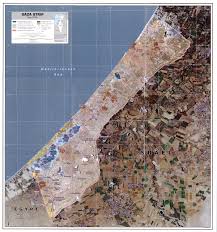
In the fog of war, it isn’t just the truth that falls casualty. So does common sense. Quite a few pundits seem to think that Israel lacks a strategy in Gaza. But unlike the Lebanon war of 2006, this war has been planned in advance, and every stage has been war-gamed. Here is my read of Israel’s strategic plan, which lies behind “Operation Cast Lead.”

Israel’s long-term strategic goal is the elimination of Hamas control of Gaza. This is especially the goal of the Kadima and Labor parties, which are distinguished by their commitment to a negotiated final status agreement with the Palestinian Authority led by Mahmoud Abbas. The Hamas takeover in Gaza reduced Abbas to a provincial governor, who no longer represents effective authority in all the areas destined for a future Palestinian state. Hamas rule in Gaza is a bone in the throat of the “peace process”—one Israel is determined to remove.

Struggle over Sanctions. But how? After the Hamas takeover in June 2007, Israel imposed a regime of economic sanctions on Gaza, by constricting the flow of goods and materials into Gaza via its crossings to Israel. The idea was gradually to undermine the popularity of Hamas in Gaza, while at the same time bolstering Abbas. Israel enjoyed considerable success in this approach. While the diplomatic “peace process” with Abbas didn’t move very far, the West Bank enjoyed an economic boomlet, as Israel removed checkpoints and facilitated the movement of capital, goods, workers, and foreign tourists. So while Gaza languished under sanctions, with zero growth, the West Bank visibly prospered—reinforcing the message that “Islamic resistance” is a dead end.

Hamas in power, from the outset, sought to break out of what it has called the Israeli “siege” by firing rockets into Israel. Its quid pro quo was an end to Hamas rocket fire in exchange for a lifting of the Israeli “siege.” When Israel and Hamas reached an agreement for “calm” last June, Hamas hoped the sanctions would be lifted as well, and Israel did increase the flow through the crossing points, by about 50 percent. Fuel supplies were restored to previous levels. But Hamas was fully aware that sanctions were slowly eroding its base and contradicting its narrative that “resistance” pays. This is why it refused to renew the “calm” agreement after its six-month expiration, and renewed rocket fire.

Were Israel to lift the economic sanctions, it would transform Hamas control of Gaza into a permanent fact, solidify the division of the West Bank and Gaza, and undermine both Israel and Abbas by showing that violent “resistance” to Israel produces better results than peaceful compromise and cooperation. Rewarding “resistance” just produces more of it. So Israel’s war aim is very straightforward, and it is not simply a total cease-fire. At the very least, it is a total cease-fire that also leaves the sanctions against Hamas in place. This would place Israel in an advantageous position to bring about the collapse of Hamas rule sometime in the future—its long-term objective.

Cease-Fire on Israel’s Terms. The Israeli operation is meant to impress on Hamas that there is something far worse than the sanctions—that Israel is capable of hunting Hamas on air, sea, and land, at tremendous cost to Hamas and minimal cost to Israel, while much of the world stands by, and parts of it (including some Arabs) quietly applaud. Israel’s aim is not to bring down Hamas at this stage, but to compel it to accept a cease-fire on Israel’s terms—terms that leave the sanctions in place.

Many Western and Arab governments see the logic of this. They would like to see Abbas and the Palestinian Authority back in authority over Gaza, thus restoring credibility to the “peace process.” Because they wish to see Hamas contained if not diminished, they have moved slowly or not at all to respond to calls for action to stop the fighting. The question now is how Israel turns its military moves into political moves that achieve the shared objectives of this coalition of convenience.

A hint of the solution Israel envisions comes from a senior Israeli diplomatic source: “Israel cannot agree that the only party responsible for implementing and regulating the cease-fire be Hamas.” Israel’s objective is to put another player on the ground in Gaza, which over time would be positioned to undermine Hamas. And since the objective is gradually restoring Gaza to control by Abbas and the Palestinian Authority, it seems logical to assume that this mechanism will be designed to enforce Hamas submission to that authority. Hamas would swallow the pill in the name of “national unity,” but it would become beholden to the PA.

It is the PA, for example, which could be reinserted at the Egyptian border crossing at Rafah (as already demanded by Egypt). It is the PA that could be given exclusive control of reconstruction budgets to repair damaged and destroyed ministries, mosques, and homes. (In the eventual reconstruction boom, Israel will hold all the cards: Gaza has no construction materials, and gravel, aggregate, and cement must be trucked in from Israel.) The premise is that if economic sanctions are to be lifted—and post-war Gaza will be desperately in need of all material things—it must only be through the agency of the PA. Finally, PA security forces could be reintroduced in a police capacity, as part of the “national” reconciliation. An envelope for this restoration of the PA could be provided by the international community.

It isn’t impossible that Israel would go beyond its declared aims and bring Hamas down if Hamas appeared sufficiently damaged by initial ground operations. If Israeli forces are positioned to do this, and Hamas begins to unravel, the impetus to finish the job would be strong. This could make for a much quicker handoff to the PA, via some internationalized body. Israeli disavowals of interest in this outcome, at this time, should be taken with a grain of salt. Israel won’t miss an opportunity if it presents itself.

Possible Complications. What could go wrong with this scenario? A lot. Hamas assumes (probably correctly) that its Palestinian opponents fed Israel with much of the intelligence it needed to wage precision warfare against Hamas. There is likely to be a vicious settling of scores as soon as a cease-fire is in place, if not before, and which could approximate a civil war. This could open space for small groups like Islamic Jihad and other gangs, which could shoot off rockets at their own initiative (or that of Iran). If something can go wrong in Gaza, there is a good chance it will. Much of the aftermath will have to be improvised, and much will depend on how thoroughly Israel has degraded the capabilities of Hamas.

If Hamas remains a player, the biggest risk to Israel is that the mechanism created through diplomacy to “implement and regulate” ends up legitimating Hamas. The temptation to “engage” Hamas has grown in Europe, and even among some Americans, ever since the Hamas victory in the 2006 legislative council elections. As diplomats work to put together a cease-fire mechanism, Hamas will work hard to tempt governments to talk to it, persuading them to skirt the Quartet’s insistence that Hamas not be “engaged” until it accepts past PA-Israel agreements, recognizes Israel, and renounces armed struggle.

Legitimation of Hamas could seal the fate of the “peace process,” and give “resistance” the reputation of a truly winning strategy. The United States will have to assure that all contact with Hamas runs exclusively through the Egyptians, the Saudis, the Turks, and above all, the PA. Europe and the United States must stay well out of the diplomatic reach of Hamas, until it meets the Quartet conditions—a highly improbable prospect.

Politics Will Return. As with any multi-stage plan, Israel’s appears clearer at the outset and fuzzier in the later stages, where consensus dissipates. In particular, the opposition Likud has less confidence in Abbas and the “peace process” as presently configured. While it is adamant about ending Hamas rule in Gaza, it would be much less concerned with restoring the unity of the Palestinians. As Israel achieves its military aims, underlying political differences, now suppressed, are bound to surface, especially as elections are only a month away.

But for now, Israel is united in pursuing its war of demolition against Hamas. Its aim is not only to stop the rockets from falling in southern Israel, but to move a long stride forward toward a change of regime in Gaza.

This post originally appeared in the series On Second Thought, published by the Adelson Institute for Strategic Studies, Shalem Center, Jerusalem.

Hillary: Triangulation on Israel?

The following op-ed by Martin Kramer appears in the Jerusalem Post, November 5, 2007.

Hillary Clinton has published her foreign policy agenda in Foreign Affairs magazine, under the title “Security and Opportunity for the Twenty-First Century.” The one paragraph on the Israeli-Palestinian conflict draws deeply on the notions that “resolving the conflict” should be America’s top priority, that both sides are equally at fault for the “violence,” and that Palestinians need only make promises to earn statehood. The passage strongly suggests that Hillary’s support for Israel is more “triangulated” than many have assumed.

Here is the passage in full:

Getting out of Iraq will enable us to play a constructive role in a renewed Middle East peace process that would mean security and normal relations for Israel and the Palestinians. The fundamental elements of a final agreement have been clear since 2000: a Palestinian state in Gaza and the West Bank in return for a declaration that the conflict is over, recognition of Israel’s right to exist, guarantees of Israeli security, diplomatic recognition of Israel, and normalization of its relations with Arab states. U.S. diplomacy is critical in helping to resolve this conflict. In addition to facilitating negotiations, we must engage in regional diplomacy to gain Arab support for a Palestinian leadership that is committed to peace and willing to engage in a dialogue with the Israelis. Whether or not the United States makes progress in helping to broker a final agreement, consistent U.S. involvement can lower the level of violence and restore our credibility in the region.

THIS IS a carefully crafted paragraph, loaded with allusions and references that the casual reader is likely to miss, but that send a clear signal on the high frequency of the “peace process.” The message is this: a Hillary administration would constantly busy itself with Israeli-Palestinians talks, regardless of their prospects, and would strive to avoid any appearance of partiality–toward Israel.

The hyper-activism is made explicit in the promise of “consistent U.S. involvement,” “whether or not the United States makes progress.”

This is exactly what the US did during the Clinton years, when Yasser Arafat visited the White House 11 times, and met with President Clinton 24 times. Not only did this “consistent involvement” at the highest level not produce any progress, it raised the expectations of Palestinians to an absurd level, leaving them more intransigent and belligerent than they were at the outset.

Obsessive US diplomacy eventually blew up in Washington’s face when Arafat launched a so-called “intifada” against Israel in 2000.

IT IS ALL the more astonishing, then, that Hillary, who witnessed the debacle from up close, thinks “consistent US involvement,” whatever its outcome, will “lower the level of violence and restore our credibility in the region.” She ignores precisely the lesson inflicted upon us by the failed policy of the Clinton administration: If the US obsessively tinkers with this issue without result, it is bound to raise the level of violence and damage our credibility.

In this same sentence, Hillary makes another nod toward the Palestinian position. She imagines that all this busy “involvement” will somehow “reduce violence.” Aside from the probability that it would have the opposite effect, the very choice of the word “violence” evokes the infamous phrase “cycle of violence,” by which Israelis and Palestinians are deemed equally responsible for the bloodshed.

That the Palestinians have deliberately cultivated a culture of terrorism, celebrating suicide bombers, is entirely lost in this formulation. Instead of terrorism, there is only “violence,” which includes both the suicide-bomb dispatchers and the Israeli operations to stop them. By avoiding the word “terrorism,” Hillary adopts a position of studied neutrality.

WHAT HILLARY calls the “fundamental elements of a final agreement” are also carefully tailored to lower the bar for the Palestinians. They are to receive a state in return for a “declaration that the conflict is over,” “recognition of Israel’s right to exist,” and “guarantees of Israeli security” (emphasis added). In other words, Palestinians are not expected to do anything, only issue a surfeit of declarations and promises.

During the Clinton administration, the White House collected a mountain of these Palestinian chits, which turned out to be worthless. Hillary makes no mention whatsoever of Palestinians actually fighting terrorism (not that word!), and says nothing at all about the need for good governance and accountability. In short, she would ask the Palestinians simply to make the sort of promises Arafat made to her husband, as though we had not learned the hard way to demand that Palestinians perform.

In fact, the entire premise of Hillary’s statement is that we can go back to the innocence of 2000, before the crash. She deliberately evokes the legacy of her husband when she writes that the “fundamental elements of a final agreement have been clear since 2000” (emphasis added), i.e., when Bill Clinton presented his “parameters” at Camp David.

Clear to whom? Arafat rejected them then, Hamas (now far stronger than it was in 2000) has always regarded a final settlement with Israel as anathema, and even Mahmoud Abbas cannot bring himself to make the necessary concessions.

Nor does Hillary consider that perhaps the Palestinians, having chosen to wage war against Israel in 2000, should be made to expect less than what they might have had in 2000. Instead, she implies that the game should be resumed precisely at the point where Arafat walked off the field and began to shoot. The Palestinians did not gain by war, she implies, but certainly they did not lose.

ONE OF THE things they should have lost is any serious consideration of the so-called “right of return” of Palestinian “refugees” (the large majority of whom are descendants of refugees) to Israel proper. President Bush said as much to Mahmoud Abbas at the Akaba summit in 2003, announcing that “a democratic Palestinian state fully at peace with Israel will promote the long-term security and well-being of Israel as a Jewish state(emphasis added).

The Palestinians insist that they will not recognize Israel as a Jewish state, because this effectively negates their “right of return.” Hillary herself, in a statement made in September, said she personally “believes that Israel’s right to exist in safety as a Jewish state… must never be questioned.” Yet Hillary’s formula in the Foreign Affairs piece invites the Palestinians to do just that, asking them simply to “recognize Israel’s right to exist.”

A Palestinian can only read this as an invitation to hold firm to the bogus “right of return” (and hold out against the Bush-Rice diplomatic surge in anticipation of a Hillary administration).

THERE IS another nod to the Palestinians at the top of the passage: “Getting out of Iraq will enable us to play a constructive role in a renewed Middle East peace process that would mean security and normal relations for Israel and the Palestinians.” This nicely exonerates the Palestinians of responsibility for ditching diplomacy and waging war. Instead, it is the US that must say a mea culpa for allowing itself to be distracted from the cause of Palestine by something as insignificant, in comparison, as the liberation of 27 million Iraqis.

In fact, had the Palestinians, at any moment, shown themselves ready to fight terror and make the compromises necessary for peace, the Bush Administration would have taken up the burden. (Even absent that, President Bush greatly strengthened the US commitment to a Palestinian state.) The sentence seems to be an effort to enlist supporters of a renewed “peace process” behind the quit-Iraq agenda, although it is a mystery how simply “getting out of Iraq,” as opposed to victory in Iraq, would position the US to play a “constructive role” anywhere in the Middle East.

In September, Hillary issued a statement on Israel designed to bolster her standing among pro-Israel voters. Her Foreign Affairs piece, aimed at the wider foreign policy establishment, takes a very different line.

Who is the real Hillary, behind the triangulation? Who knows?

The Foreign Affairs article is intended to be the point of reference for any future Hillary administration. For supporters of Israel, it can only give rise to the most profound misgivings. These are not formulas used by Israel’s friends.

Martin Kramer is Olin Institute senior fellow at Harvard University, and senior Middle East adviser to the presidential campaign of Rudy Giuliani. These views are his own.