The paradoxical Jabotinsky

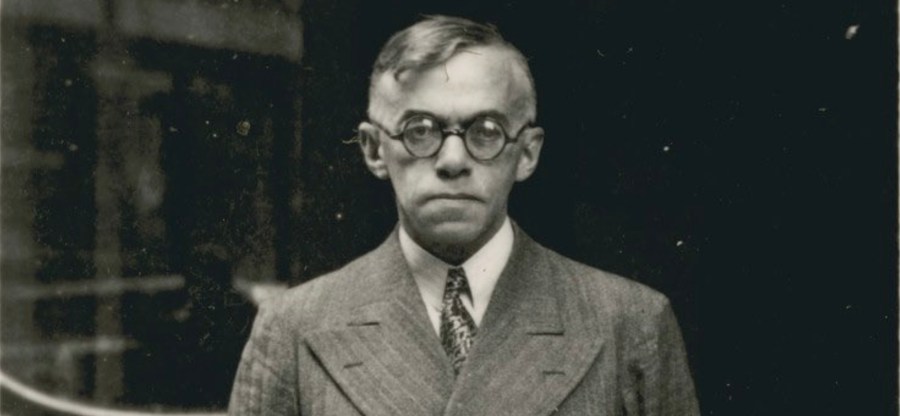
Ze’ev Jabotinsky was a man of paradoxes, and one of them has always been a source of some unease among certain of his followers. The founder of Revisionism had a secular view of the world, and practiced none of the rituals of Judaism. Yet the Likud, his political heir, owes its rise to power in good measure to traditional and religious Jews. 

Paradox? The historian Avi Shilon, over at Mosaic, has written an essay claiming that this isn’t such a contradiction, since the “mature” Jabotinsky had begun a personal reconciliation with the faith.

I’ve written a response to Shilon, and there I take a different stand on the question. (So did Hillel Halkin, a Jabotinsky biographer, in an earlier response.) But I then follow another paradox opened by Shilon’s essay: Jabotinsky’s view of Jewish settlement. Jabotinsky and David Ben-Gurion came down on opposite sides in a famous debate just over a century ago, surrounding a place called Tel Hai. Over time, Jabotinsky’s view has prevailed, but not in the way you might think. Read my full response here or below.

Did the UN create Israel?

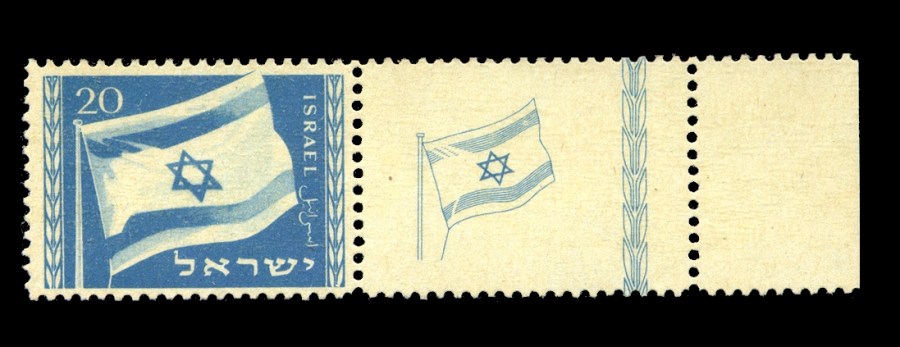
Israel’s declaration of independence doesn’t invoke God’s promise of the land to the patriarchs, as I explained in the last installment of my series on Israel’s declaration of independence. But it repeatedly invokes the United Nations “partition resolution” of November 1947. So did the UN create Israel?

As I explain in my new installment, Israel’s founders, and above all David Ben-Gurion, were very selective in what they took from the UN. Indeed, if you only read Israel’s declaration of independence, you’d think that the UN had licensed the creation of only one state, a Jewish one. You wouldn’t know the UN had voted for partition, or that its plan had come with a map.

If it had been within the power of the UN to create a Jewish state, it would have created an Arab one too. But states aren’t created by decree. Absent a Jewish army, Israel wouldn’t have arisen in any borders, and certainly not in the expanded borders of 1949. To learn how the drafters of the declaration cleverly construed the UN’s decision, read my new installment, at this link.

Will the real founders please stand up?

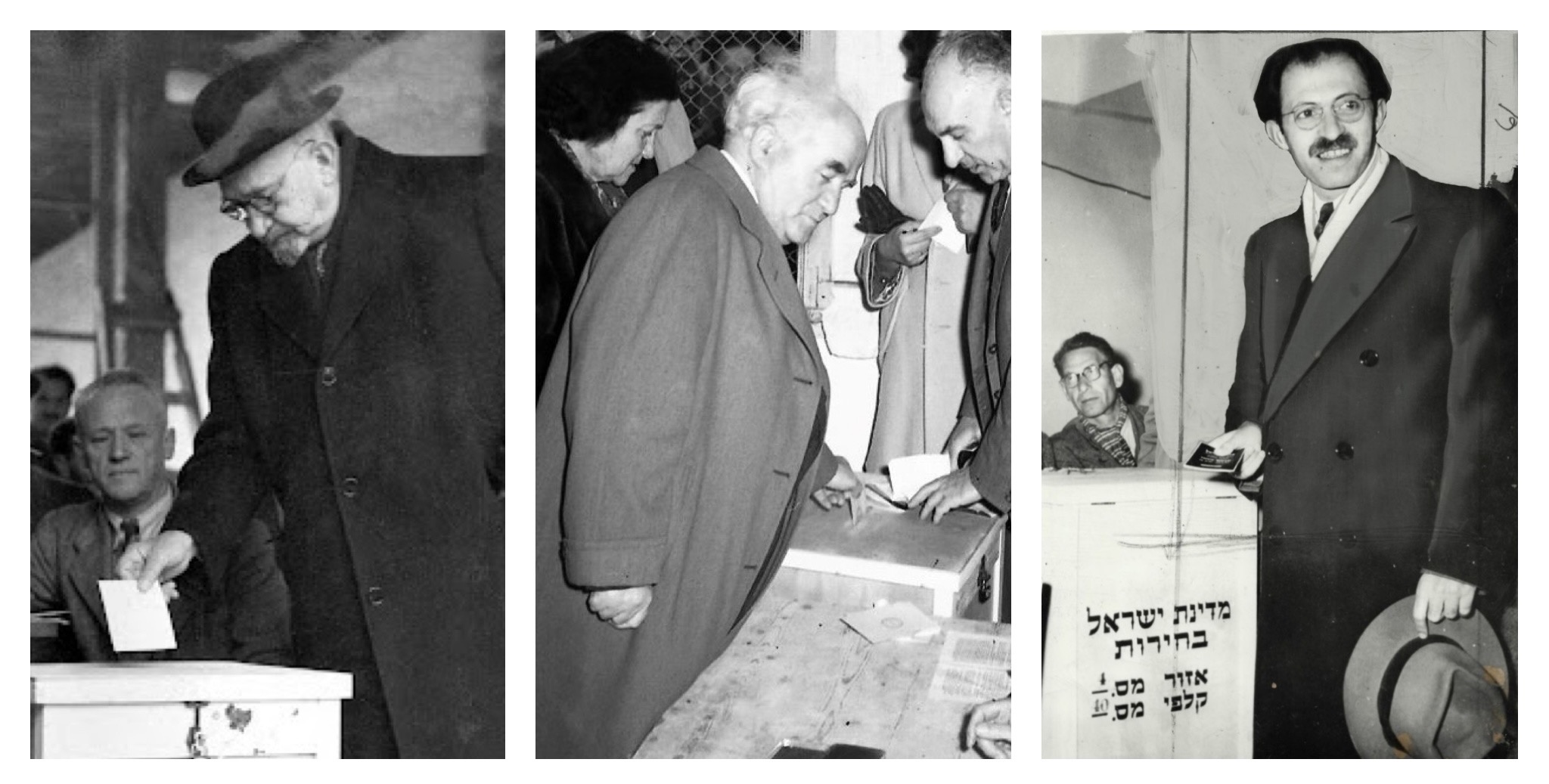
Here are three photographs, of three Israelis casting ballots in Israel’s first elections in January 1949. 

To the left is Chaim Weizmann, the elder statesman of Zionism, who helped defeat the Uganda Plan in 1903, who secured the Balfour Declaration in 1917, and who won Truman’s recognition of Israel in 1948. As he casts his ballot, he is 74 years old, and he is the first president of Israel.

In the middle is David Ben-Gurion, a pioneer who settled in Palestine in 1906, who for forty years steeled the Jewish Yishuv in Palestine against Arab violence and British royal commissions, and who declared Israel’s independence and founded the Israel Defense Forces in 1948. As he casts his ballot, he is 62 years of age, and he is the first prime minister of Israel.

To the right is Menachem Begin, who had commanded the Irgun (or Etzel) underground following his arrival in Palestine in 1942. His most notable achievements (at this point): in 1946 and 1947, he planned attacks on British troops including the bombing of the King David Hotel and the retaliatory hanging of two British sergeants. As he casts his ballot, he is 35 years old, and in this first election, the party he leads will finish in fourth place.

Who among these three men deserves to be called a “founder of Israel”? One could be generous and include all three, satisfying everyone. But would that be historically accurate? If not, where should the line be drawn? I answered that question to my own satisfaction in a debate over at Mosaic. Last week I posted the text of my argument. Now, if you prefer, you can watch me make it below.