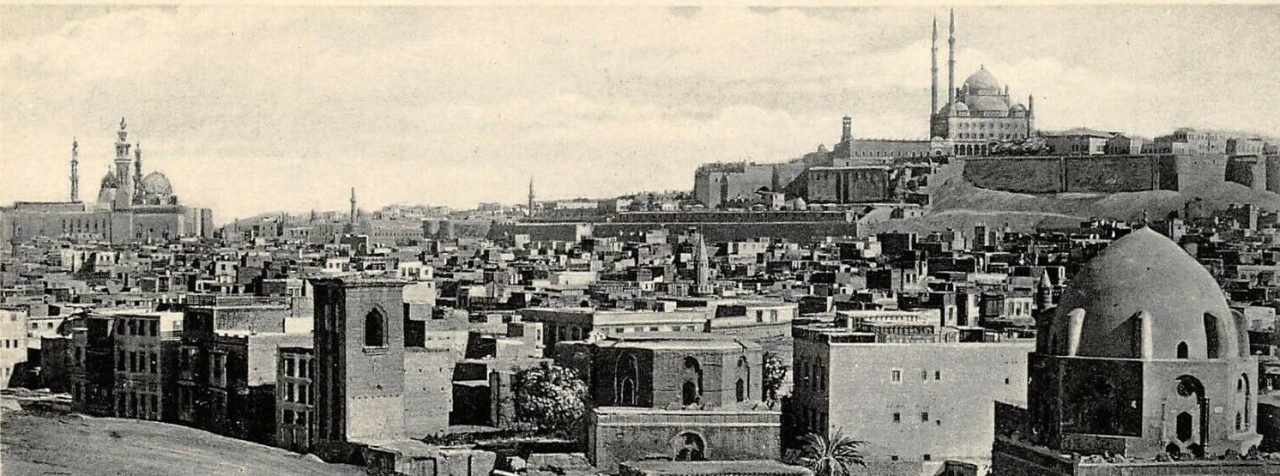
Saudi Prince on Academic Shopping Spree

Last month, a newspaper in Exeter, England, carried a news item with this Thousand-and-One-Nights headline: “Rich Prince Shares Wealth with City’s University Students.” Saudi Prince Alwaleed bin Talal had flown into Exeter to make a gift of one million euros to the local university’s Institute of Arab and Islamic Studies. The news item was absolutely breathless in its reportage. “Prince Alwaleed is almost certainly the richest person to have ever set foot in the city,” the paper gushed. And he was “not one to travel lightly”: “He originally planned to fly into Exeter Airport on his private A340 aircraft one of the longest planes in the world and what would have been the largest plane ever to land at the airport. But he decided to settle for a more modest jet for his large entourage.”

Remember Prince Alwaleed? He’s the nephew of Saudi King Fahd and Crown Prince Abdullah. Forbes pegs him as the fifth-richest man in the world, at $17.7 billion net worth (half of it in Citigroup shares, which made him his fortune). And who can forget his monumental faux pas? Alwaleed visited Ground Zero in New York with then-Mayor Rudy Giuliani just after 9/11, and gave the city’s Twin Towers relief fund a check for $10 million. Giuliani promptly returned it after Alwaleed, in the media spotlight, pinned the blame for 9/11 on U.S. support for Israel.

Alwaleed received a media drubbing, but that hasn’t deterred him from his self-appointed mission to rescue the image of Islam and Saudi Arabia. He subsequently made a couple of small gifts half a million each to the Council on American-Islamic Relations (CAIR), and to the President George Herbert Walker Bush Scholarship Fund at Andover, the prep school that graduated both Bushes. It’s the Saudi way. You give to legitimate causes (like the Twin Towers Fund and Andover), and exploit the gratitude to promote your political agenda (deflecting 9/11 responsibility or legitimizing CAIR-style advocacy). Pulling this off requires a deft touch, perfect timing, and the right amount of money. Alwaleed misread New York and Giuliani, and his timing was way off, but he usually gets it right, and he’s back in the giving business.

His present plan runs in the direction of academe. Universities generate ideas, and Alwaleed regards one idea the “clash of civilizations” as positively dangerous to Arabs and Muslims. So he has embarked on a grand giving spree, to create academic “bridges” between Islam and the West, and specifically between the Arab world and the United States.

Last January, Alwaleed made a gift of $10 million to the American University in Cairo for a center for American studies (and a new humanities and social sciences building). It was the largest single gift ever made to the university. Last month, he turned up in Beirut to inaugurate another center for American studies, this one at the American University of Beirut. The price tag: $5.2 million. I actually think this is a worthwhile cause, although it’s an obvious slap in the face to the indigenous universities. Their students are the ones who most desperately need lessons in America, but Egyptian or Saudi faculty would almost certainly turn such centers into “know-thine-enemy” hate factories.

But that’s only one half of the strategy. In Cairo, Alwaleed hinted at the broader plan, when he called his American studies centers “one pillar of a bridge connecting the divide between the United States and the rest of the Arab World.” He then added: “We now need to plant another [pillar] on the other side.” In Exeter, he provided still more detail:

This endowment represents one component of a major effort that I have embarked upon to bridge the gap that has arisen between Islamic and Western communities in recent years. To that end, I have recently established centers of American studies and research at the American University in Cairo (AUC) and the American University of Beirut (AUB). And I am in the process of establishing centers of Arab and Islamic studies at select universities in the United States.

Well! It’s possible that at this very moment, Prince Alwaleed’s scouts are scouring America for campuses to plant his “pillars,” and you can bet that academic higher-ups who know it are primping themselves. Will the prince prefer entirely new centers on virgin soil? (King Fahd gave about $20 million ten years ago, to create a Middle East center in his name at the University of Arkansas.) Or will Alwaleed prefer to embed programs within existing Middle East centers at top universities? (Prince Sultan did that at Berkeley for $5 million, and Khalid al-Turki did it at Harvard for $2 million.) The mind boggles at the possibilities, when you think of the purchasing power of the world’s fifth-richest man.

Of course, this is why we can’t ever expect to get the straight story on Saudi Arabia, Wahhabism, and oil from people who operate within Middle Eastern studies. If you want a fabulously wealthy Saudi royal to drop out of the sky in his private jet and leave a few million, you had better watch what you say—which means you had better say nothing. For example, look at the program of the upcoming Middle East Studies Association conference, scheduled for November. The conference panels will include over 300 presentations. There are, by my count, at least twenty-five presentations dealing with the Palestinians. There are zero—that’s right, zero—dealing with Saudi Arabia. Silence is golden.

Saudi money, as I’ve written before, has already compromised the research agenda in Middle Eastern studies. Prince Alwaleed’s buying binge is liable to reduce the entire field to a cargo cult, with profs and center directors dancing the ardha in the hope of attracting the flying prince. This is great for Saudi Arabia. It’s not at all great for the American public, which seeks objective assessments of the Saudi kingdom.

Can anything be done to mitigate creeping corruption? Here’s an idea. The U.S. government subsidizes Middle East centers through the Title VI program of the Department of Education. Beginning next year, there will be seventeen National Resource Centers for the Middle East, a record number. Instead of funding so many centers, wouldn’t it make more sense to concentrate taxpayers’ resources in centers willing to forgo all foreign funding? Say no to foreign money, get more U.S. funding, and tell some truths about places like Saudi Arabia.

As Congress reauthorizes the Higher Education Act, it should give thought to the effect of foreign funding on area studies, and especially Middle Eastern studies. But that evaluation will take time. In the near future, don’t be surprised to see grinning university presidents posing with Prince Alwaleed. They will say there are no strings attached. Puris omnia pura: To the pure all things are pure. Academics do flatter themselves.

Update: It’s more than two years since this posting, but Prince Alwaleed has finally acted, making gifts of $20 million each to Harvard and Georgetown. And who’s walked away with the money at Georgetown? None other than John Esposito. See my Sandbox posting, Georgetown Yankees in Prince Alwaleed’s Court.

“Outreach” Outrage at Georgetown

In the debate over U.S. government funding for Middle East centers, supporters of the subsidies claim that evidence for bias in the centers is anecdotal. But collect enough anecdotes and you have a pattern. Centers that receive subsidies—National Resource Centers funded under Title VI of the Higher Education Act—are required to engage in “outreach” to the wider community, and they receive funds for that purpose. It’s precisely here that the anecdotes are easiest to collect, because it’s here that the bias reveals itself to outsiders.

Consider Georgetown University’s Title VI Middle East center, the “core” of which is its Center for Contemporary Arab Studies (CCAS). In the May issue of the CCAS News, the center’s “outreach” director, Zeina Seikaly, offers a report on her program’s spring workshop for teachers. Some 140 Washington area K-12 teachers participated in the April 9 event, entitled “Crisis with Iraq.” (That very day, Saddam’s statue came toppling down in central Baghdad.) The “outreach” program lined up five speakers to address the teachers:

  • Phyllis Bennis, a fellow at the “progressive” Institute for Policy Studies and prolific antiwar activist. Her “talking points” on the war: it “is among the most dangerous and reckless actions ever taken by a U.S. president,” it “threatens our Constitution,” and it “stands in violation of the UN Charter and international law.”
  • Edmund Ghareeb, journalist and Georgetown adjunct professor. Prior to the war, Ghareeb claimed that Saddam had been wrongly “demonized,” called for the “immediate lifting of the embargo,” and proposed a “Marshall plan” to rebuild Iraq—without removing Saddam. He also joined sanctions critic Denis Halliday in an antiwar briefing for Congress.
  • Kalee Kreider, a public relations consultant and environmental activist (formerly with Greenpeace). She travelled to Iraq in December to handle “media liason” for an antiwar mission of the National Council of Churches.
  • Anas Shallal, founder of Iraqi Americans for Peaceful Alternatives—”a non-partisan, ad hoc organization whose primary aim is to stop the war against Iraq and its people.” Once asked about Saddam’s repression, he answered that it “really took place years ago,”and that the regime’s tyranny “is, in no small part, due to our involvement in the Middle East and Iraq for many, many years.”
  • Samer Shehata, assistant professor of Arab politics at Georgetown. After a visit to Iraq in December, he wrote a page-one report for the CCAS News, determining that the “sanctions regime against Iraq constitutes a ‘Weapon of Mass Destruction’ and a crime against humanity.” The report did not mention Saddam. “This war is about empire, oil, and unfinished business,” he told 1,000 educators when Operation Iraqi Freedom began. (He also told them that “the reason [the 9/11 attacks] were directed at the United States is because our policies in the Middle East stink.”)

In academe, this panel would be described as “diverse”—Arabs and Americans, men and women, academics and activists. In the real world, this is called a stacked deck. Georgetown’s “outreach” program employed five people, three of them with no connection to the university, to hammer area schoolteachers with five varieties of the antiwar message. Imagine what an incredible machine it must take to translate your tax dollars into an event such as this. Well, you don’t have to imagine it. It’s called Title VI.

On June 19, the House Subcommittee on Select Education held a hearing on reports of bias in the Title VI-funded programs at universities. That evening, MSNBC’s program “Scarborough Country” devoted a segment to the controversy. Stanley Kurtz, who had testified earlier in the day, presented the case against Title VI abuse. And who appeared to defend the program? Perhaps the president of the Middle East Studies Association? Perhaps a director of one of the fourteen Title VI Middle East centers? Perhaps the director of Georgetown’s center? No: Title VI was defended by Hussein Ibish, communications director for the American-Arab Anti-Discrimination Committee. Why should Ibish, who is not an academic, accept an invitation to defend a government program for university-based Middle East centers? Precisely because of the sort of event held by Georgetown on April 9. Title VI “outreach” allows biased academics to bring in off-campus activists, and pay them lecture fees to propagandize teachers and the general public. All at the taxpayers’ expense.

I don’t want to be misunderstood. Title VI support is not abused by all area studies centers, or even by all Middle East centers. The problem is that there is no effective mechanism for identifying abuse and rectifying it in real time. Unless someone lodges a complaint, the Department of Education doesn’t even know about the content of events like the “Crisis with Iraq” workshop. In any case, its staff is in no position to analyze a speakers’ list for bias. So Georgetown continues to run grossly unbalanced programs, and no one calls it to account. Indeed, Georgetown’s Title VI Middle East grant has just been renewed for another three years.

This is why Title VI needs a supervisory board, as proposed by Kurtz. The board would provide ongoing oversight to these programs, supervise the work of review panels, investigate complaints of abuse, and reprimand or defund centers that have turned themselves into propaganda outlets. Title VI is under scrutiny because the Higher Education Act is up for reauthorization, so this is the time to make your views known. E-mail the chair of the Subcommittee on Select Education, Rep. Pete Hoekstra (R-Michigan), at this address:

tellhoek@mail.house.gov

You can write him at this address:

Committee on Education and the Workforce
U. S. House of Representatives
2181 Rayburn House Office Building
Washington, D.C. 20515

And you can fax him at this number: (202) 226-0779.

Follow-up: Reading list at Georgetown. In an entry last week, I wrote that higher education lobbyist Terry Hartle (American Council of Education) had thrown sand in the eyes of the House Subcommittee, when he said this about Edward Said’s book Orientalism: “Even a cursory review of the syllabi of the Middle East Centers clearly shows this work only occasionally appears as an assigned reading or on a resource list.”

So let’s take the only Title VI Middle East center inside the Beltway—the one closest to Dr. Hartle’s office on Dupont Circle—as an example. Georgetown offers a master’s degree in Arab studies. It’s become a popular program since 9/11: according to the CCAS News, “this year there were 175 applications for 25 slots in the program, a 250-percent increase from just two years ago.” The day before yesterday, students admitted to this program received their summer reading assignment:

We also recommend that you begin reading the following books, which you will need to have read by the first class meeting (Monday, September 8th) of the “Introduction to the Study to the Arab World” course: Edward Said, Orientalism; Albert Hourani, History of the Arab Peoples; and Guity Nashat and Judith Tucker, Women in the Middle East and North Africa: Restoring Women to History. The first is a classic in the field of critical area studies; the other two are background readings that will lend necessary familiarity with major historical patterns.

Got that, Dr. Hartle? Before these elite students even cross the Potomac to begin their studies—some on Title VI fellowships— they are expected to have read through Orientalism at the beach.

The next time the Subcommittee calls a hearing on Title VI, it can dispense with Hartle and the American Council on Education—the lobby without a clue. Summon the subsidized professors from Georgetown, and grill ’em good.

Edward Said, Malcolm Kerr, and Honors at AUB

On Saturday, the American University of Beirut (AUB) will hold its annual commencement, and will award honorary doctorates for the first time in over thirty years. Among the recipients: Edward Said.

Edward Said is a big celebrity in Beirut, and AUB is his favorite theater. In 1999, he addressed 1,000 students there. “The atmosphere was almost like a carnival,” reported Beirut’s Daily Star. In 2000, he delivered AUB’s commencement address. In March of this year, he spoke once more at AUB; the Daily Star likened it to “an American rock concert for the learned and the not-so.” So there’s nothing daring or controversial in AUB’s decision to honor Edward Said. Yet there’s a bit of irony in it.

During AUB’s long night of war and instability, the university lost one of its presidents: Malcolm Kerr, assassinated at gunpoint on campus on January 18, 1984. Kerr had a special bond with AUB. His parents had been American educators there, and he was born in the AUB hospital. He studied at Princeton and Johns Hopkins, became a political scientist, and built an academic career at UCLA, where he became one of America’s leading interpreters of contemporary Arab politics. Kerr was also one of the founders and early presidents of the Middle East Studies Association. He returned to Lebanon to become the president of AUB in 1982, at the university’s darkest hour. Eighteen months later, his choice cost him his life.

Why mention Malcolm Kerr on the eve of this commencement? Kerr was the only American scholar to take a chisel to Edward Said’s 1978 book Orientalism, the work that catapulted Said to academic fame. In a review published in an academic journal in 1980, Kerr described the book as

spoiled by overzealous prosecutorial argument in which Professor Said, in his eagerness to spin too large a web, leaps at conclusions and tries to throw everything but the kitchen sink into a preconceived frame of analysis. In charging the entire tradition of European and American Oriental studies with the sins of reductionism and caricature, he commits precisely the same error.

It’s a great read. For all of it, click here.