Israel, the (independent) state

Although Israel has what is commonly called a declaration of independence, its actual formal name is something else: the Proclamation of the State of Israel. Not independence, but statehood: the two may seem identical, but they are not.

If that claim intrigues you, then you should read the second installment of my series on Israel’s declaration of independence, which, as I show, was something rather more complex than that. Go here, or download here.

Israel declares independence: new series

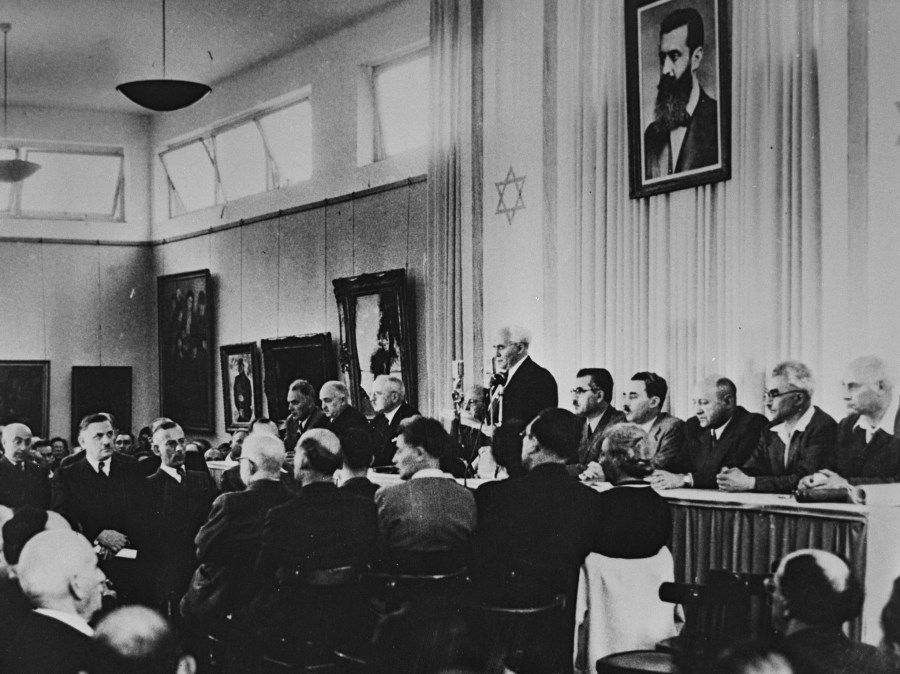
Mosaic marks Israeli independence day with the first installment of my new series on Israel’s Declaration of Independence. This essay does more than lay out the series. Read the declaration and hear it read, and soak in the atmosphere that enveloped the Tel Aviv Museum on May 14, 1948, where David Ben-Gurion and his colleagues renewed Jewish sovereignty after a hiatus of 2,000 years. 

“When Ben-Gurion’s car pulls up, he emerges with his wife Paula to the salute of a policeman. His crisp return salute, captured on film, will become one of the iconic images of the day. The hall is now packed, standing room only….”

Read the rest at Mosaic, at this link.

Abraham Accords: the real deal?

Earlier this month, I interviewed David Friedman, Trump’s ambassador to Israel, for the Jewish Leadership Conference. It was a frank exchange, and I pressed him on the relationship between the “Deal of the Century” and the Abraham Accords. Was the deal conceived, at least at some levels and by some persons, as a throwaway for precisely something like the ice-breaker with the United Arab Emirates and Bahrain? “We were triangulating towards an outcome,” he admitted, “either one of which would have been acceptable.” 

There will be many competing versions of what happened; Friedman’s deserves a thorough read. Go to this link, at Mosaic.