The Arab crisis

In October, I made a short presentation to an American-Israeli conclave in Washington. This is the major part of it.

This is an extraordinary time in the Middle East, but just what we have witnessed has eluded consensus. That is reflected in the terminology. Some called it the “Arab Spring,” by analogy to the democratic transformations in Europe. When it became clear that the path wasn’t going to be as smooth as in Europe, others backtracked and called it the “Arab Awakening,” which sounds like a longer-term proposition. Still others, who saw Islamists initially triumph in elections, took to calling it the “Islamist Winter.” The terminological confusion is a reflection of analytical disagreement.

Another source of confusion has been the widespread resort to historical analogies. When it didn’t look like the transition would be that smooth, or might even be aborted, commentary began to appear comparing the events to Europe in 1848. When optimists wanted to make the point that sometimes successful revolutions take a long time, they pointed to the American revolution of 1776. When pessimists wanted to emphasize that revolutions conceived in idealism could go astray, they pointed to the Russian Revolution of 1917. Finally, some circled back to 1989, but this time not with an emphasis on the “Spring” analogy to Poland, but on the “Balkan Ghosts” analogy to Bosnia. Analogies are a crutch, to which we return when our analysis is thin.

As a historian by training, I have no difficulty predicting that the debate over terminology and the application of analogies will go on for many years to come. If historians still debate the causes of the French Revolution, there is no reason to think the events of the past couple of years won’t be debated far into the future. That’s how we historians make our living.

But you don’t make your living that way. You do analysis of the moment, and you have to make a judgment call based on what evidence there is now, in order to predict the future trajectory on which to base policy and strategy. So while it would suit me just fine to say that it’s too early to tell, let me go out on a limb and make some generalizations.

Let us agree that what we are witnessing is a very profound crisis. Regimes have fallen, tens of thousands have died, millions are refugees. There is even a nominal price tag. The banking giant HSBC has just released a report estimating that this crisis will have cost Middle Eastern countries $800 billion in lost output by the end of next year. It also estimates that the combined GDP of the seven most-impacted countries—Egypt, Tunisia, Libya, Syria, Jordan, Lebanon and Bahrain—will be 35% lower by the end of 2014 than it would have been if the 2011 uprisings hadn’t happened.

This is wealth destruction on a massive scale. And it is not as if these economies had a big buffer to absorb this hit: the already-poor have become desperately poor. As against these mounting costs, the gains have been debatable. Has there been progress toward good governance and the rule of law? Or descent into rule by militias and pervasive insecurity? The situation differs from country to country, but overall, it is hard to be optimistic about any of the impacted countries, which are mired in various degrees of turmoil.

But before we can say what sort of crisis this is, let’s say what sort of crisis it isn’t. It isn’t just a repudiation of authoritarian rule. It is true that the kind of rule based on personality cult and pervasive fear has lost its grip. The United States contributed to that by removing Saddam Hussein from power in 2003. Saddam was the avatar for a certain kind of regime, and his fall exposed others who ruled in the same way. His removal dissipated the aura of fear that surrounded such regimes, because the praetorian guards entrusted with their defense could be put to flight. The enablers of these regimes were prepared to torture to defend them. What they weren’t prepared to do was to fight and die. That proved to be the case from Tunisia to Egypt to Libya.

But if it was a revulsion against authoritarian rule, and a yearning for the dignity conferred by democracy, how does one explain the support of Egyptians for a Muslim Brotherhood regime which was itself authoritarian? Or the counter-revolution in Egypt, which returned a military junta to power by coup? Perhaps this isn’t a political crisis of authoritarianism versus democracy, between bad (authoritarian) guys and good (democratic) guys. In the case of Egypt, there isn’t even an agreement over who the bad guys and good guys are. And there isn’t a consensus over Syria either, where only a handful of the players are committed to democracy in a form we would recognize.

If it wasn’t about freedom and democracy, was it a “return to Islam”? It briefly did look just like that. For a moment, it seemed like another analogy, Iran 1979, might be apt. Certainly the status quo has been eroded by the spread of an Islamist social movement among the masses. But Islamists didn’t lead the uprisings, and they haven’t been able to consolidate their early victories in elections and secure positions of dominance. Islamists have struggled without success to translate their social base into coherent and effective politics. Perhaps this is because people aren’t persuaded they have the answer to the crisis, or even understand it.

Was it an economic crisis? Many of you are no doubt familiar with what I might call, for lack of a better term, deep explanations for the revolutions. One of them, backed up by many statistics, is the demographic youth bulge which has surged through the Arab world. This part of the world is in a transition to lower rates of fertility, but it is now paying the price of extraordinarily high fertility rates registered twenty to thirty years ago. Millions of young people have flooded the labor markets, and no economy in the world could keep up. The turmoil is sometimes interpreted as the outburst of frustrated young men venting their rage at their own indolence and impotence.

But if this were primarily an economic crisis, why did it erupt at a time of economic expansion and growth? And why wasn’t it anticipated that the resulting instability would actually worsen the economic plight of these countries?

Having now exhausted various explanations, and found them wanting, I proceed to my sweeping generalization. This is a crisis of culture. That is to say, it is more than a political or social or economic crisis. Of course it has elements of all of these things, but at its most fundamental, it is a crisis of culture—to be precise, the implosion of the hybrid civilization that dominated the twentieth century in the Arab world.

That hybrid was the defensive, selective adaptation of Islamic traditions to the ways of the West. The idea was that the tradition could be preserved, that its essence could be defended, while making adjustments to modernity as needed. The timeless character of the political, religious, and social traditions of the region could be upheld, even as upgrades were made to accommodate modernity. In Turkey, Atatürk’s cultural revolution had thrown all of tradition overboard and embraced the ways of Europe without reservation. The Arabs resisted the notion, and their leaders promised them a different path, a hybrid of the Arab-Islamic tradition with Western-style modernity.

This hybrid civilization pretended to be revolutionary, but it permitted the survival of those pre-modern traditions that block progress, from authoritarianism and patriarchy to sectarianism and tribalism. This hybrid civilization has now failed, and what we have seen is a collapse, not of a political system, but of a moral universe left behind by time.

That failure was long concealed by a mixture of regime maneuvering and the prop of oil. It has been cushioned in those places in the Arab Gulf where rulers have given up on the better part of Arab-Islamic civilization, inviting the Louvre and the Guggenheim and American universities to build branches, and allowing expatriates to outnumber the Arabs. These are the places that have become refuges from chaos elsewhere, and that have even profited from it. But in the great centers of Arab-Islamic civilization, from Cairo to Damascus to Baghdad, the crisis of the political order is primarily a symptom of the collapse of their own hybrid of tradition and modernity.

The failure of the hybrid is most dramatically evidenced by the rise of sectarianism. The Sunni-Shiite divide has lots of layers, including a disparity of power, often the legacy of colonialism. But the mindset of sectarianism is thoroughly pre-modern. Modern nationalism was devised at least in part to blunt sectarianism among Muslims.

But because the tradition had to be respected, the hybrid civilization of the region tolerated the exclusion of Jews and the marginalization of Christians. It was only one step from there to the defamation by Shiite of Sunni, by Sunni of Alawi, and on and on. The jihad of Muslim against Muslim, whether waged by Lebanon’s Hezbollah in Syria, or by extreme Islamists in parts of Iraq and northern Syria, is a huge reversal. It is like a page taken straight out of eighth- or ninth-century Islamic history. Here we are in a Middle East where the major divide isn’t over the form of government, or the nature of the economic system, or the extent of individual liberty. It is over a dispute dating from the seventh century of Islam—the sort of thing Europe left behind when it secularized during the Enlightenment.

There are some who would actually reify this by inscribing it on the map. There is a certain line of reasoning, that what the Middle East really needs is a new map, drawn along sectarian lines. This is how the argument goes: The 1916 Sykes-Picot map is worn out, it is coming apart at the seams. The lines on the political map are losing their meaning, the lines that aren’t yet on the map are becoming realities. An alternative map is needed, and most of the alternatives have a standard feature: divvying up the Fertile Crescent along sectarian and ethnic lines.

There is no doubt that the present crisis is weakening some states, and that they are losing their ability to project central power up to their borders. Sectarian and ethnic separatism does have purchase. But even if new lines could be drawn, how would this solve the crisis? How would it make the region better suited to embrace modernity? The fact is that sectarian statelets, predicated on pre-modern identities, could well go the other way. Think about the Sunni Islamist quasi-states centered around Raqqa in northern Syria and Gaza on the Mediterranean. These aren’t going to become the next Dubai or Qatar, and not just because they don’t have oil. If the map does come undone, and new statelets or quasi-states or mini-states are born, that is just as likely to bring about more sectarian and ethnic conflict than ease it.

In summation, there are millions of people who now must reconfigure the way they see themselves and the world, not just through a political revolution, but through a cultural one. There is no way any outside power can deliberately accelerate or channel this transformation. And since we are much closer to the beginning of that process than the end, the region will remain a cauldron for years if not decades to come.

 I also commend this 10-point scorecard by BBC correspondent Kevin Connolly. Just one irony: the winners of the “Arab Spring” haven’t been Arabs, but Iran and the Kurds.

U.S. strategy in the Middle East (unclassified)

On December 4, I spoke at a new forum devoted to articulating a “grand strategy” for Israel, led by former Israeli National Security Adviser Uzi Arad. The day was devoted to understanding the strategies of other states, and I drew the assignment to characterize U.S. strategy. What follows is description, not prescription.

Let me begin with an observation which may seem paradoxical, given the amount of attention we lavish on the Middle East and the fact that I’m a Middle East expert. The Middle East is not a region of overriding U.S. interest. The value of what it produces, excluding oil, is small, and its militaries are largely weak and ineffectual. This limits both the promise and the danger inherent in the region, which traditionally figured somewhere in the middle or lower end of U.S. strategic concerns. The United States was prepared to expend much blood and treasure to put Europe and the Pacific rim on the track to peace and stability. It has never accorded the Middle East the same worth, and the usual approach has been to try to preserve U.S. interests in the region on the cheap.

The United States has four core interests in the Middle East: the free flow of oil, the security of Israel, countering terrorism, and preventing the spread of weapons of mass destruction—weapons that would allow Middle Eastern pathologies to spill over and endanger the world. On occasion, some have tried to add the promotion of human rights or democracy to this short list of interests. When that has happened, under the impetus of a Jimmy Carter or a George W. Bush, it’s lasted for a few years, and then dropped off. Democracy and human rights are nice-to-haves for the United States. They are not need-to-haves.

Some might imagine that it is (or should be) a U.S. objective to keep all other powers out of the Middle East. In fact, at no point has the United States believed that upholding the four core U.S. interests requires the exclusion of other powers. Europe, Russia, and China dish out aid, do business, sell arms, and support clients. The United States tolerates their presence, because its own presence is so dominant, and because considerable parts of the Middle East aren’t worth the costs of competing.

To preserve its four core interests, the United States has traditionally adhered to four basic strategies. I’ve given them names for the sake of convenience, but they are my names, and you won’t find them in any American document. They are: delegating, delinking, pairing, and flipping. I’ll explain each one in turn, but what they all have in common is that they are meant to achieve U.S. objectives at the lowest possible cost.

Delegating. Most great empires that have dominated the Middle East had to do so by putting boots on the ground—or, if you want to go all the way back to antiquity, sandals on the ground. The Romans, the Ottomans, and the British—to name a few—incorporated the region in their imperial systems by garrisoning it. The United States has traditionally preferred a different and more economical approach, seeking to dominate the region through allies, clients, friends, and proxies. The United States sells arms, conducts diplomacy, shares intelligence, runs some special ops, launches cruise missiles (and now drones)—everything short of landing the American soldier in full battle gear. When that soldier has been deployed, it has been in extraordinary circumstances, and has had the character of an aberration. The 1958 intervention in Lebanon, the 1982 dispatch of Marines to Beirut, the 1991 Gulf war—these were all short-lived interventions with narrow purposes.

The 2003 Iraq war, along with the Afghan war, were dramatic deviations from the norm—uncharacteristic attempts at nation-building. 9/11 broke the continuity of the American approach, culminating in George W. Bush’s “forward strategy of freedom.” He openly acknowledged that it constituted a sharp departure from traditional U.S. policy, and we are now in the midst of a reversion to the norm. The usual American approach has been to back its friends from a distance, to provision them to fight battles on their own, and to use its technological advantages to deal with threats at a distance. What is the right distance? I commend to you the article in the current GQ entitled “Confessions of a Drone Warrior.” The ideal distance, it turns out, is a hangar somewhere in Nevada. That’s the American way, and it becomes ever more attractive as technology advances.

The bedrock of these U.S. ties is now cooperation in the “war on terror.” 9/11 demonstrated that mass-casualty terrorism against Americans could shift U.S. opinion, distorting cost-benefit analysis in decisions to use force. To avoid a slide back into the region, the United States does everything necessary to keep Al Qaeda wannabes on the run and on their heels. Whenever the United States puts this one boot in, it is precisely in order to keep the other boot out.

Delinking. This second strategy seeks to separate the two areas of endemic conflict, the Israel-centered system and the oil-centered system. After 1948, the Saudis would regularly threaten that U.S. support for Israel could damage U.S. relations with Arab oil producers. Despite this, the United States managed to keep both Israel and the Saudis in tow. But in 1973, in response to an Arab-Israeli war, the Arab oil producers imposed an oil embargo on the United States, driving prices sky high, forcing the United States to ration gasoline, and prompting a recession.

Since then, a basic principle of U.S. strategy has been to delink the Israel-centered and the oil-centered systems, in order to block any chain reaction across the Middle East. It achieved that, first, deliberately, by brokering an Egyptian-Israeli peace that made another big Arab-Israeli war unlikely; and second, inadvertently, by standing by while Khomeini overthrew the Shah, leaving the Saudis and others no choice but to shelter in America’s bosom. Remember that delinking assumes linkage—that the link is real and so has to be broken. The average U.S. policymaker believes in linkage, and many of them think that the fastest way to delink the two systems is progress toward “peace” between Israelis and Palestinians. Even a process that doesn’t produce a final agreement has the ongoing effect of lowering the profile of the Israeli-Palestinian conflict in the oil-centered system.

Pairing. This consists of finding two adversaries whose rivalry is destabilizing, and knocking their heads together or plying them with incentives to bring them under one American umbrella. Until the Iranian revolution, the Shah’s Iran and Saudi Arabia, perennial rivals, constituted the “two pillars” of U.S. influence in the Gulf, which Washington kept in careful balance. After 1979, Israel and Egypt constituted the stabilizing duo in the Eastern Mediterranean. By definition, pairing means creating an unnatural alliance of wary partners—creating a triangle in which the United States forms the long side. A well-constructed triangle will leave the outsider twisting in the wind. The Egypt-Israel pair did that to Syria, and the Saudi-Iranian pair once boxed in Iraq.

The Iranian revolution broke up the crucial pairing in the Gulf, and one of the endemic problems of U.S. strategy has been the difficulty of forging an alternative. During the Iran-Iraq war, Saudi Arabia and Iraq paired against Iran, but that ended disastrously when Iraq invaded Kuwait. The “dual containment” of Iran and Iraq in the 1990s left the Saudis isolated. The removal of Saddam was supposed to make Iraq amenable once again to pairing with the Saudis and the Gulf Arabs. But a Shiite-dominated Iraq was destined to remain aloof from Saudi Arabia, and open to the influence of Iran. Absent a pairing for the Saudis and Gulf Arabs, the United States has had to play the role of the other half, in a costly way.

Flipping. Which brings me to the fourth strategy. Flipping involves engaging an adversary and turning him around. The classic instance was Egypt, which had been a militantly pan-Arab, stridently anti-American Soviet client state, and which the United States flipped into its own orbit. The idea is to focus on that state which is most disruptive of your interests, and slowly drive it to the conclusion that it can’t afford to remain outside the American tent. Why flipping? Containment is hard to preserve against erosion, and it tends to punish peoples more than their rulers. Regime change is risky and fraught with unintended consequences. Flipping isn’t easy, but when it works, it’s regarded as the most economical of all outcomes.

Much fog surrounds the Iran plan of the Obama administration, but the United States could be trying to solve its endemic problem in the Persian Gulf by flipping Iran. The nuclear deal could be an opening to a wider dialogue with Iran, which would bring Iran into some sort of strategic relationship with the United States, on terms no one can predict. In this scenario, the United States would seek to repeat the flipping of Egypt—this time, without a war to facilitate the last stage. Flipping presumes that for every Nasser there is a Sadat (read: Ahmedinejad, Rouhani), and that everyone has their price. It also presumes that the United States can drive down the price by a mix of incentives and threats. No one in the Obama administration dares hint today that this is the longer-term strategy, but it’s no doubt hiding in the back of many minds.

On the basis of what I’ve just outlined, it is useful to think of the Obama administration’s policy in the Middle East not as a retreat (or “appeasement”) but as an effort to get back to what worked for the United States in the past. It is a nostalgic project. And as we know from public opinion polling, that is just what Americans want. They wish to go back to the good old days, when a few clever people in pinstripe suits and a few well-placed intel assets could keep the Middle East on the back burner where it belongs.

There is much to be said for the argument that American obsessing about the Middle East has been a distraction from more important agendas. But preserving the four key interests I mentioned earlier requires an ongoing and determined effort to play a skilled game. The United States claims it intends to remain engaged in the Middle East. As it repositions itself, the credibility of that claim is sure to be tested.

Special Relationships

This post first appeared on the Commentary blog on December 2.

Last week, John Kerry appeared with British foreign secretary William Hague in London, and they congratulated one another on concluding their nuclear deal with Iran. Kerry expressed American gratitude for Britain’s support. “We are determined to press forward,” he said, “and give further life to this very special relationship and to our common objectives.”

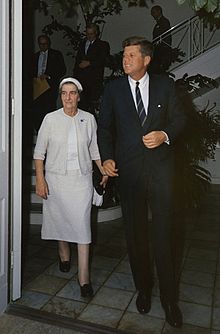
It was President John F. Kennedy who first extended the concept of a “special relationship” beyond Britain to include Israel. In December 1962, Kennedy met with Israel’s then-foreign minister, Golda Meir, in Palm Beach, Florida, and the American memorandum of conversation reported his assurance in these words: “The United States, the President said, has a special relationship with Israel in the Middle East really comparable only to that which it has with Britain over a wide range of world affairs.”

The State Department disliked this. A few months earlier, the Near East and South Asia Bureau had put together a memo on U.S.-Israel relations. “Israel’s proposals for a special relationship with the U.S. would be self-defeating if executed,” it argued. “We consider it important not to give in to Israeli and domestic pressures for a special relationship in national security matters.” But Kennedy spoke the words, and even if their definition remained foggy, they provided some reassurance to Israel every time an American president or secretary of state uttered them.

Which is why it’s worth noting that John Kerry doesn’t utter them. To the best I can determine, in his present job, he hasn’t ever described the U.S.-Israel relationship as “special.” Susan Rice, while at the UN, did so on several occasions, and Senator Kerry did it when he ran for president back in 2004 and again to AIPAC in 2009. But as best as I can tell (and I would welcome contrary evidence), he hasn’t done it as secretary of state, and that stands in striking contrast to his repeated invocation of the “special relationship” with Britain.

For example, last February he visited London and said this (Hague beaming at his side):

When you think of everything that binds the United States and Great Britain—our common values, our long shared history, our ties of family, in my case, personal and friendship—there is a reason why we call this a special relationship, or as President Obama and Prime Minister Cameron wrote, really, a partnership of the heart. It is that.

In June, Kerry (again with Hague at his side) stressed the “special relationship,” which he declared to be “grounded in so much—our history, our values, our traditions. It is, without question, an essential, if not the essential relationship.”

And in September, when Britain’s parliament voted down a motion to join the U.S. in the use of force in Syria, Kerry rushed to declare the “special relationship” intact:

The relationship between the United States and the United Kingdom has often been described as special, essential. And it has been described thusly, quite simply, because it is. It was before a vote the other day in parliament, and it will be for long afterwards after that vote. Our bond, as William [Hague] has just said, is bigger than one vote; it’s bigger than one moment in history. It’s about values. It’s about rules of the road, rules by which human beings try to organize their societies and offer people maximum freedom and opportunity, respecting rights, and finding a balance in a very complicated world. And we have no better partner in that effort than Great Britain, and we are grateful for that.

Quite early, the Obama administration earned a reputation in British public opinion for showing insufficient respect for the “special relationship,” and Kerry may see his mission as repairing that impression. But then the Obama administration stands no higher in Israeli public opinion, and Kerry sees no need to do any work of repair (and a few things he has said have heaped insult on injury).

President Obama does refer to the “special relationship” with Israel, but coming from him, the phrase means a bit less than it once did. That’s because he’s upgraded Britain to something even higher. On the eve of Obama’s visit to Britain in May 2011, he and British prime minister David Cameron published a joint op-ed in the London Times that included this sentence: “Ours is not just a special relationship, it is an essential relationship—for us and for the world.” (The headline: “Not Just Special, But An Essential Relationship.”) Suddenly, the word “essential” started cropping up in references to the relationship with Britain (see also two of the Kerry quotes above). “Essential” is now the new platinum card in relations with the United States, and Britain alone holds one. (That’s why having Britain on board the Iran deal was so important to the Obama administration, and it’s why Hague was assigned the role of setting Israel straight: “We would discourage anybody in the world, including Israel, from taking any steps that would undermine this agreement and we will make that very clear to all concerned.” How pleased he must have been to categorize Israel among the world’s “anybodies.”)

Still, while Obama may have promoted Britain, he didn’t demote Israel. And as John Kennedy made clear more than fifty years ago, the two belong in a league of their own. Just what makes a “special relationship”? It’s more than democracy—the world is full of democracies. It’s not “shared values,” since American values are widely shared around the world. What compels the United States openly to acknowledge two “special relationships” is that two foreign states embody old cultures to which the American public feels profoundly and uniquely indebted.

Given that debt, the U.S. government assumes the obligation to show a bit of respect and work a little harder to make its case, when its biggest-knows-best policies impinge on the interests of those two states. When they dissent, as Britain did over Syria and Israel now does over Iran, it’s their privilege to do so and still win American praise as “special” friends who are entitled to speak their minds freely. For an example of how it’s done, see the Kerry quote above, following the British balk on Syria. So far, there’s no equivalent for Israel over Iran.

The U.S. government’s recognition of a “special relationship” doesn’t create a fact, it acknowledges a debt felt deeply by the American people. John Kerry apparently doesn’t fully grasp that reality in regard to Israel. But then, little in his Mideast diplomacy suggests that reality constrains him anyway.