Sweeping Khalidi under Obama’s rug

The Washington Post runs an article today, exploring the origins of President Obama’s heels-dug-in stance on Israeli settlements. White House officials described Obama’s position to the Post as “years old and not the product of recent events or discussions.” The Post then traces it way back to some of Obama’s Jewish friends from Chicago days. The earliest influence named in the piece is the late Rabbi Arnold Jacob Wolf of Hyde Park, whose synagogue was across from Obama’s home (and whom Marty Peretz memorably described as “one of those remaining nudnik Reform clergy who is always pained that, given the distress of the Palestinians, life is too good for the Israelis”).

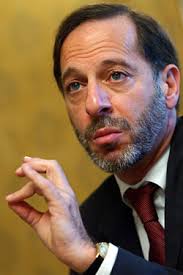
But how is it possible to mention Wolf and not Rashid Khalidi, Obama’s University of Chicago colleague? Not only did Obama famously have his own “conversations” with Khalidi, but Wolf attested that his own conversations with Obama on Israel and the Palestinians were three-way, involving Khalidi. A journalist who interviewed Wolf last year wrote this:

Wolf has impressions about Obama’s initial views on Israel more than specifics, and the impression was one of sympathy for the views that he and their mutual friend, Palestinian advocate Rashid Khalidi, expressed to him on Israel—views including the need to pressure Israel to give up the West Bank. In retrospect, he believes that Obama was carefully considering their perspective rather than endorsing it. “When he was listening, we had his ear, but he didn’t come down on our side,” he reflects. “I think he was listening and learning and thinking.”

“Our side,” no less. It makes no sense to invoke Wolf’s influence without even mentioning Khalidi, because on the question of the West Bank, they were a tag-team.

That’s why writing Khalidi out of the story of Obama’s view of the settlements is absurd. Back in October, I delivered a lecture suggesting that Khalidi gave Obama his primer on the Middle East. I recently posted it here, for the record. There’s nothing in it I would change, and the claim that Obama got his intransigent view of the settlements from exclusively Jewish sources is yet another attempt to sweep Khalidi under the rug.

Obama and the Muslims

My quick assessment of President Obama’s Cairo speech of June 4 appears (with fifteen other expert assessments) at Middle East Strategy at Harvard (MESH), and is reproduced here at Sandbox.

“Peoples of Egypt, you will be told that I have come to destroy your religion; do not believe it! Reply that I have come to restore your rights, to punish the usurpers, and that I respect more than the Mamluks God, His Prophet, and the Quran.” So spoke Bonaparte when he arrived in Egypt, in a proclamation of July 2, 1798. Substitute “Islam” for Egypt, “we Americans” for I, and “violent extremists” for the Mamluks, and you’ve got the core message of President Obama’s speech.

It’s a very old drill in the annals of “public diplomacy.” Supplementary gestures help. Obama was careful to pronounce the word Quran with the guttural qaf of the Arabic. (Too bad, though, he botched the word hijab.) Unless you’re converting, you can’t say Ich bin ein Muslim, so you come as close as you can. (Barack Hussein Obama—can we finally use his middle name now?—gets closer than most.) Some Muslims are wise to this, and so presumably they will discount it. But the great majority? Who doesn’t love pandering?

I leave it to others to parse the sparse policy pointers in the speech. (Rob Satloff does a nice job of it.) Some of the influences on Obama bubble to the surface. There is the Third Worldism: Muslims are victims of our colonialism (Obama has read Fanon) and the Cold War (has he been reading Khalidi again?) The primacy of the West is over: “Any world order that elevates one nation or group of people over another will inevitably fail.” There is the implicit comparison of the Palestinians to black Americans during segregation, a familiar trope (Carter and Condi went for it too). Israel comes across as an anomaly. There is no appreciation of Israel as a strategic asset—its ties to the United States are “cultural and historical,” and thus not entirely rational. (That validates Obama’s other former Chicago colleague, Mearsheimer.) All of this has the ring of conviction—and of a Third Worldist sensibility.

Maybe the most disconcerting line is this one: “We can’t disguise hostility towards any religion behind the pretense of liberalism.” The pretense? This discrediting of liberalism and its universal humanism is the classic stance of the Third Worldist radical. And did you know that the job description of the nation’s leader now includes “my responsibility as president of the United States to fight against negative stereotypes of Islam wherever they appear”? Perhaps it’s possible to disband CAIR. America now has a president who knows “what Islam is, [and] what it isn’t,” and who even has a mandate to insist on closing “the divisions between Sunni and Shia.” Perhaps an emissary should be sent from Washington to the pertinent muftis and mullahs: the mission would certainly be more congenial than closing divisions of General Motors.

Indeed, not since Bonaparte has a foreigner landed on Egyptian soil and delivered a message of such overbearing hubris. Were I a Muslim, this 6,000-word manifesto would have me worried stiff. This man wants to be my president as much as he is America’s.

He walks with the Islamists, talks with the Islamists

If I consulted with quadrupeds
Think what fun we’d have asking over crocodiles for tea!
Or maybe lunch with two or three lions, walruses and sea lions
What a lovely place the world would be!

—Bobby Darin, lyrics from Talk to the Animals

You know things are headed downhill fast when Alastair Crooke warrants a profile in the New York Times, for his long-term project of “engaging” Hamas and Hezbollah. The profile flags his importance in these words: “Talking to Islamists is the new order of the day in Washington and London. The Obama administration wants a dialogue with Iran, and the British Foreign Office has decided to reopen diplomatic contacts with Hezbollah, the Shiite militant group.” And so on.

In 2005, I debated Crooke at the Center for Strategic and International Studies (CSIS) in Washington. This seems like a perfect opportunity to point to my remarks: here. The CSIS summary of my remarks and his: here.