Intimidation at Georgetown

Back in the spring, some students at Georgetown University took umbrage at a celebration of Israel’s sixtieth anniversary, organized by a pro-Israel student group. Their protest took the form of sitting on the lawn next to the revelers, mouths taped shut. The student newspaper The Hoya covered the demonstration, and described it thus:

About 30 demonstrators, many of whom were graduate students, wore black shirts, tape over their mouths and, in many cases, neck scarves. They did not speak but handed out quarter sheets with a cartoon and short message; one held a poster-sized version of the quarter sheet which began, “Our presence is a gesture toward the many for whom the passing of these 60 years is not marked by celebration.”

There is nothing unusual about this scene at Georgetown or any campus. Student demonstrations for and against political causes are a staple of campus life.

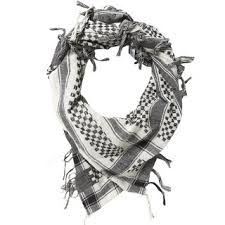
But I was taken aback to see this demonstration highlighted in the newsletter of an academic unit of the university. I refer to an article in the June issue of the Center for Contemporary Arab Studies’ CCAS News, under the headline “MAAS Students Demonstrate Against ‘Israel: Still Sexy at Sixty’ Celebration.” Some of the students in question, it turns out, were masters’ degree students at the Center. (The CCAS degree program is called MAAS, Master of Arts in Arab Studies.) CCAS News ran this story over two pages, with two photographs of the protesting students, taking care (unlike The Hoya) to identify them as “MAAS students” (and to point out that the “neck scarves” were kaffiyehs).

Presumably this demonstration was not a CCAS activity, and not done at its initiative or under its sponsorship. So I wonder why it is highlighted under “Center News” in this thrice-annual survey of the Center’s academic activities. Am I to understand that CCAS officially takes pride in its students’ activism for this political cause? After all, the newsletter is comprised exclusively of news about the admirable achievements and doings of the Center and its faculty, students, guests, and supporters.

The public wink of approval offered by CCAS to this anti-Israel demonstration is a troubling example of the total confusion of the academic and the political. It is also a form of subtle intimidation. It sends a signal to those Georgetown and CCAS students who do not share the views on display in the demonstration, or who might even have participated in the pro-Israel celebration. What are they to conclude? That they are not welcome, or less welcome, to take a masters’ degree or a course in this program? That their lack of activism, or their activism for Israel, will put them at a disadvantage? They might well conclude just that. (Coincidentally, the same newsletter reports that the student who organized the demonstration received a U.S. government summer study grant via the Center. Almost 100 students applied; only five received grants.)

I urge the director of CCAS and the Georgetown administration to express their regret at the unfortunate inclusion of this article in CCAS News, and to reassure all Georgetown students that CCAS does not explicitly or implicitly endorse the extracurricular political activities of any of its faculty, staff, or students. The U.S. Department of Education, which subsidizes CCAS to the tune of about $1.5 million a year (under Title VI), should actively seek such reassurance.

Miss Lambton’s advice

Ann (Nancy) K.S. Lambton, the distinguished British historian of medieval and modern Iran, died on July 19 at the age of 96. Her obituaries tell some of her remarkable story as a pioneering scholar and a formidable personality. They are also interesting for what they omit, regarding her role in the idea of removing Mohammad Mossadegh from power in Iran.

The Independent obit says nothing. The Times obit makes an all-too-brief allusion: “She was consulted by British officials on developments in Irano-British relations, especially during the crisis in 1951 when Iran’s Prime Minister, Muhammad Mussadiq, caused a furore by nationalising British oil interests in Iran.” Yet we are not told exactly what she proposed in these consultations. The Telegraph is more explicit: “Lambton’s insights into the strengths and weaknesses of Iran’s then prime minister, Mohammed Mossadegh, proved a valuable aid to Britain’s eventual success, in concert with America, in precipitating an end to Mossadegh’s premiership and in ensuring a continued, though reduced, British share in Iran’s oil production.” Yet we are not told just how she imparted these “insights,” or why they were “valuable.” The Guardian quotes a historian as saying her advice “marked the beginnings” of the 1953 coup, but does not explain what she advised or how she had such a profound effect. So what is the fuller story behind these allusions?

In 1951, Ann Lambton was a Reader in Persian at the School of Oriental and African Studies, University of London. She had many connections in Whitehall, and her standing as an oracle on matters of Persian politics was unassailable. She had completed her doctorate in 1939 after a year of field work in Iran, and then spent the war years as press attaché in the British Legation (later Embassy) in Tehran, under the most seasoned of old hands, Sir Reader Bullard. She also came from a prominent landed family with assorted estates (including, yes, a Lambton Castle)—an advantage of pedigree that largely made up for what still was, in those days, a gender deficiency. When Nancy Lambton spoke, people listened—and when it came to Mohammad Mossadegh, she had strong views.

The historian Wm. Roger Louis first went through the British archives on the Mossadegh affair just after they were opened in the early 1980s, and he has told the story three times, in two books and an article (most recently here). “Here the historian treads on patchy ground,” warns Louis. “The British archives have been carefully ‘weeded’ in order to protect identities and indeed to obscure the truth about British complicity.” But he came across the minutes of conversations between Lambton and a Foreign Office official who described her as someone who knew Iran “better than anyone else in this country.”

Lambton, the official reported in June 1951, “was of the decided opinion that it was impossible to do business” with Mossadegh, and that no concessions should be made to him. She urged “covert means” to undermine his position, consisting of support for Iranians who would speak out against him, and stirring opposition to him “from the bazaars upwards.” The official added: “Miss Lambton feels that without a campaign on the above lines it is not possible to create the sort of climate in Tehran which is necessary to change the regime.” He then relayed her practical recommendation: entrust the mission to Robert (Robin) Zaehner, a quixotic Oxford don and former intelligence agent, fully fluent in Persian, whom Lambton described as “the ideal man” for the job. On Lambton’s recommendation, the Foreign Office dispatched Zaehner to Tehran, where he put together a network of disaffected opponents of Mossadegh’s regime.

This effort came to naught, partly because the Truman Administration still thought the British should deal with Mossadegh. In November 1951, Lambton complained: “The Americans do not have the experience or the psychological insight to understand Persia.” But she did not relent: “If only we keep steady, Dr. Mossadegh will fall. There may be a period of chaos, but ultimately a government with which we can deal will come back.” Anthony Eden, Foreign Secretary, added this note: “I agree with Miss Lambton. She has a remarkable first hand knowledge of Persians & their mentality.”

Yet Mossadegh hung on, and a year later he shut down the British diplomatic mission. According to Lambton’s Foreign Office contact, she thought that the British policy of not making “unjustifiable concessions” to Mossadegh “would have been successful had it not been for American vacillations,” and she insisted that “it is still useless to accept any settlement” with Mossadegh, “because he would immediately renege.”

This was the prevailing British view, and persistence ultimately paid off. In November 1952, Dwight Eisenhower was elected U.S. president, and the new team in Washington took a very different (and dimmer) view of Mossadegh. Anthony Eden met with the president-elect to discuss “the Persia question,” and the CIA’s Kermit Roosevelt and Donald Wilbur set in motion the wheels of the August 1953 coup—an American-led, joint CIA-MI6 production.

“In that [first] minute [of June 1951],” writes historian Louis, “may thus be found the origins of the ‘Zaehner mission’ and the beginnings of the 1953 coup.” Louis asserts that “the archives, for better or worse, link Professor Lambton with the planning to undermine Musaddiq.” He notes that “Lambton herself, as if wary of future historians, rarely committed her thoughts on covert operations to writing. The quotations of her comments by various officials, however, are internally consistent and invariably reveal a hard-line attitude towards Musaddiq.”

In the latest 2006 retelling of the tale by Louis, he has somewhat trimmed his estimate of Lambton’s role. “I have the impression from the minutes,” he writes in a footnote, “that the officials quoting [Lambton] sometimes wanted to invoke her authority to lend credibility to their own views.” Louis also adds that Lambton’s “views were entirely in line with those of other British authorities on Iran.” In other words, she was urging them to think or do something they already thought or wanted to do anyway, but for which they needed an authoritative footnote.

But there can be no doubt that her advice bolstered the advocates of toughing it out and bringing Mossadegh down. The obits tend to downplay this story because the 1953 coup has come to be seen as some sort of original sin—as the root cause of the Islamic revolution that unfolded a full quarter-century later. But wherever one puts the 1953 coup in the great chain of causation, Lambton’s assessments at the time should inspire awe. Years of experience in Iran, exact knowledge of Persian, and wide travels within the country, all had led her to conclude that Mossadegh could be pushed out, as against the view that he had to be accommodated. She was right. Given the propensity of Western experts on Iran to get so many things wrong over the years, Lambton’s call is all the more remarkable.

The present incumbents in power in Iran are careful to shut out Western Orientalists, not because they fear the situation in Iran will be misrepresented but because it might be accurately represented, exposing the weaknesses of their regime. The historian Ervand Abrahamian, mentioning Lambton (and Zaehner), writes that it should not be surprising that the coup “gave rise to conspiracy theories [among Iranians], including cloak and dagger stories of Orientalist professors moonlighting as spies, forgers, and even assassins. Reality—in this case—was stranger than fiction.” The reality is that it isn’t easy to hide one’s vulnerabilities from an intimate stranger such as Lambton. The fear of Orientalist professors, both there and here, has never been that they might get things wrong, but that they are very likely to get them right.

Originally posted at Middle East Strategy at Harvard.

Obama embraces linkage

In my earlier post on the myth of linkage, I brought a number of exemplary quotes from figures such as Jimmy Carter and Zbigniew Brzezinski to illustrate my point. Now another quote can be added to the collection—this one from Barack Obama, fresh from his quick tutorial in the Middle East:

I think King, King Abdullah [of Jordan] is as savvy an analyst of the region and player in the region as, as there is, one of the points that he made and I think a lot of people made, is that we’ve got to have an overarching strategy recognizing that all these issues are connected. If we can solve the Israeli-Palestinian process, then that will make it easier for Arab states and the Gulf states to support us when it comes to issues like Iraq and Afghanistan.

It will also weaken Iran, which has been using Hamas and Hezbollah as a way to stir up mischief in the region. If we’ve gotten an Israeli-Palestinian peace deal, maybe at the same time peeling Syria out of the Iranian orbit, that makes it easier to isolate Iran so that they have a tougher time developing a nuclear weapon.

Thus is the myth of linkage perpetuated from generation unto generation. This same savvy King Abdullah, in a CNN interview the day after 9/11, offered up the ultimate linkage thesis, when asked whether the attacks would have happened if Israelis and Palestinians had reached a peace agreement at Camp David in July 2000:

I don’t believe so, because I think that if you had solved the problems of the Middle East, and obviously the core issue is that between the Israelis and Palestinians, I doubt very much that this incident would have taken place, and again, that was a reminder to all of us and why I think so many of us in the international community have been working so hard to bring a stop to the violence and bring people back to the peace process, because, in a vacuum, you do allow the extremists the upper hand and the chance to try things as what happened yesterday. And they will continue on trying until we can solve the problem once and for all.

Savvy indeed.