The right of the Jewish people

“All men are created equal… they are endowed by their Creator with certain unalienable rights.” These two principles, from the American Declaration of Independence, form the very bedrock of the United States. Did Israel, in declaring its independence in May 1948, assert the same principles?

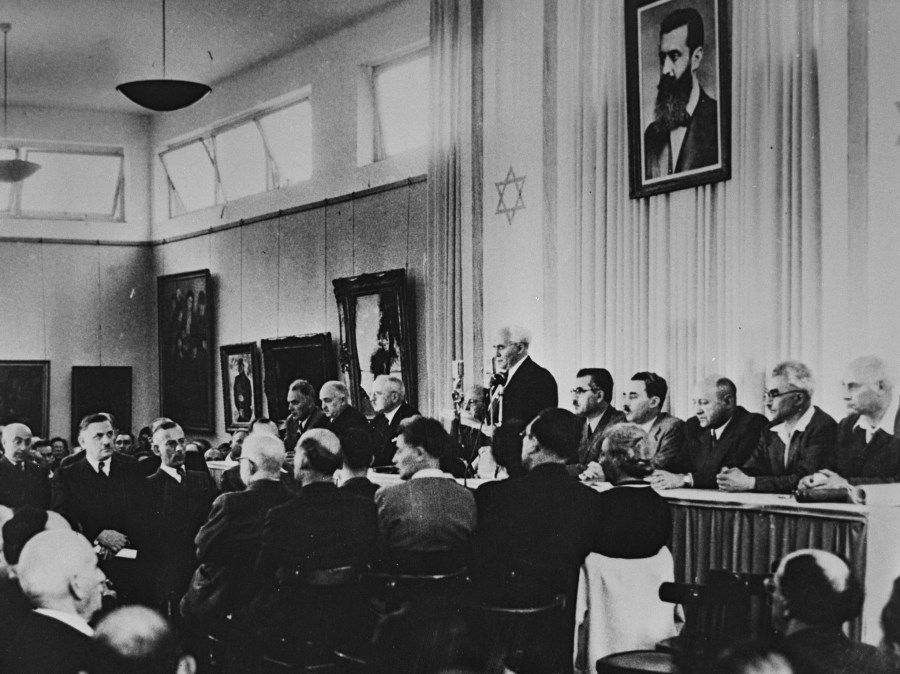
In my latest (sixth) installment on Israel’s declaration of independence, I examine its treatment of rights. The bedrock of Israel isn’t individual rights; it’s the collective right of the Jewish people to independence in its own homeland. The fact that Israel has a secure Jewish majority makes it possible for the Jewish state to function as a democracy that recognizes the equal political rights of its citizens, and the collective rights of its minorities. But that majority wasn’t self-evident in May 1948, and the language of the declaration reflects it.

The word “democracy,” present in the drafts of the declaration, was ultimately struck. But the declaration does guarantee the “full and equal citizenship” of all. So just where does the declaration come down on the question of collective versus individual rights? And what’s the one right that is totally unique to Israel?

Read the full essay at Mosaic. 
The paradoxical Jabotinsky

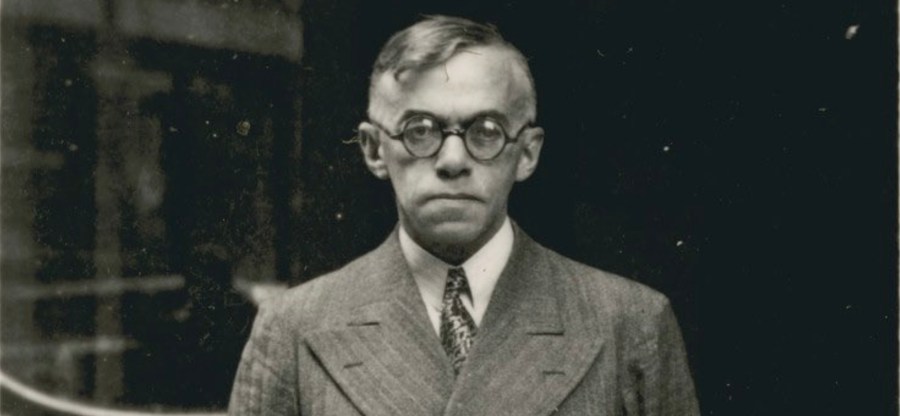
Ze’ev Jabotinsky was a man of paradoxes, and one of them has always been a source of some unease among certain of his followers. The founder of Revisionism had a secular view of the world, and practiced none of the rituals of Judaism. Yet the Likud, his political heir, owes its rise to power in good measure to traditional and religious Jews. 

Paradox? The historian Avi Shilon, over at Mosaic, has written an essay claiming that this isn’t such a contradiction, since the “mature” Jabotinsky had begun a personal reconciliation with the faith.

I’ve written a response to Shilon, and there I take a different stand on the question. (So did Hillel Halkin, a Jabotinsky biographer, in an earlier response.) But I then follow another paradox opened by Shilon’s essay: Jabotinsky’s view of Jewish settlement. Jabotinsky and David Ben-Gurion came down on opposite sides in a famous debate just over a century ago, surrounding a place called Tel Hai. Over time, Jabotinsky’s view has prevailed, but not in the way you might think. Read my full response here or below.

Did the UN create Israel?

Israel’s declaration of independence doesn’t invoke God’s promise of the land to the patriarchs, as I explained in the last installment of my series on Israel’s declaration of independence. But it repeatedly invokes the United Nations “partition resolution” of November 1947. So did the UN create Israel?

As I explain in my new installment, Israel’s founders, and above all David Ben-Gurion, were very selective in what they took from the UN. Indeed, if you only read Israel’s declaration of independence, you’d think that the UN had licensed the creation of only one state, a Jewish one. You wouldn’t know the UN had voted for partition, or that its plan had come with a map.

If it had been within the power of the UN to create a Jewish state, it would have created an Arab one too. But states aren’t created by decree. Absent a Jewish army, Israel wouldn’t have arisen in any borders, and certainly not in the expanded borders of 1949. To learn how the drafters of the declaration cleverly construed the UN’s decision, read my new installment, at this link.