Obama’s Mideast priorities

On April 22, I appeared on a panel organized by The Washington Institute for Near East Policy, entitled “The Obama Administration and the Middle East: Setting Priorities, Taking Action.” Fellow panelists: Thomas Friedman, William Kristol, and David Makovsky. The proceedings have just been published, and they can be downloaded here. Below, my initial statement; go to the full proceedings for more.

I’m at a distinct advantage because I’m on a panel with partisan journalists, and I’m an academic. I’m entirely objective. [Laughter.] And I’m interested very much in ideas. You see, I don’t have any sources whispering in my ear. I just have to read texts and what people say and reach my best understanding of them.

This has been an interesting conference because we’ve heard a lot of reassurances, especially from General [Jim] Jones last night, that all of the administration’s priorities are in proper alignment. And I don’t want to question anyone’s good faith, but the fact is there are a lot of mixed messages coming out of this administration. And no one really knows whether this mixing reflects a clever strategy or is just a sign of confusion.

President Obama himself does it. A good example was his visit to Israel during the presidential campaign back in mid-2008. While in Sderot, he said, “A nuclear Iran would be a game-changing situation, not just in the Middle East but around the world. Whatever remains of our nuclear non- proliferation framework I think would begin to disintegrate.” That was a very powerful statement. And I call that “Obama 1.0.” We heard echoes of it last night in General Jones’s speech as well.

But then Obama, on the same trip, went off to Jordan and met with King Abdullah. And he came back and appeared on Meet the Press, where he said the following:

I think King Abdullah of Jordan is as savvy an analyst of the region and player in the region as there is. And one of the points he made and that I think a lot of people made is that we’ve got to have an overarching strategy recognizing that all these issues are connected.

If we can solve the Israeli-Palestinian process, then that will make it easier for Arab states and the Gulf states to support us when it comes to issues like Iraq and Afghanistan. It will also weaken Iran, which has been using Hamas and Hizballah as a way to stir up mischief in the region. If we’ve gotten an Israeli-Palestinian peace deal, maybe at the same time peeling Syria out of the Iranian orbit, that makes it easier to isolate Iran so that they have a tougher time developing a nuclear weapon.

Ladies and gentlemen, that is the Obama policy formulated then, down to the letter. And I call it “Obama 2.0” because look at the shift that took place. The game-changer in the Middle East is no longer Iranian nuclear capabilities, but the peace process. This shift is one in which Iran essentially becomes subordinate to the peace process.

To my knowledge, Obama has not repeated the phrase “game-changing” since he made it in 2008 to describe the effect of Iranian nuclear weapons. In 2008, he said it was an extraordinary priority to stop Iran. Last month, he said it’s one of our highest priorities to make sure that Iran doesn’t possess a nuclear weapon. And the other day, Adm. Mike Mullen said that Iran has been a priority of this administration from the outset. So stopping Iran has gone from being an extraordinary priority to one of our highest priorities to a priority.

And then Bill [Kristol] had a very interesting piece the other day—I see it in front of him—about Admiral Mullen saying the following: “Iran getting a nuclear weapon would be incredibly destabilizing. Attacking them would also create the same kind of outcome.” Now, obviously, if the outcome from doing something and from doing nothing is the same, that’s a pretty powerful argument for doing nothing. But of course, it isn’t the same outcome. I’ll leave it to Bill to explain, perhaps, why this is what he has called a false equivalence—unless you’ve decided that a nuclear Iran is not a game-changer, but instead just a really big hassle.

Now, I admired Obama 1.0 for what I thought was a very clear-sighted vision. A nuclear Iran does change the game for the Middle East and for the world, as he said. Obama 2.0 seems to me very confused about priorities. And that’s because an Israeli-Palestinian deal, for whatever merits it has and whatever limitations it’s obviously going to have, doesn’t change the game. It rearranges the pieces on the board, possibly to give one a slight advantage.

For example, the spat over housing in Jerusalem looks to me like something totally out of proportion. Excuse me for saying so, but the controversy over Ramat Shlomo—1,600 building units in Jerusalem—made Obama look like the captain of a ship rearranging 1,600 deck chairs on a vessel headed straight toward an iceberg. And that’s how I would describe the first year of the Obama administration. We’re on a ship. The iceberg is straight ahead. Everyone can see it. And the administration has been busy rearranging the deck chairs. [Applause.]
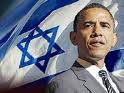
Obama, Israel and American Jews

Commentary asked “31 prominent American Jews” to respond to these questions: “Can Obama’s Jewish supporters act in a way that will change the unmistakable direction of current American policy emanating from the White House? Will American Jews accept Barack Obama’s view that the state of Israel bears some responsibility for the loss of American ‘blood and treasure’ in the Middle East? Will they continue to extend their support to the Obama administration and to Barack Obama’s political party?” My answer, from “Obama, Israel & American Jews: The Challenge—A Symposium,” in the June issue of Commentary:

While “I-told-you-so” vindication feels good (I was senior Middle East adviser to Rudy Giuliani’s campaign), it is no substitute for the urgent re-education of Barack Obama.

No American president has ever entered the Oval Office with so many bad ideas about the Middle East, half-baked in the ovens of the Middle East departments at Columbia and the University of Chicago. Two of these ideas are particularly pernicious and might be described as the Khalidi Doctrine, after Rashid Khalidi, the Palestinian-American professor who gave Obama his Middle East primer at Chicago. First, the American resort to force in the Middle East is always counterproductive; second, the unresolved Palestine problem is the hinge on which the entire Middle East turns.

Guided by these two ideas, Obama’s ship ran aground almost as soon as it left port. The diplomatic drive to tame Iran was bound to stall without the backup of a credible military threat—the willingness to use force, despite its downsides. The implosion of Plan A, “engagement,” has left a strategic vacuum, which only now the administration is beginning to fill with stiffer rhetoric. And putting the Palestine problem front and center has only incited the intransigence of the Arabs in general and the Palestinians in particular. By declaring a peace deal a “vital American interest” and tussling with the Netanyahu government, Obama merely jacked up the Palestinian asking price for renewing negotiations and everything else.

As the two pillars of the Khalidi Doctrine crumble under the weight of reality, champions of an alternative approach are finally getting some traction. They insist that U.S. diplomacy toward Iran is doomed, absent the threat to use force if talks fail. And they argue that tinkering with the Israeli-Palestinian “peace process” is a dangerous distraction from the main event: Iran.

How do we know whether these ideas are making inroads? First, there was the “dual loyalty” smearing of Dennis Ross by an anonymous administration official, which looked like a desperate lunge to head off just this kind of rethinking. Second, the president of the weather vane called the Council on Foreign Relations suddenly reversed direction: chasing an Israeli-Palestinian deal, he announced, is “a distraction that would benefit neither the U.S. nor Israel, given an Iranian threat that is close at hand and a promise of peace that is distant.” To judge from these gyrations, the re-education of Barack Obama has begun.

What can American Jews do to accelerate it? They must keep their and Obama’s eyes squarely on the ball. When Obama visited the town of Sderot during his campaign, he declared that “a nuclear Iran would be a game-changing situation not just in the Middle East but around the world. Whatever remains of our nuclear non-proliferation framework, I think, would begin to disintegrate.” That is the Obama for whom most Jewish Democrats cast their votes: a president who would secure the greater peace. Call it the Sderot Pledge: American Jews must unite around it and hold Obama to it.

Martin Kramer is senior fellow at the Shalem Center in Jerusalem, and Wexler-Fromer fellow at The Washington Institute for Near East Policy.

Visit Commentary (subscribers only) here for the other responses by Elliott Abrams, Morris J. Amitay, Peter Berkowitz, Kenneth J. Bialkin, Matthew Brooks, Mona Charen, Alan M. Dershowitz, Nathan J. Diamentis, Ira Forman, Abraham H. Foxman, Jonathan Gurwitz, Jeff Jacoby, Jeremy Kalmanofsky, Jonathan Kellerman, Ed Koch, William Kristol, Michael Medved, Aaron David Miller, Tova Mirvis, Daniel Pipes, Norman Podhoretz, Dennis Prager, Gary Rosenblatt, Jonathan D. Sarna, Robert Satloff, Dan Senor, Tevi Troy, Ruth R. Wisse, David Wolpe, and Eric H. Yoffie.

The Washington Institute Book Prize, last call

The Washington Institute for Near East Policy has issued its last call for submissions for the 2010 Washington Institute Book Prize. The prize, inaugurated two years ago, is awarded annually to three outstanding new books that have illuminated the Middle East for American readers. Gold Prize is $30,000, Silver Prize is $15,000, and Bronze Prize is $5,000. The competition is open to new books published in the United States for the first time in English between May 1, 2009, and May 1, 2010.

The 2009 Washington Institute Book Prize recipients were A Safe Haven: Harry S. Truman and the Founding of Israel by Allis and Ronald Radosh (Gold Medal), The Crisis of Islamic Civilization by Ali A. Allawi (Silver Medal), and Innocent Abroad: An Intimate Account of American Peace Diplomacy in the Middle East by Martin Indyk (Bronze Medal).

Only publishers may submit books, so if you’re the author of an eligible book, get on the phone to your publisher now.