by Martin Kramer
This essay appeared at ForeignAffairs.com on June 7, 2018.

Bernard Lewis, historian of the Middle East, passed away on May 19, just shy of his 102nd birthday. No other person in our time has done as much to inform and influence the West’s view of the Islamic world and the Middle East. A long career of scholarship in the United Kingdom, followed by decades as a public intellectual in the United States, earned him readers across the globe. After the 9/11 attacks, he became a celebrity: “Osama bin Laden made me famous,” he admitted. The two short books he published after the terror strikes became New York Times bestsellers. Charlie Rose couldn’t get enough of him.
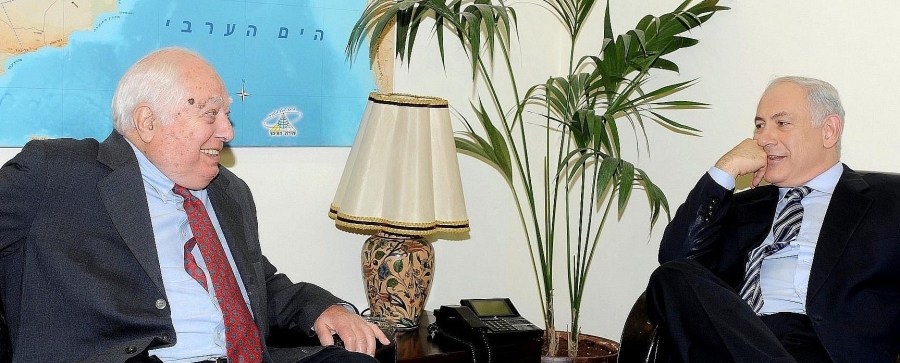
Regard for Lewis extended well beyond (and above) the general public. He was also known to be a valued interlocutor of Turkish and Jordanian statesmen, Iran’s last shah, Israeli prime ministers, and U.S. President George W. Bush and his team. Bush was even spotted carrying a marked-up copy of one of Lewis’ articles. As the “war on terror” and its Iraqi sequel unfolded and unraveled, he became the subject of magazine profiles and cover stories. Bernard Lewis knew the Middle East, and America thought it knew him.
Or did it? “For some, I’m the towering genius,” Lewis said in 2012. “For others, I’m the devil incarnate.” Despite having written 30-plus books (including a memoir) and hundreds of articles, and undertaken countless interviews, Lewis was widely misunderstood. Many of those misunderstandings, latent since he went silent a few years ago, reappeared in his obituaries, mixed with either admiration or vitriol.
Part of this is due to his sheer longevity. On 9/11, he was already 85 years old; he’d published his first book in 1940, over 60 years earlier. He was hardly obscure when he became “famous,” but his mass audience discovered him only during the last decade of his seven-decade career. For those like me who met him much earlier (I became his student at Princeton University in 1976), the latecomers seemed not to grasp the true significance or magnitude of his contribution.
It would take thousands of words to dispel the many myths about Lewis, from the crude ones (the “Lewis Plan” for dividing up the Middle East into statelets, or the “Lewis Doctrine” of “sowing” democracy by force), to the supposedly knowing ones (“Godfather of the Iraq War”). That needs to be done elsewhere, and in a pointed way. Here, let me flag three particularly salient misunderstandings, which arose not from malice, but from a failure to read widely and deeply in the great body of his work.
“Last Orientalist” or Pioneer Scholar?
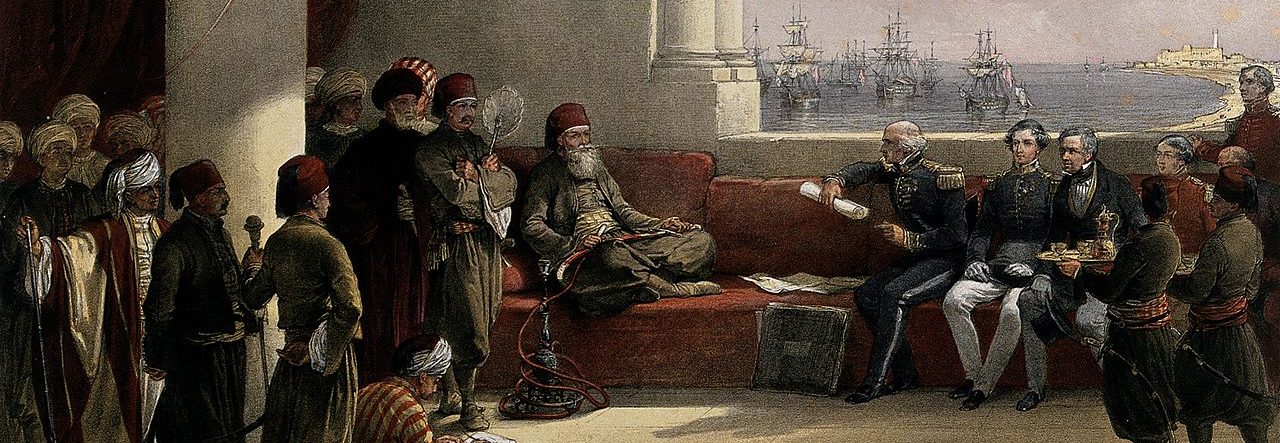
The first is the belief that Lewis was an “Orientalist,” or even “the last Orientalist,” a title applied to him either as a term of abuse or as a badge of honor. This misconception was fostered by Lewis’ famous duel with the Palestinian American literary scholar Edward Said, whose 1978 manifesto, Orientalism, indicted Western “Orientalist” writers and scholars for purveying bigotry against Islam and the Arabs. Lewis rose to the defense of the scholars: it was they who undermined Europe’s medieval prejudice against Islam, by directly accessing and engaging original Islamic sources. Lewis maintained that this brand of scholarly Orientalism amounted to one of the nobler triumphs of the Enlightenment.
But in defending the Orientalists, Lewis wasn’t acting as one. Yes, Lewis had studied under a famed British Orientalist, Sir Hamilton Gibb. He knew the Orientalist canon intimately and had a gift for languages that would have been the envy of any philologist. But Lewis wasn’t “the last Orientalist.” (“The Orientalists have gone,” Lewis insisted.) He was the first real historian of the Middle East, considered a pioneer in applying the latest approaches in European social and economic history to the Middle Eastern past.
His highly readable studies on every period were chock-full of fascinating historical detail about day-to-day life, which he’d culled from indigenous sources. He was the first Westerner admitted to the Ottoman archives, and he was the first scholar to read the Islamic texts for earlier periods with a trained historian’s eye. (I can attest, as someone who once tended his 18,000-volume library, that he owned every significant Arabic, Persian, and Turkish chronicle.) Lewis, as a young don, criticized his Orientalist forebears for their insularity and called for “the integration of the history of Islam into the study of the general history of humanity.” No one did more than Lewis to advance this elusive goal.
Through his historical research, Lewis arrived at a crucial insight, which informed all his later writings. Islamic civilization in its “golden age” had all the prerequisites to make the leap to modernity before parochial Europe did.
Yet it stagnated, then declined. “The rise of the West has been much studied,” he once noted, “but the waning of Islamic power has received little serious scholarly attention.” This would be his project, and in its pursuit, he reached an intriguing conclusion: the elites of the great Muslim empires, especially the Ottomans, were so certain of their own God-given superiority that they saw no reason ever to change. They discounted the steady rise of Europe, and by the time they got a fix on the problem, it was too late.
Thus began a desperate race to arrest the decline of the Muslim world and its eclipse by a dynamic Europe. There were many Western observers who pointed to the spreading rot. But Lewis revealed the Muslim point of view. Reform, modernization, nationalism, Islamism, terror – all these were strategies to restore to the Muslims some semblance of the power they had wielded for over a millennium and which they lost in just a few generations. Lewis’ biggest bestseller, What Went Wrong?, published just after 9/11, distilled his many findings on how Muslims had tried and failed to restore their world. Al Qaeda (and later the Islamic State, also known as ISIS), by seeking to reenact the seventh century, was the most desperate of these attempts to reverse history.
The question of decline preoccupied Lewis, because he knew its human cost. When he finished his PhD at the University of London in 1939, his country still ruled a quarter of humankind and almost a third of the world’s land mass. Then, just as he was on the brink of launching his career, his country went to war against an evil power that overran Europe and nearly destroyed Western civilization. In his city, London, 30,000 died in German bombings. “I went to shelters in the underground stations,” he recalled, “but I soon got tired of this and decided to stay in my bed and take my chances.”
After the war, the British Empire gradually dissolved, and Britain ceased to be great. Tout passe, tout casse, tout lasse (Everything passes, everything breaks, everything wearies): Lewis in old age was wont to repeat the French adage. He had witnessed firsthand the crumbling of a mighty empire, and he sought the underlying causes of decline in the example of Islam. Lewis’ later message to the United States, which had saved the West, was to warn against a repeat of the smug complacency that presaged the precipitate declines of Ottoman Islam and Britannia.
Clash or Encounter?
This brings us to a second misunderstanding. Lewis has been tagged as the father of the “clash of civilizations,” which Samuel Huntington borrowed (with acknowledgment) for his famous Foreign Affairs article of 1993. Lewis had used the phrase as early as 1957 to describe the deeper aspect of contemporary conflicts in the Middle East. (Better to “view the present discontents of the Middle East,” he wrote, “not as a conflict between states or nations, but as a clash between civilizations.”) He repeated the phrase in subsequent works, most famously in his 1990 article, “The Roots of Muslim Rage.”
Huntington, however, went further than Lewis, presenting the “clash” as a struggle among all the world’s civilizations, fueled by cultural differences. Lewis had something else in mind. He held that Islam and Christendom (later, the West) were unique rivals, not because of their differences but because they shared so much: the Greco-Roman legacy, Abrahamic monotheism, and the Mediterranean basin.
Obviously, these two sibling civilizations often clashed. But being so similar, they also borrowed, exchanged, and translated. In 1994, just after Huntington popularized the “clash” thesis, Lewis sought to distance himself from it. That year, he revised his classic 1964 book The Middle East and the West, and in the revision, “clash” became “encounter.” He told me later that he felt “clash” was “too harsh.”
In 1996, when Huntington published The Clash of Civilizations and the Remaking of World Order, Lewis again kept his distance. He noted that “there have been great struggles between Christendom and Islam in the past” and that “there are still some on both sides who see world history in terms of a holy war between believers and unbelievers.” But this wasn’t fate: “A new era of peaceful coexistence is possible,” he announced. Lewis never denied coining the phrase “clash between civilizations,” but he meant it as a very partial description of the past and the present, and not as a prediction of the future.
Still, Lewis also sensed that the resentment of the West simmered, and he was the first to conclude that it would take an increasingly Islamist form. As early as 1964, he thought it “obvious” that “Islamic movements alone are authentically Middle Eastern in inspiration…express[ing] the passions of the submerged masses of the population. Though they have all, so far, been defeated, they have not yet spoken their last word.” He returned to this theme in 1976, in his seminal article “The Return of Islam.” When Commentary published it, Western liberals and Arab nationalists ridiculed him. They’d pinned their hopes and reputations on the ever-onward progress of secular modernity. If Islam had “returned,” they had failed.
Lewis didn’t have to wait long for vindication. He didn’t predict the Iranian Revolution three years later, but it enhanced his reputation for prescience. He struck again in 1998 on the pages of Foreign Affairs, where he analyzed the “declaration of jihad” of a little-known Saudi renegade named Osama bin Laden. Lewis again warned against complacency – to no avail.
After 9/11, America listened to him precisely because he had heard Islamism extremist voices when no one took them seriously. Yet he always insisted that those voices didn’t speak for all of Islam: “Anyone with even a moderate knowledge of Islam knows that most Muslims are neither militant nor violent.” Bin Laden’s message was a “grotesque travesty of the nature of Islam and even of its doctrine of jihad. The Quran speaks of peace as well as of war.”
In Contempt or Good Faith?
The third misunderstanding is the notion that Lewis held “the Arabs” in contempt. After his death, some Twitter feeds sputtered words supposedly said by Lewis to Dick Cheney when he was vice president: “I believe that one of the things you’ve got to do to Arabs is hit them between the eyes with a big stick. They respect power.”
The only source for this “quote” was the former National Security Adviser Brent Scowcroft, who speculated to a journalist on what Lewis might have said behind closed doors. In fact, no one ever heard Lewis say any such thing. But beyond fake quotes, there has persisted the idea, planted first by Said, that Lewis’ work was “very close to being propaganda against his subject material.” (Presumably, the reference is to the Arabs. In regard to the Turks, Lewis’ critics sometimes claimed he propagandized for them.) Another academic, Richard Bulliet, claimed that Lewis was “a person who does not like the people he is purporting to have expertise about. He doesn’t respect them.”
If this were true, there is no credible explanation as to why, for all the years I knew Lewis, his staunchest friends included prominent Arab scholars. At Princeton, Lewis’ closest colleague was the Egyptian-born economic historian Charles Issawi, his exact contemporary and a man of vast learning. Their erudite and recondite banter induced awe. When the “Orientalism” controversy broke, Issawi stood with Lewis. (“We should be eternally as grateful to the Orientalists,” Issawi told an interviewer, “who taught us so much.”) Issawi often closely tracked the ideas of Lewis, as in a 1986 lecture (later published) entitled, “The Clash of Cultures in the Middle East.” Lewis and Issawi disagreed over Israel and Palestine. But in an affectionate tribute to Issawi, Lewis wrote that “our agreements have not strengthened nor our disagreements weakened our friendship.”
It was at Princeton that Lewis first met the Lebanese-born Fouad Ajami, half his age at the time, who gradually became a disciple. It was Ajami who wrote paeans to Lewis on special occasions and spoke movingly at events celebrating him. Ajami attested to “deep reservoirs of reverence felt for [Lewis] in many Muslim and Arab lands…. Countless Arab and Iranian and Turkish readers…know that he has not come to the material of their history driven by bad faith, or a desire for dominion.” Lewis, in turn, dedicated a book to Ajami, “in appreciation of his scholarship, friendship, and courage.” Together they founded an academic association of Middle Eastern studies, meant as a platform for dissenting views.
And while some Arabs thought Lewis too “Zionist,” others valued him precisely for his rapport with Israeli leaders. In 1971, the Egyptian statesman Tahseen Bashir, acting at the behest of President Anwar Sadat, asked Lewis to inform Israeli Prime Minister Golda Meir of Egypt’s interest in peace. Lewis not only conveyed the message from one friend to another, he endorsed it. (Meir rejected the overture; war followed two years later.) Lewis also always combined visits to Israel with stops in Jordan, where King Hussein and then Crown Prince Hassan hosted him. “I had a personal relationship with the royal family,” wrote Lewis, who made Amman his base in the Arab world. He certainly didn’t believe that Israelis and Arabs were doomed to “clash,” and he supported the Oslo Accords (although he later admitted it was a mistake to imagine Palestinian leader Yasir Arafat abandoning terrorism).
It was Lewis’ Arab friends who persuaded him, however improbably, that the Arab peoples were primed for democracy, beginning in Iraq. During the long Cold War, when the Arabs were subjected to Stalinist-style dictatorships, Lewis saw the present as a simple continuum of “the authoritarianism, perhaps we may even say the totalitarianism, of the Islamic political tradition.” But the fall of the Soviet Union invigorated democracy movements everywhere. Were the Arabs truly exceptions? Iraqis came to Lewis and told him they weren’t, and Lewis was primed to believe them. He had entered a last and hopeful phase, of desiring to see the Arabs partake of the bounty of democracy.
Consider, for example, his penultimate contribution to Foreign Affairs. In his 2005 essay, “Freedom and Justice in the Modern Middle East,” Lewis denied that dictatorship constituted “the immemorial way” of the Arabs. It was “simply untrue. It shows ignorance of the Arab past, contempt for the Arab present, and unconcern for the Arab future.” Dictatorships were “very alien to the foundations of Islamic civilization. There are older rules and traditions on which the peoples of the Middle East can build.”
It’s debatable, and probably always will be. But in making the case, beginning with Iraq, Lewis wasn’t propagandizing against his subject. To the contrary, he was arguing that there was nothing so exceptional about the Arabs or Islam that would exclude them from the shared future of humankind. “The Middle East is a region of great, ancient civilizations with talented and ingenious people,” he announced in 2002, “and I have no doubt at all that they can create free societies.” This wasn’t a well-grounded analysis, akin to his prescient read of Islamism. It was a closing prophecy, meant to resolve the contradictions in Lewis’ double devotion to Islam and the West.
The questions that Lewis posed, and the answers that he gave, are still at the center of our politics, which is why his death produced such an outpouring of passions, for and against him. But now he is himself a subject in history. Lewis has given us guidelines for assessing him. “The historian must strive to achieve as great a degree of objectivity as possible,” he wrote. “No man can be entirely detached from the events of the time in which he lived…. The scholar, however, will not give way to his prejudices. He will recognize them, control them, allow for them, and by a process of intellectual self-discipline reduce their working to a minimum.”
Whether Bernard Lewis approximated this ideal is a legitimate question. But it can be answered fairly only by rising to his standard.
 Bernard Lewis has passed away, less than two weeks shy of his 102d birthday. The headline of today’s Washington Post

You must be logged in to post a comment.