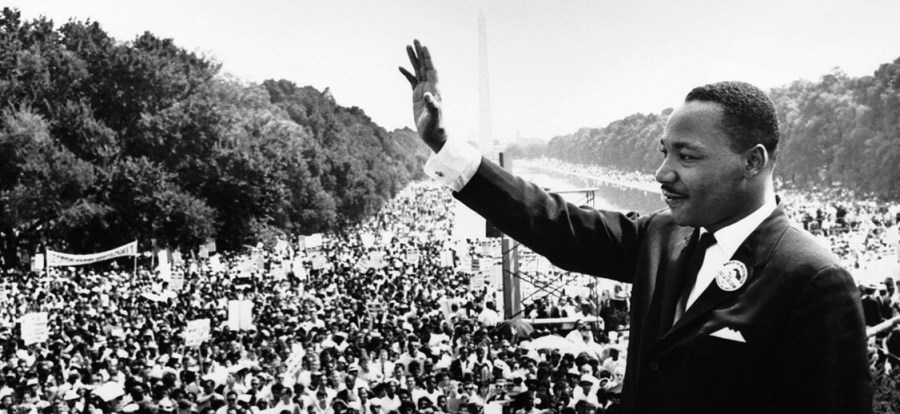
Once again, it’s Martin Luther King Jr. Day, and time to bundle my studies of MLK’s relationship to Israel and the Palestinians.
1. What about this quote, attributed to King around the time of the Six-Day War? “When people criticize Zionists, they mean Jews. You’re talking anti-Semitism!” Is it authentic, and if so, what did he mean? What did he think of that war, and why didn’t he ever visit Israel? I answer these questions in this article. Update: And here is the previously-unpublished Six-Day War interview of MLK.
2. If King left no quote in favor of the Palestinian cause, it’s because he didn’t know much about it, correct? Wrong: he saw it up close, in Jerusalem and the West Bank, and still left no quote. I explain, in this article.
3. Well, if King tilted toward Israel, it’s because he depended on Jewish donors, didn’t he? Well, he did, but that isn’t the whole story, or even the main story. I look at King’s closest rabbinic allies, and their positions on Israel, in this article.
Let’s be clear: no one knows what King would say about Israel or the Palestinians today. Polemicists on both sides have cooked answers, but for a historian, it’s not even a legitimate question. All that a historian can do is demonstrate what King said, and perhaps infer what he thought, all those many years ago. Some of the issues which were then on the table still sit there today, although much of the context has been transformed by subsequent events.
So share this bundle with your friends, and if you think your elected representatives might benefit from it, send it to them too. The purpose of the day is for thoughtful people to reflect, and to draw conclusions for the present and future. But they should do that in full awareness of the known facts of the past.
 Martin Kramer on the Middle East
You must be logged in to post a comment.