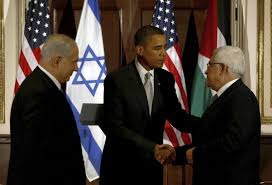
 My Columbia lecture has been published in the Middle East Papers series of Middle East Strategy at Harvard. My core argument is that the Obama administration is thwarting itself, by seeming reluctant to uphold American primacy in the region. More troops in Afghanistan are unlikely to change the Middle Eastern perception that the United States is something less than it was. That’s because Iran is seen as the true test of American resolve. Download the paper here.
Category: Sandbox
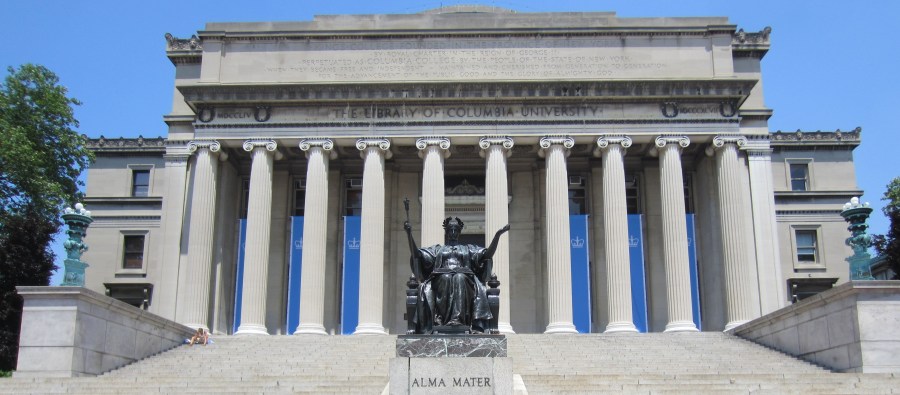
Why I’m (still) grateful to Columbia
This is how I opened my lecture on U.S. Middle East policy to the Columbia University International Relations Forum on November 16.
As some of you may know, I’ve been a long-time and often sharp critic of certain decisions made by Columbia University. There’s a saying, that honest criticism is hard to take, especially from a friend, an acquaintance, or a stranger. In other words, it doesn’t much matter, but for what it’s worth, my criticism hasn’t been that of a stranger. I’ve commented as a professional academic, as a Columbia alumnus, and as a Columbia University Press author, who remembers this great university as a place of diverse approaches and the highest standards.
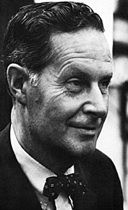
The standards I recall were personified by the late J.C. Hurewitz, with whom I studied here almost thirty-five years ago. For the younger of you in this audience, that name will mean very little, perhaps nothing. But for many years, Hurewitz dominated the teaching of the Middle East at Columbia, for which he set a very high bar. I took my first course with Hurewitz along with fellow student Lisa Anderson, who later succeeded him as director of the Middle East Institute and went on to serve as dean of the School of International and Public Affairs. She precisely and elegantly described Hurewitz in these words:
The motif in J.C. Hurewitz’s professional life has been a belief in the possibility and desirability of fairness.… His commitment to an abstract notion of fairness as a value, both moral and pragmatic, was particularly striking in worlds—Middle Eastern politics, academics, government—where the primacy of personal bias or political inclination has been far more common.… There were, of course, those who believed the effort to be misguided, who said and continue to say that objectivity is impossible and dispassion irresponsible. Hurewitz did not say he was trying to be objective in any absolute or scientific sense, however: indeed, epistemological questions are of no interest to him and he has great respect for the passions of others. He strove to be fair.
This is not the occasion to ask whether Columbia still elevates those who strive to be fair. I do want to take the opportunity to note that my best recollections of Columbia are the moments when J.C. Hurewitz seemingly floated above partisanship to achieve a higher insight on some highly contentious issue. This is a standard that’s not easy to maintain, and I sometimes fail to maintain it myself. But I learned enough here to know that partisanship, while sometimes a personal imperative, is never a scholarly virtue, and certainly should never be mistaken for scholarship. For that distinction, learned at a different Columbia at a different time, I’m still grateful.
Coming to Columbia
For those who have Columbia University ID’s, I will be lecturing on Monday evening, November 16, on “How Not to Fix the Middle East” at the invitation of the Columbia University International Relations Forum (CUIRF). The lecture will take place at the Roone Arledge Lerner Cinema on the Columbia campus, 2920 Broadway, at 8pm. It’s to be preceded by a reception at 7:15pm.
In the CUIRF web announcement, I was surprised to see it suggested that I and Prof. Jack Snyder, my moderator, “may also discuss his [Kramer’s] critique of the MEALAC program at Columbia.” At the Columbia Bwog, this grows larger in the telling: “Martin Kramer will also most likely be discussing the Joseph Massad tenure, and his critique of other MEALAC Professors at Columbia.”
It is not likely. I intend to adhere to my lecture topic.
Update: Here is a rough-and-ready summary of my appearance at Columbia, from the Columbia Spectator. My thesis, a bit muddled here, is that Obama’s Middle East policy is plagued by a contradiction. The administration undercuts its own ambitious agenda, by its own ambivalence about U.S. dominance. (Obama: “No one nation can or should try to dominate another nation.”) If the Mideast thinks U.S. power is waning, no one will comply. And they haven’t.
 Martin Kramer on the Middle East
You must be logged in to post a comment.